Be yourself; Everyone else is already taken.
— Oscar Wilde.
This is the first post on my new blog. I’m just getting this new blog going, so stay tuned for more. Subscribe below to get notified when I post new updates.
Be yourself; Everyone else is already taken.
— Oscar Wilde.
This is the first post on my new blog. I’m just getting this new blog going, so stay tuned for more. Subscribe below to get notified when I post new updates.
This is an example post, originally published as part of Blogging University. Enroll in one of our ten programs, and start your blog right.
You’re going to publish a post today. Don’t worry about how your blog looks. Don’t worry if you haven’t given it a name yet, or you’re feeling overwhelmed. Just click the “New Post” button, and tell us why you’re here.
Why do this?
The post can be short or long, a personal intro to your life or a bloggy mission statement, a manifesto for the future or a simple outline of your the types of things you hope to publish.
To help you get started, here are a few questions:
You’re not locked into any of this; one of the wonderful things about blogs is how they constantly evolve as we learn, grow, and interact with one another — but it’s good to know where and why you started, and articulating your goals may just give you a few other post ideas.
Can’t think how to get started? Just write the first thing that pops into your head. Anne Lamott, author of a book on writing we love, says that you need to give yourself permission to write a “crappy first draft”. Anne makes a great point — just start writing, and worry about editing it later.
When you’re ready to publish, give your post three to five tags that describe your blog’s focus — writing, photography, fiction, parenting, food, cars, movies, sports, whatever. These tags will help others who care about your topics find you in the Reader. Make sure one of the tags is “zerotohero,” so other new bloggers can find you, too.
“Fuck you, Greg!”
With two miles to go in the 1990 Mercer Island Half Marathon, I was done. I’d trained for several months and knew for a fact that I was better prepared than my roommate, who had put in much less mileage and had recently taken up the practice of cigarette-sneaking. But I had underestimated Greg. After telling him off as he passed by (his reply was simply a smile), I continued on without trying to regain my lead. I was moving as fast as I could. One thought crossed my mind during those final miles: I’d never hear the end of it. Turns out–I was right. He loved to share this story of his come-from-behind victory over me.

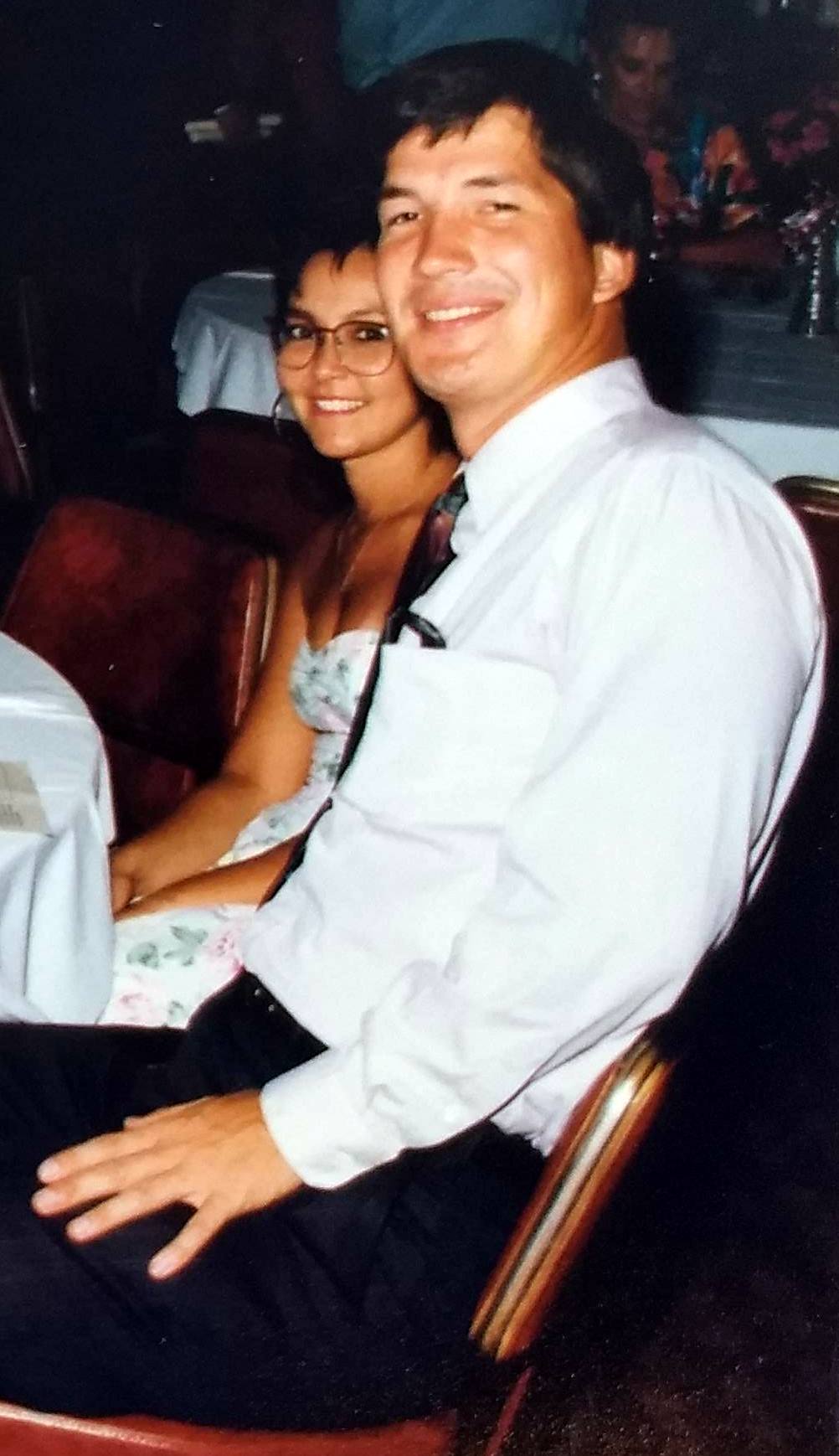
On Friday, December 9, 1988, I met Greg. We were 24 years old. My roommate Nadine, who was dating his friend Attila, introduced us. That night, we talked for hours, forming the foundation of a decades-long friendship. Nadine and I lived in a right-of-way house in Renton slated for demolition to make way for the straightening of the S-Curves. With two storeys plus a basement, the place was near-perfect and even had a security system. But because we were so lackadaisical about punching in the four-digit code for the alarm, and allowed it to sound so often for so long, when someone actually attempted to break in through the front door, neighbors delayed calling law enforcement. Greg and Attila showed up to provide moral support. The four of us all worked for the Washington State Department of Transportation in different capacities. And the DOT didn’t want to put money into a tear-down, so they simply cut back the shrubs near the entrance to discourage prospective robbers. Not long after the incident, Greg moved in with us. He and I were both bookworms, so we talked a lot about books and life and relationships. He dated a gal named Virginia at that time.
When the brown rats appeared, we knew that WSDOT wasn’t going to spring for an exterminator to take care of our rodent problem, so we lived in a state of semi-constant concern at the thought of potential encounters with them. Once, Greg showed up at the house only to find me standing on a chair, freaking out because I’d noticed one scurry by. Instead of scaring it away, he joined me in stepping up off of the floor and we freaked out together. Another time though, he prepared for a rat battle–by tracking down a golf club from the basement, just in case.
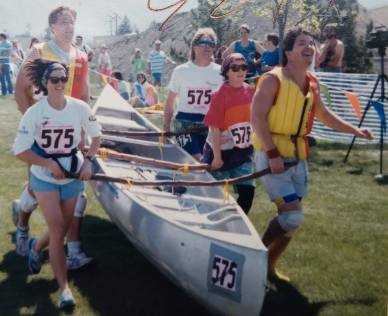
In 1991, I conned him into paddling a canoe eight miles along the Wenatchee River with my then-boyfriend Scott on a Ridge to River team. When they approached an obstacle and were forced to choose between the rough water side or the calm, Greg suggested that they choose the choppier, scarier side. The canoe tipped over, sending the pair into the 45-degree water. Our team did not finish in last place…but not by much.
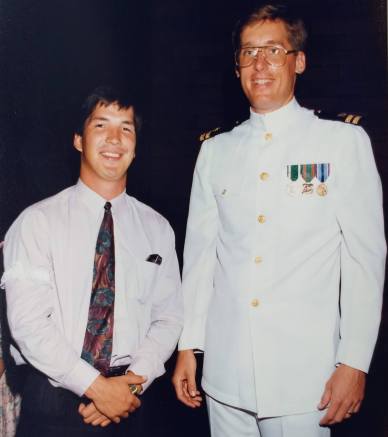
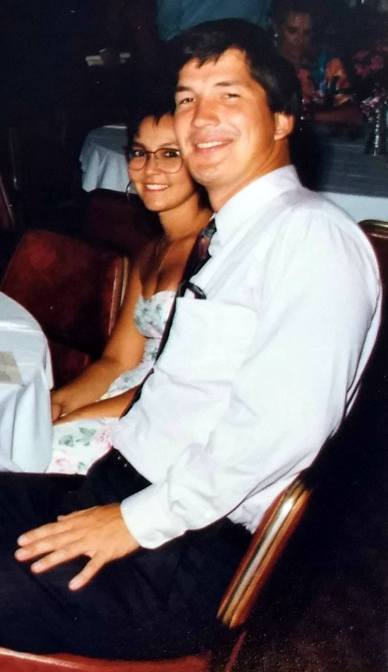
In 1992, I moved to San Diego and married Scott a few months later at Fort Lewis, Washington. Greg and his girlfriend Carlene attended. He caught the garter, which meant he was next in line for marriage. He proposed to Carlene during the Christmas of 1994 and they married the following October. In 1997, we Permanent-Change-of-Station-ed to Japan, and stayed for 3.5 years. For the next five years, I corresponded with Greg’s mom, Ruby Mae, after meeting the Lippincotts at their home in Enumclaw. Scott and I had our two children while in Japan, and Ruby Mae made me a blanket for each of them. In her letters, she (like most prospective grandmothers) wrote repeatedly how much she wanted her youngest son and his wife to have children, “He’d be a great dad.”
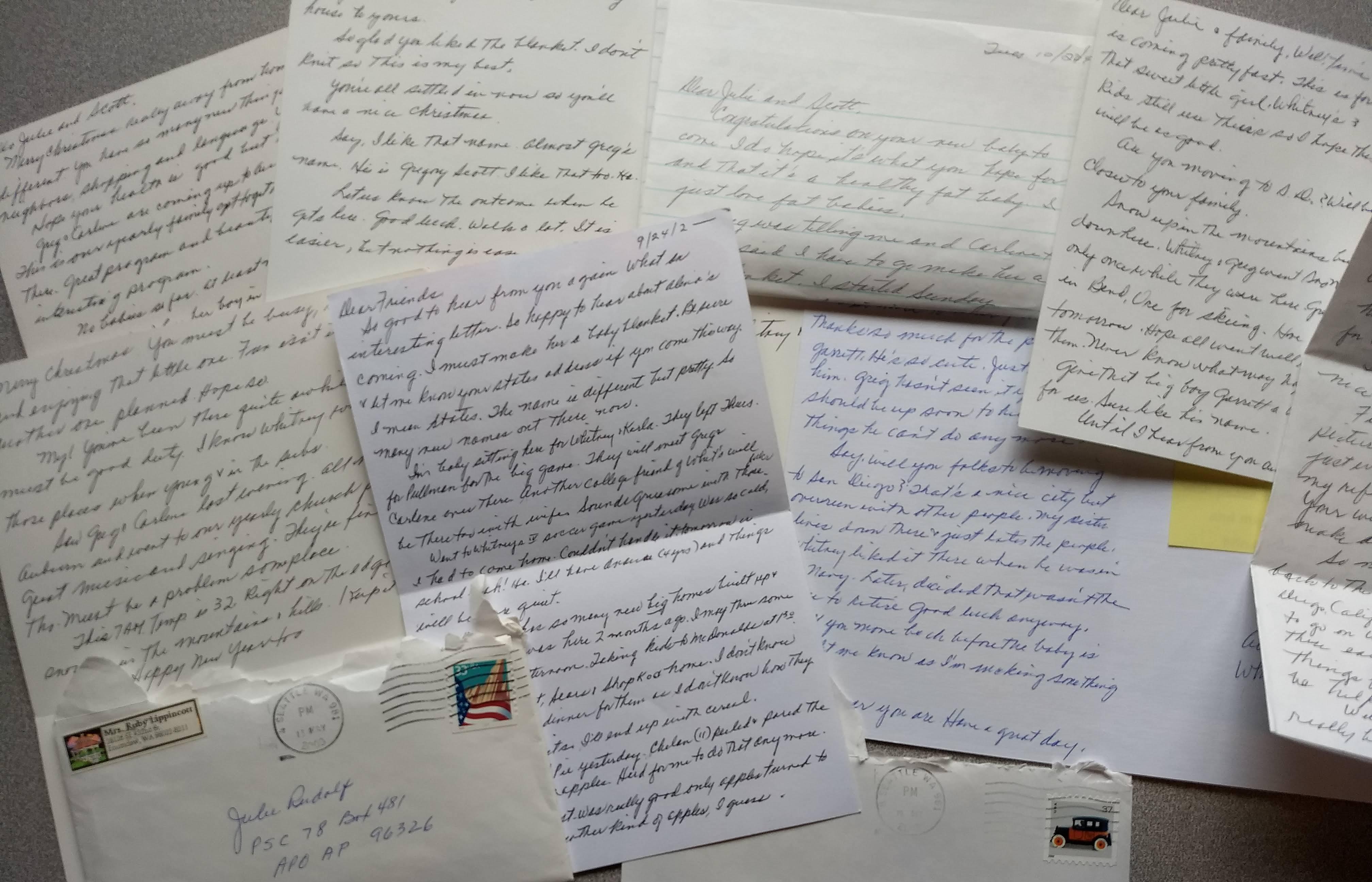
In 2001, my family moved to Southern Maryland, then returned to the Pacific Northwest four years later. Finally, I had the chance to visit Greg to reconnect, and did. We kept in touch sporadically at that time and I saw him only a couple of times. When I visited him at his place in Shelton, it felt like the old times. After that, we would talk about once a year or so. He’d start with “JuLee, JuLee, JuLee!…” and we’d spend an hour catching up, usually around my birthday in February or his in August.
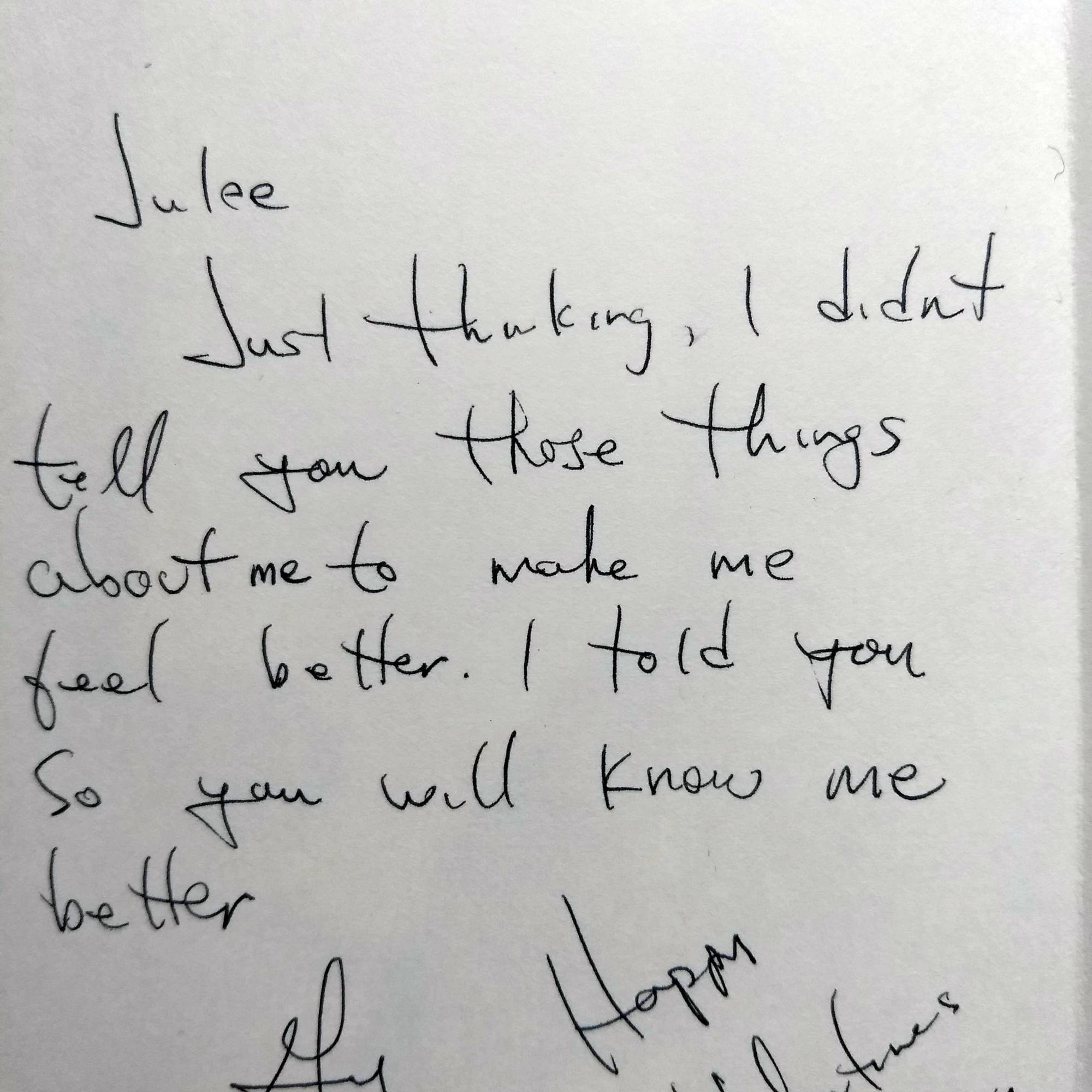
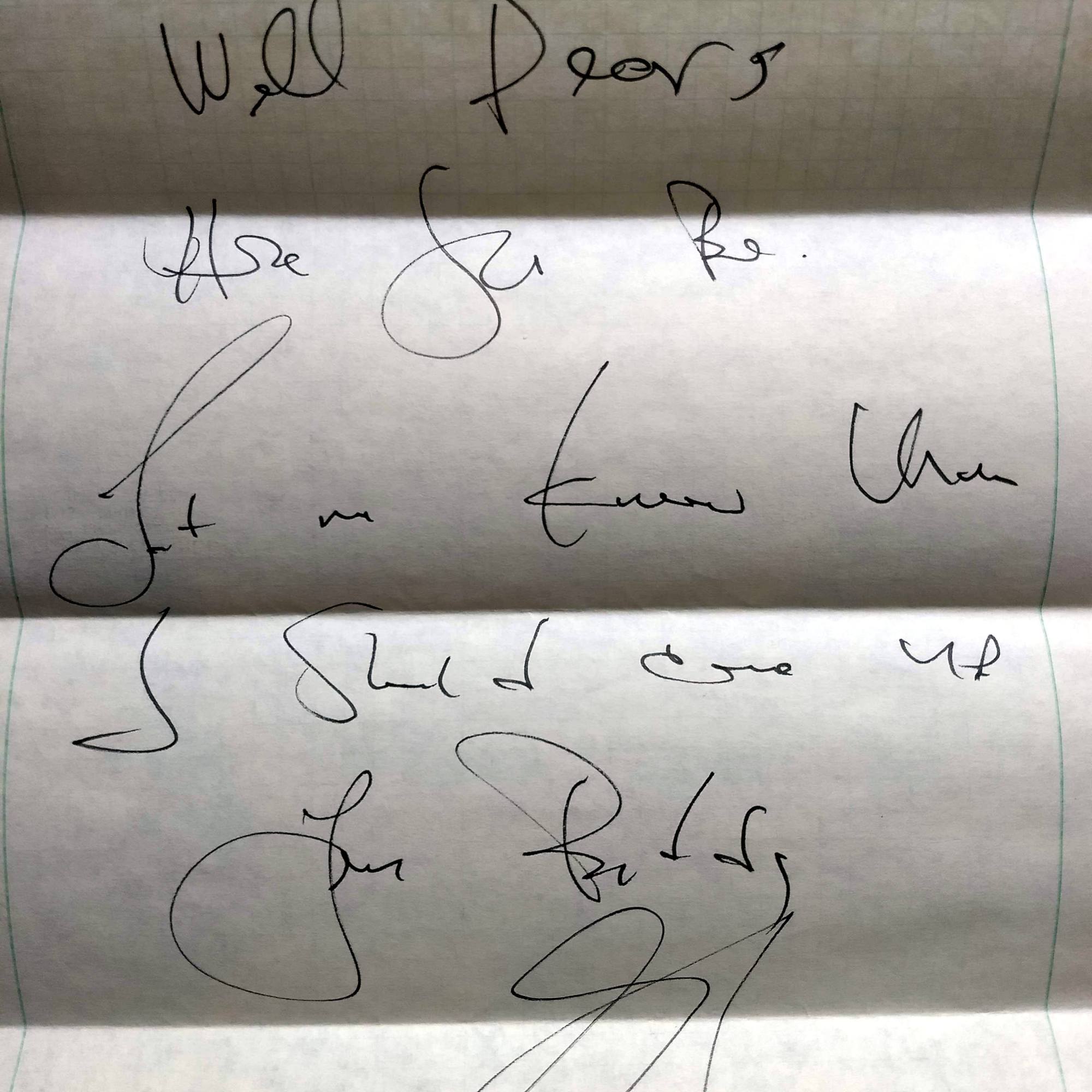
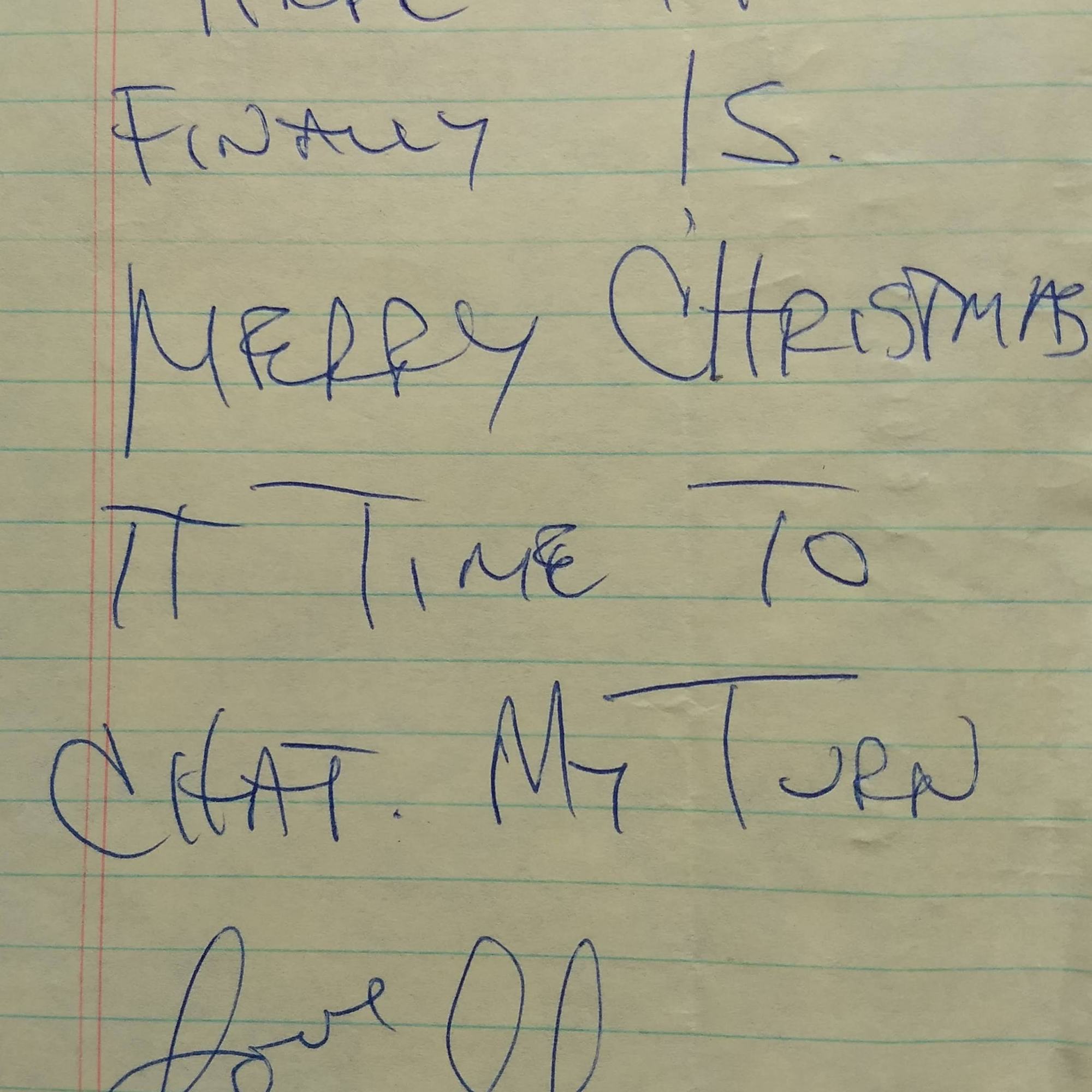
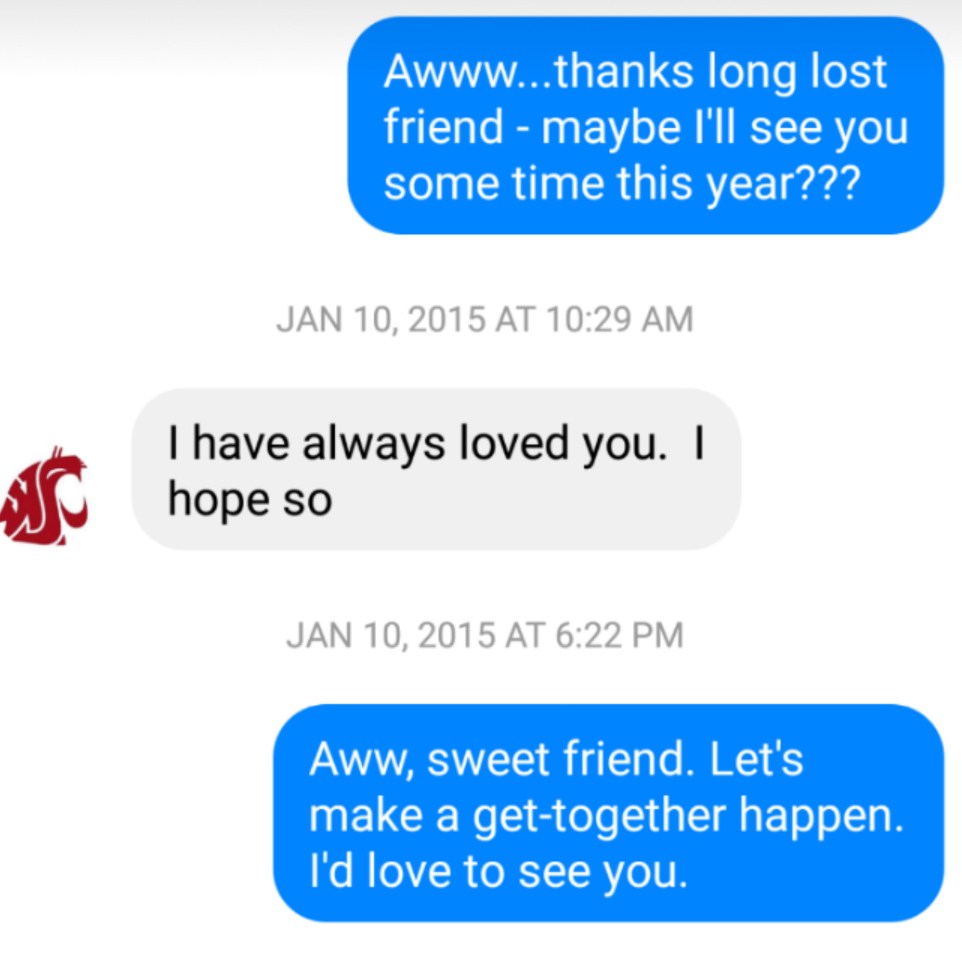
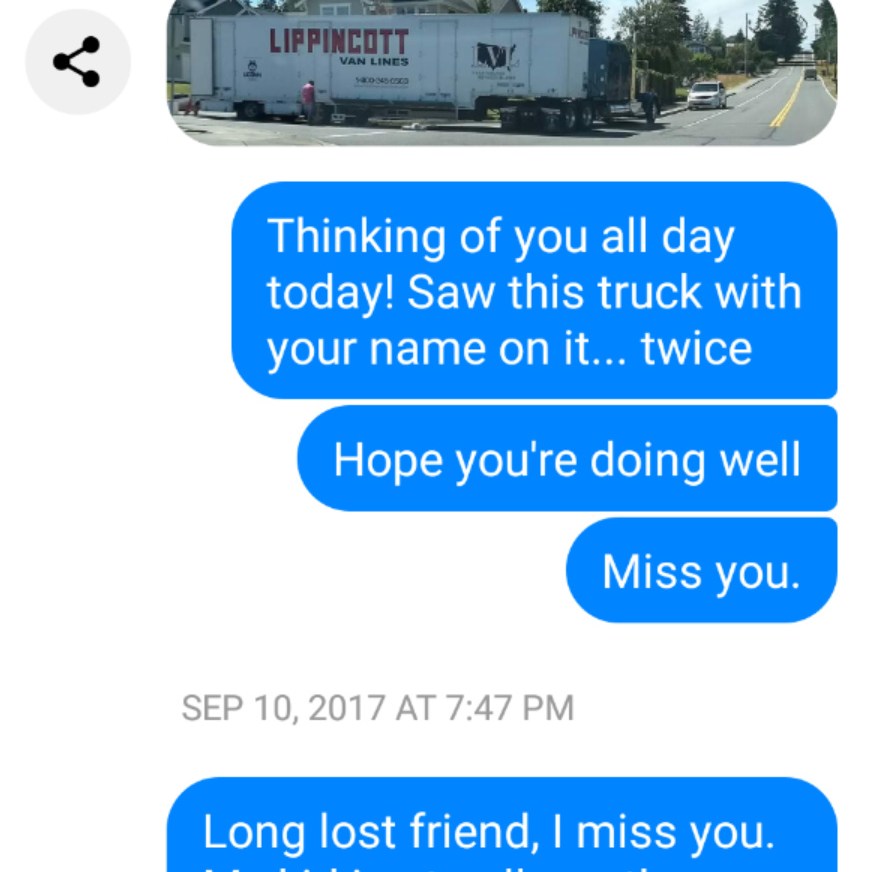

Although we were Facebook friends, we didn’t Instant Message or text much, preferring to talk on the phone or meet in person. When we did, we were able to start back up where we’d left off. Maybe that’s why I didn’t worry much about not hearing from him. In 2015, I messaged to suggest a get-together, but we didn’t make a plan. During one of the last times we spoke, in early 2017, he said, “How about if you die first, I’ll stand up for you at your funeral. And if I die first, you’ll stand up for me at mine?” I agreed. I texted him in February of 2018 suggesting a get-together. No reply. Months passed. A bunch of sad, distracting family stuff occupied my mind in the fall of 2018. On October 15, 2018, I Googled “Greg Lippincott” in hopes of tracking down his phone number so that I could call him.
His obituary appeared…
A man I’d known for nearly thirty years had died. Five months prior. And I’d had no idea. Shocked and saddened, I tried to grieve. But I didn’t want to accept the truth. Dr. Elisabeth Kübler-Ross, famous for formulating The Five Stages of Grief, said, “Denial helps us to pace our feelings of grief. There is a grace in denial. It is nature’s way of only letting in as much as we can handle.” Denial is the first stage of grief. And I can’t seem to move past it.
In Swimming in a Sea of Death: A Son’s Memoir, author David Reiff recounts his mother’s battle with cancer. Several lines have stuck with me, especially, “One mourns those one has loved who have died until one joins them,” and “She [his mother] was entitled to her own death.” Greg was entitled to his own death. I don’t know what I would have done with death staring me in the face. I don’t know if I could have, would have contacted my longtime friends to say that I was dying. And ask if they wanted to stop by and say goodbye. I wouldn’t have wanted him to do anything different than what he wanted to do, although I wish that I’d have known. Greg was my friend for 29 years, 4 months and 6 days. On January 10, 2015, he sent me this text, “I have always loved you.” I had always loved him too. If I could say anything to him now, it would be: I’ll never forget you. I’m grateful to have known you. You left too soon. And I miss you.
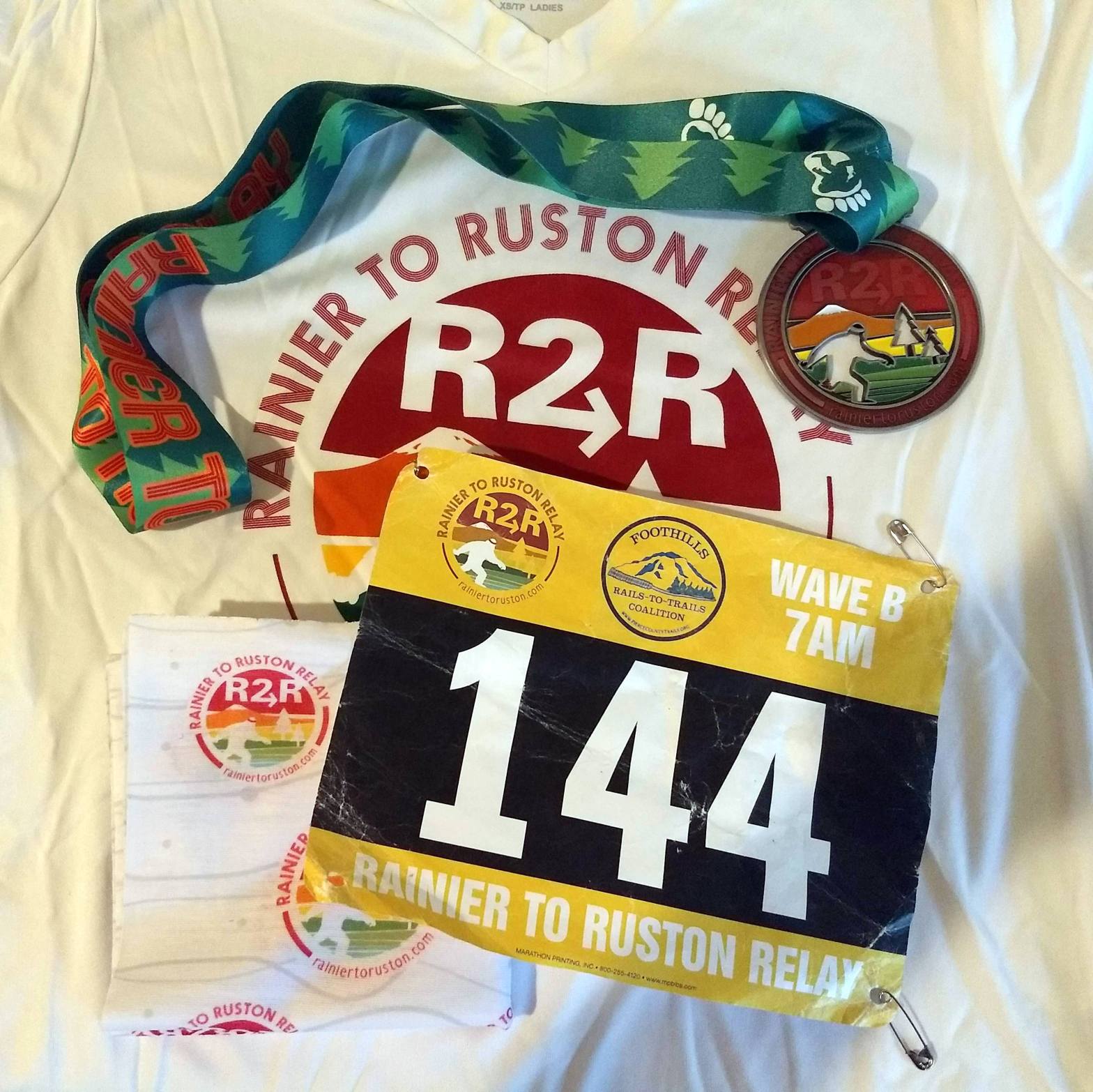
As I stepped up to traverse another stretch of sidewalk along the mean streets of Tacoma (the nearest runner half a mile ahead) I dodged a generator with a thick yellow cord strung between it and a decrepit, older model RV. I realized while spending 5.2 of my Leg 11’s six miles on streets or sidewalks, that the Runner 5 position in Rainier to Ruston wasn’t “the” short stick but simply short-stickish in a different way than that of my teammates. Fortunately, by the time I began to worry about my safety (having passed more than one thirty-something-year-old guy toting a backpack), I had crossed to the west side of the Thea Foss Waterway and, a few minutes later, handed off to Jennifer, our Runner 6.
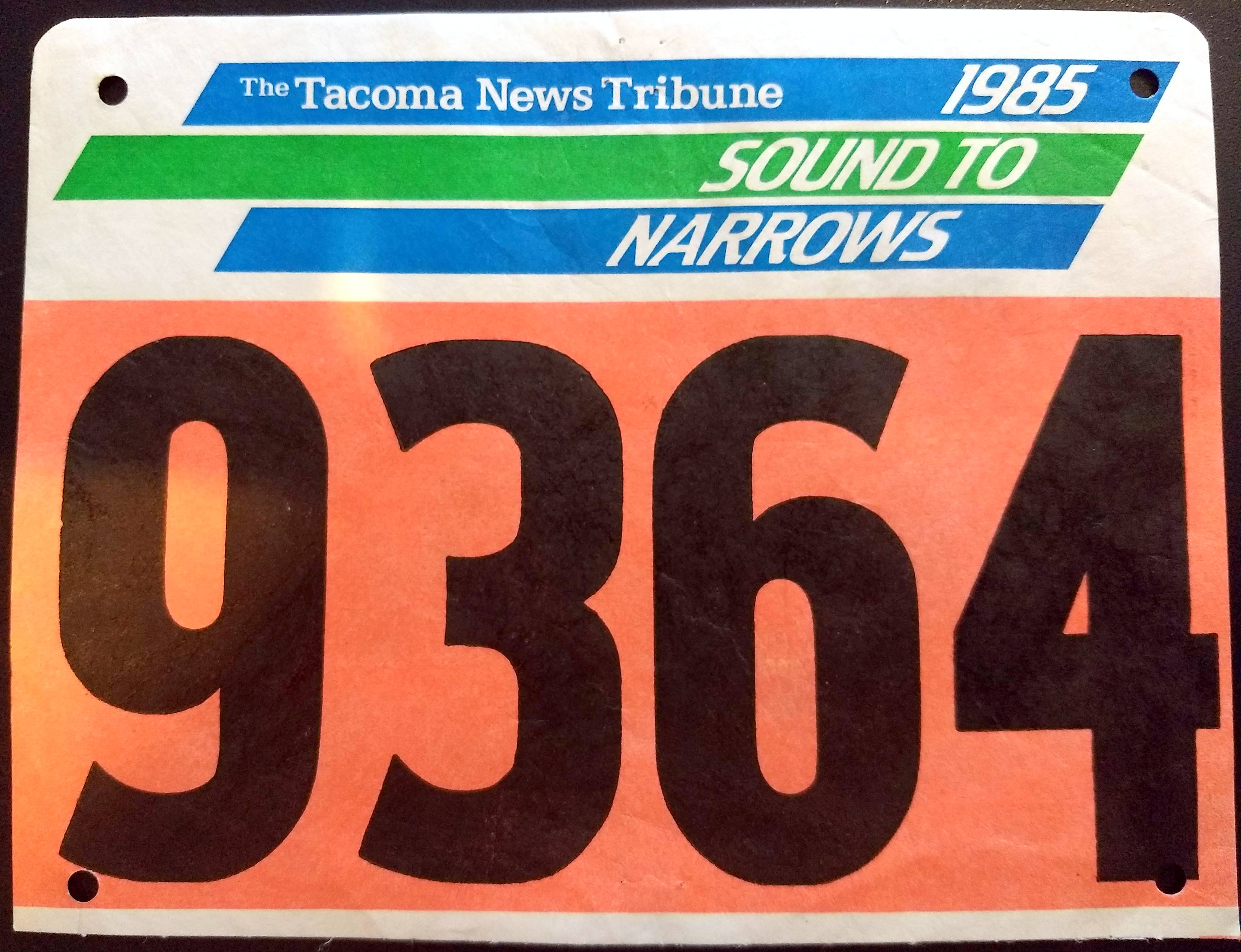
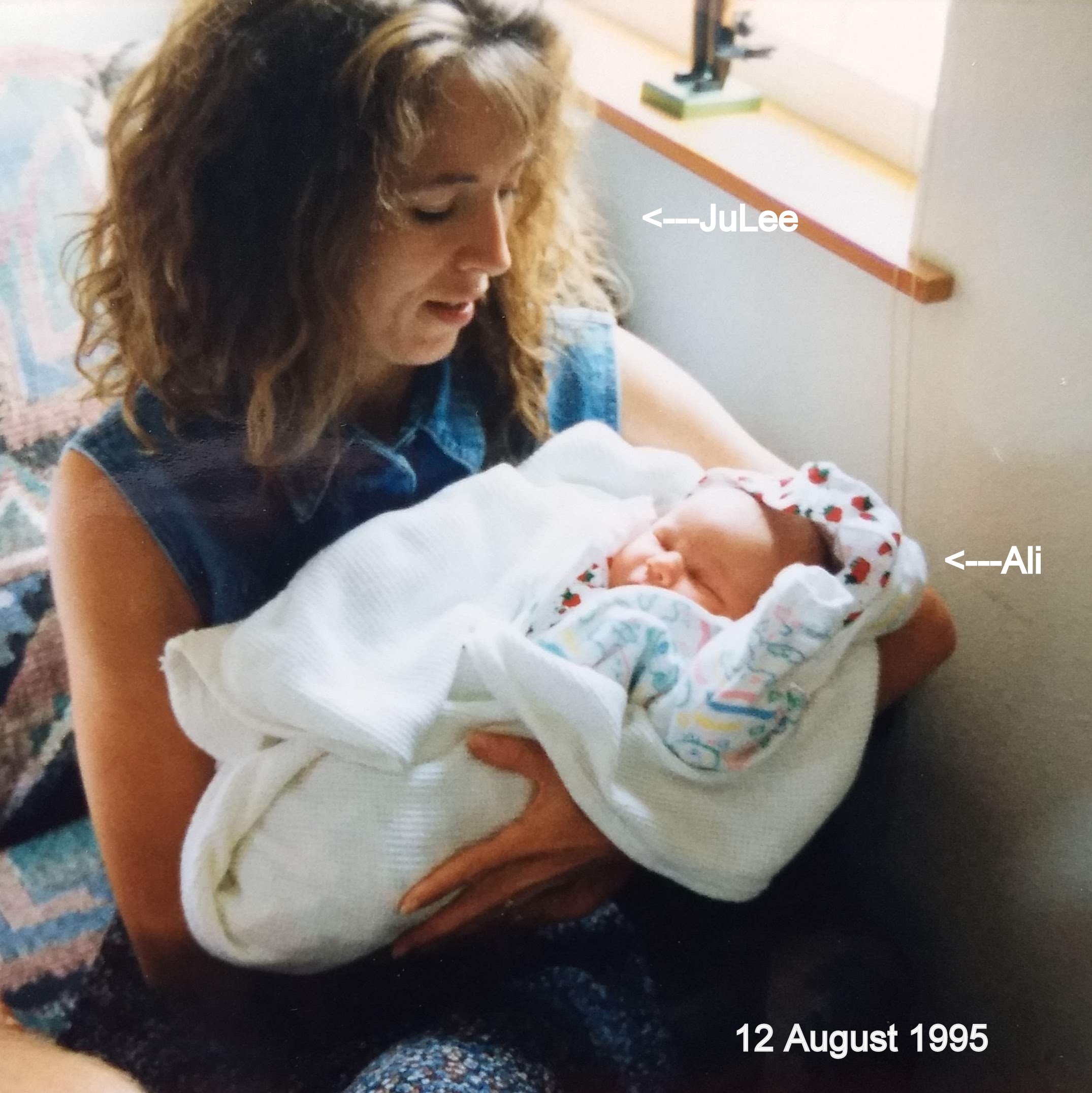
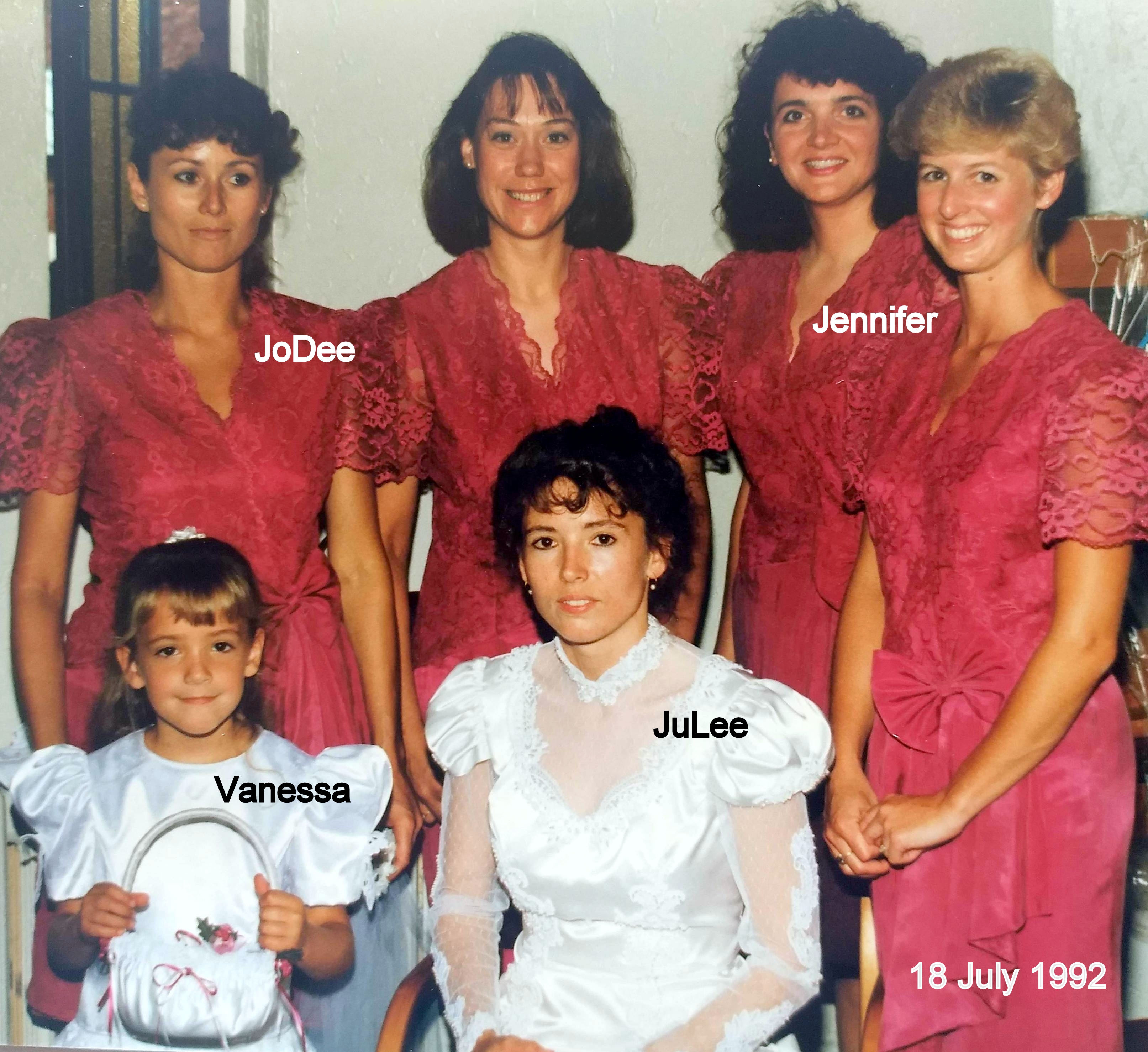
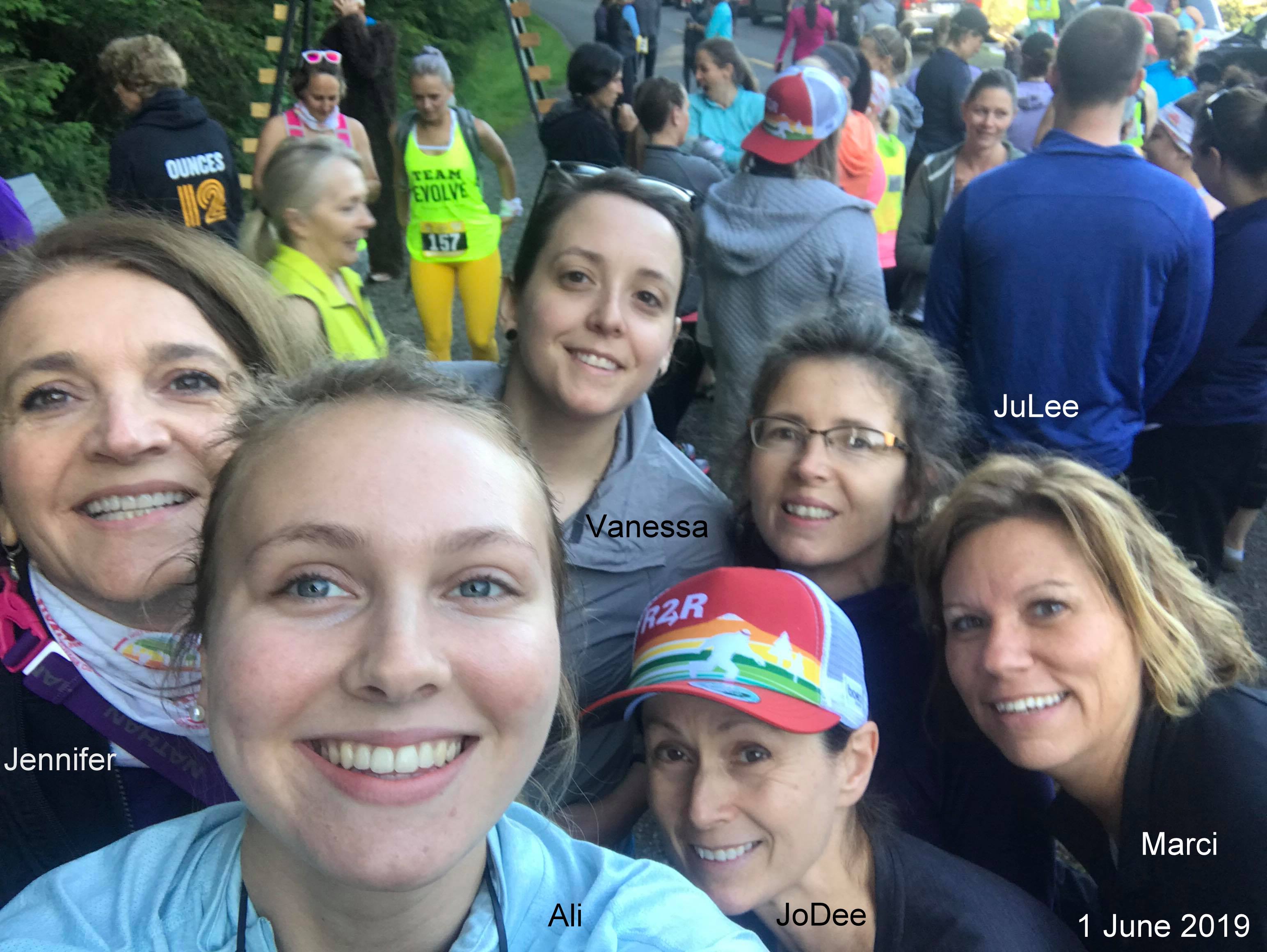
In June of 1985, Jennifer and I ran the Sound to Narrows 12K in Tacoma. We were 21 years old and it was the first road race for both of us. We had met just a year before while living in the same sorority just off of the University of Washington campus while taking the same Metro bus routes to and from our jobs at the Pike Place Market. Running together along Greek Row, Ravenna Boulevard, the Burke-Gilman Trail and around Green Lake solidified our friendship. As for the race, she most remembers the hill at the end and I–that (at my suggestion) we removed the strip along the bottom of our race bibs and discarded them before the race. Back in the day, organizers would thread these strips on a wire in order to help verify the order of the finishing runners, which made it awkward when we arrived without them. A year later, we completed a second race together: the Seattle Torchlight Run For the next three decades, we reconnected as much as possible, which wasn’t often, completed college, grew up, married, and raised families. It took a bit of coaxing to convince Jennifer (my friend of 35 years!) to host a Rainier to Ruston team of six women, but I eventually wore her down. But then, she lives along the course. And the team would include her daughter Ali. My sister JoDee and her daughter Vanessa were the second of two Mother-Daughter Pairs. Marci and I were the Spares.
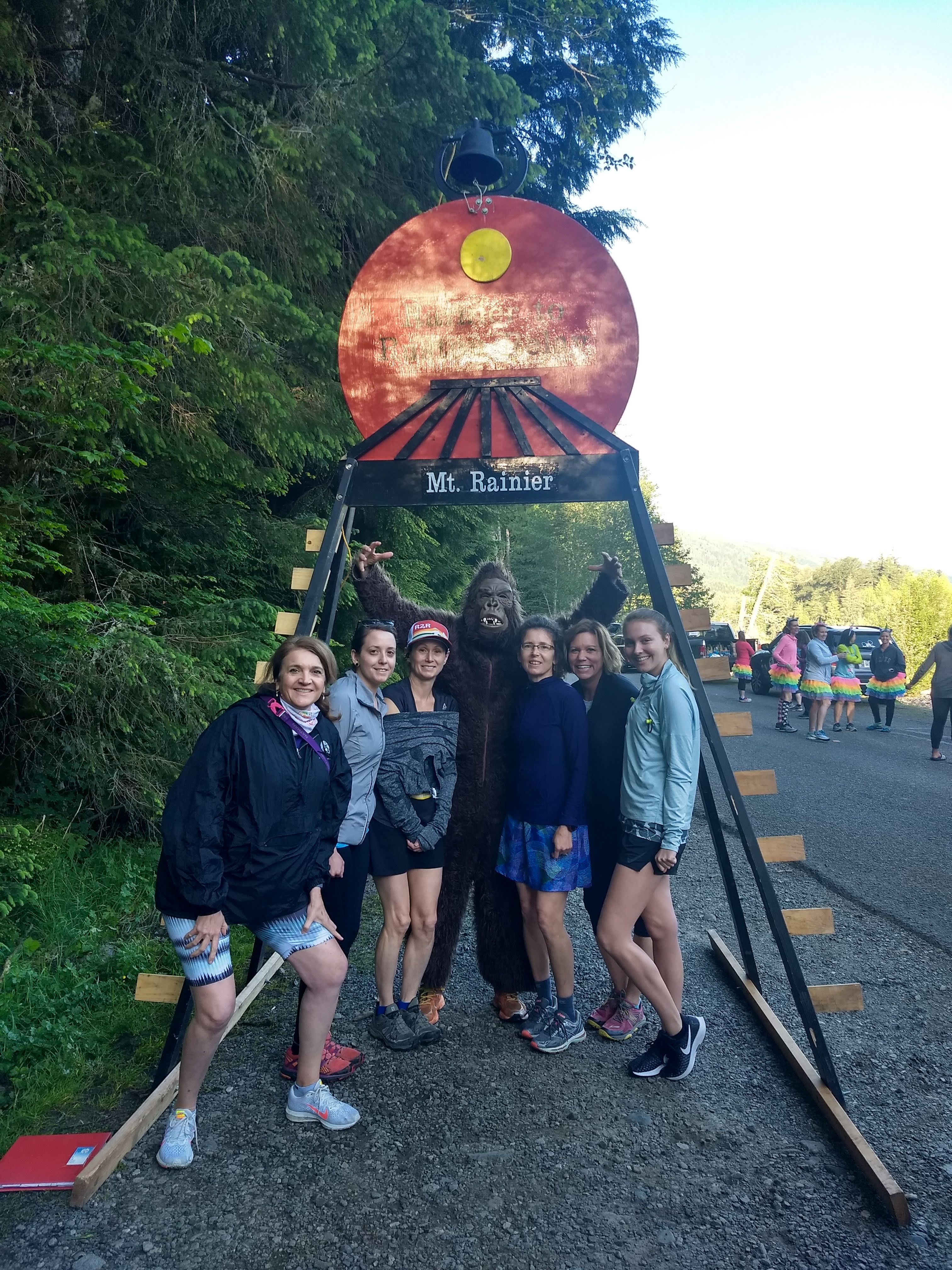
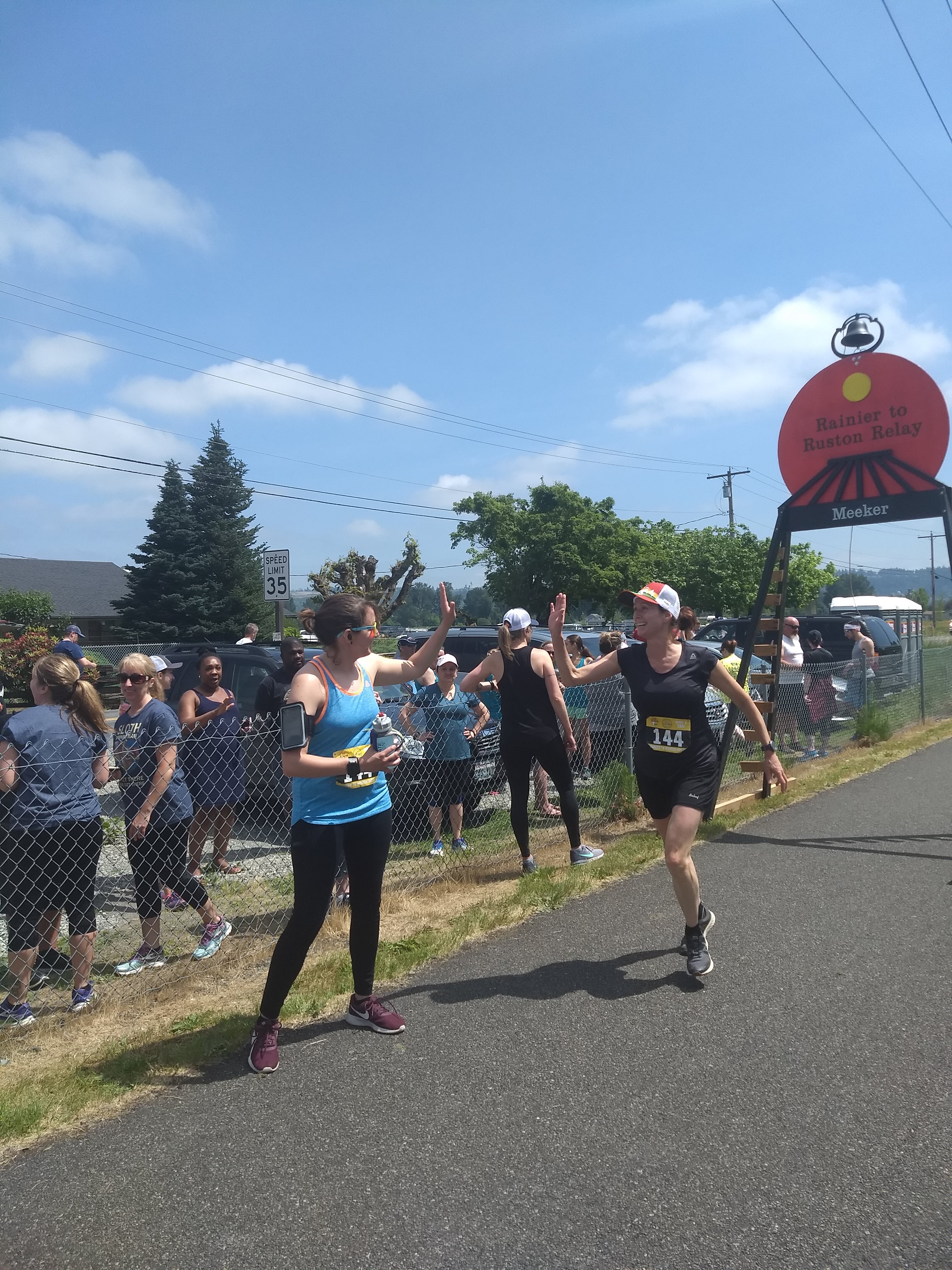
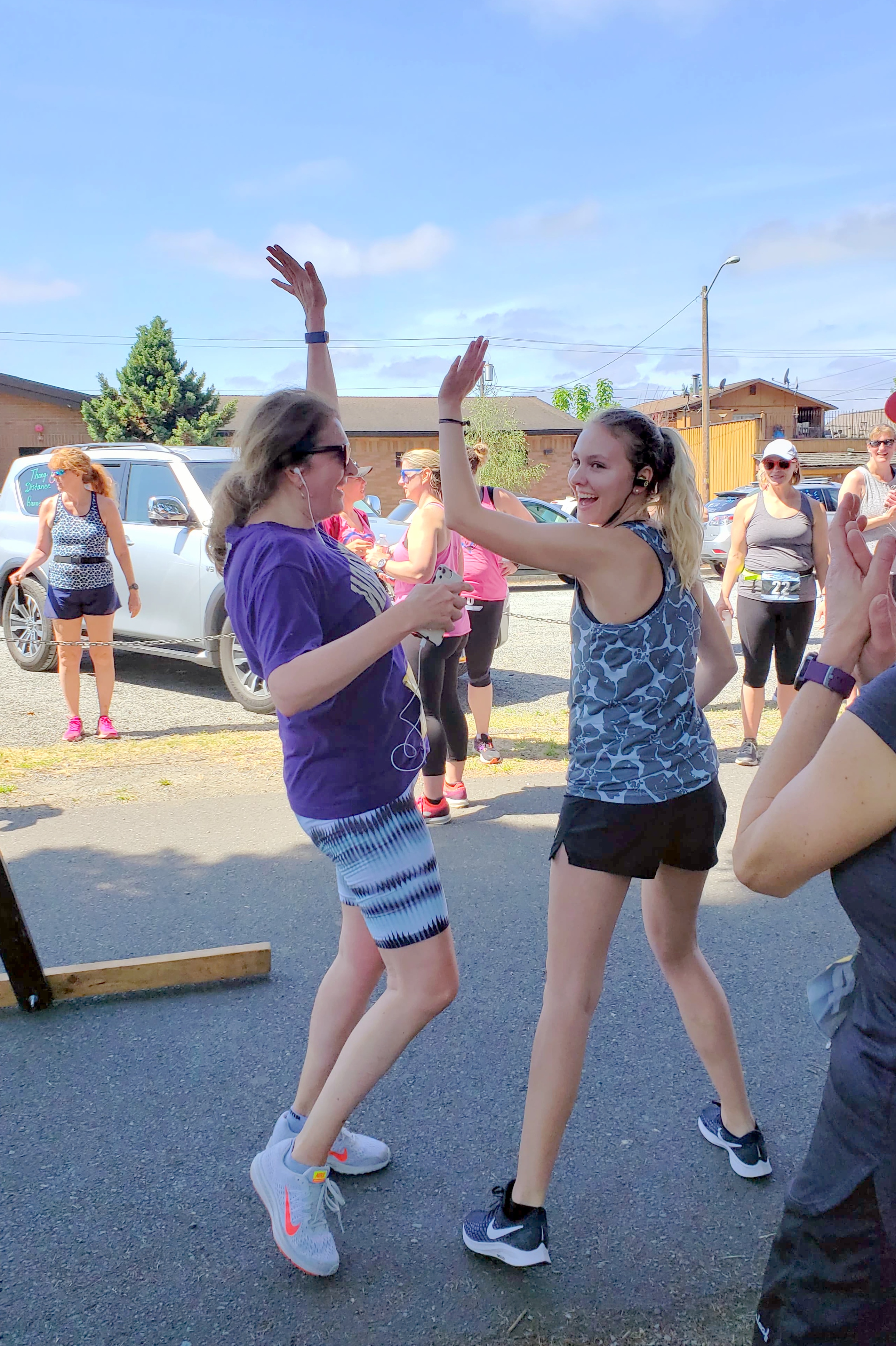
We agreed to sign up for Wave B, which is for teams with an average pace of 10-11 minutes/mile. Race day weather was perfectly sunny and clear with zero precipitation in the forecast. As we drove towards the Carbon River entrance to Mt Rainier National Park, we were nervous. Nowhere did we see a single vehicle decorated or marked in such a way as to suggest they were headed towards R2R. Finally, half an hour before our start time, we noticed several vans decorated with brightly-colored markers and the required participant sign. We breathed a collective sigh of relief, followed the pack, parked and walked towards the first of seven bell standards, which racers pass through at each checkpoint in order to commemorate old railroad. Just before Ali/Runner 1 lined up for the start, Sasquatch agreed to be photographed with our team. The race official, participants, and spectators then counted down the last ten seconds and sent the Wave B teams on their way. Ali ran along the road her entire 4.9-mile leg, then slapped hands with JoDee/Runner 2, who announced after her 6.9-mile, supposedly most difficult and secluded leg, “We have to do this again!” Vanessa/Runner 3, Marci/Runner 4, Me/Runner 5 and Jennifer/Runner 6 ran along 12-foot wide by 25-mile long Foothills Trail, which “sits atop a historic railroad bed and snakes through the river valley southeast of Tacoma.” We cheered each other on while carefully maneuvering our way to and through parking lots at the exchange points.
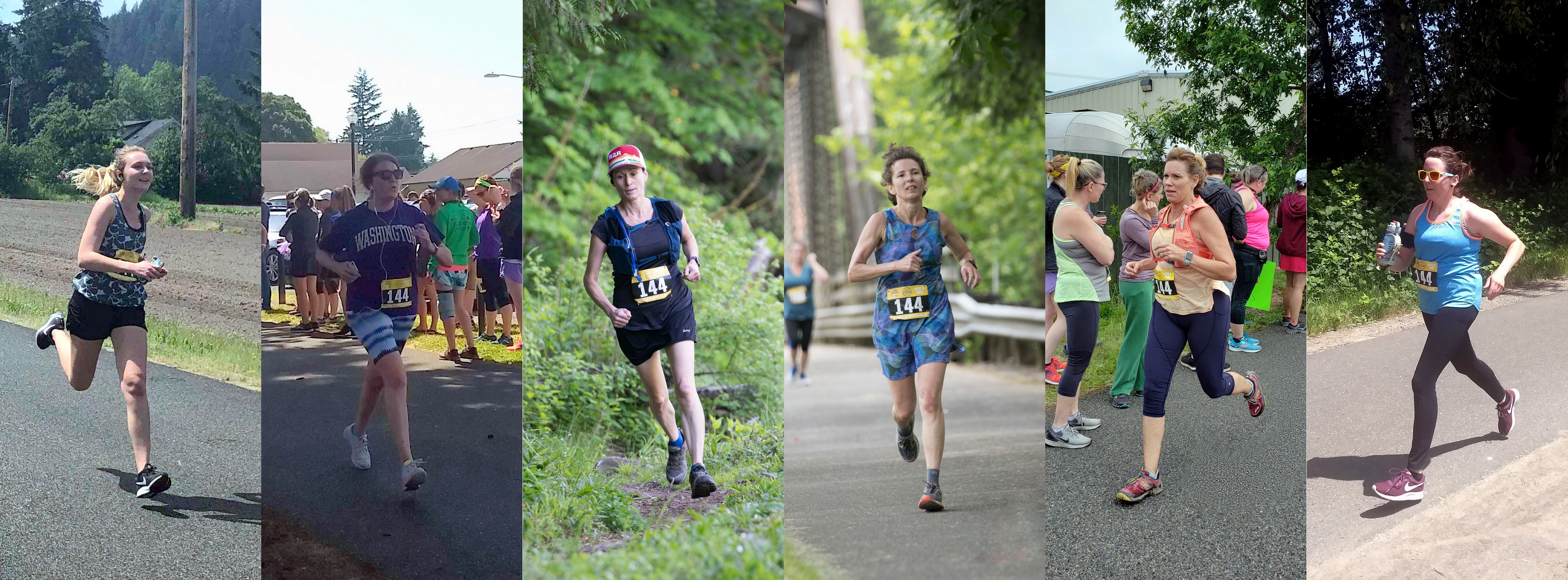
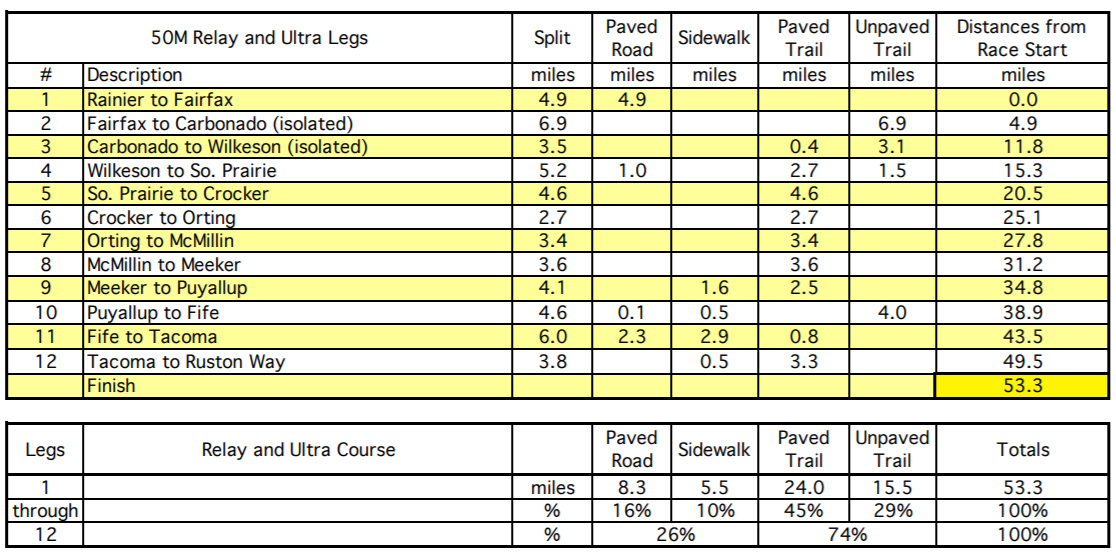
The terrain for the second set of legs included less unpaved trail and more sidewalk and became more of a challenge as the temperature rose. Ali spent her second leg from Orting to McMillin along a stretch of familiar trail-where she’d completed much of her training for the race. JoDee’s Leg 8 followed paved trail and Vanessa’s Leg 9-a mixture of paved trail and sidewalk. Marci’s Leg 10, shown on the Course Conditions table as “Unpaved Trail” and referred to as Fife Beach was, in fact, a four-mile-long stretch of sand so challenging that organizers bribed all of those stuck with the leg with a special please-don’t-complain-how-bad-it-was medal. And in our only hiccup of sorts, while waiting for her to arrive at the Leg 11 Exchange, we first learned of the requirement for the next runner to wear a safety vest for the Fife to Tacoma section. Jennifer/Runner 6 anchor-legged us through the hottest part of the day on a route that alternated between the east and west sides of the highway and ultimately along the waterfront where she dodged runners, walkers, strollers, bikers, and scooters as she made her way to the finish at Marine Park.
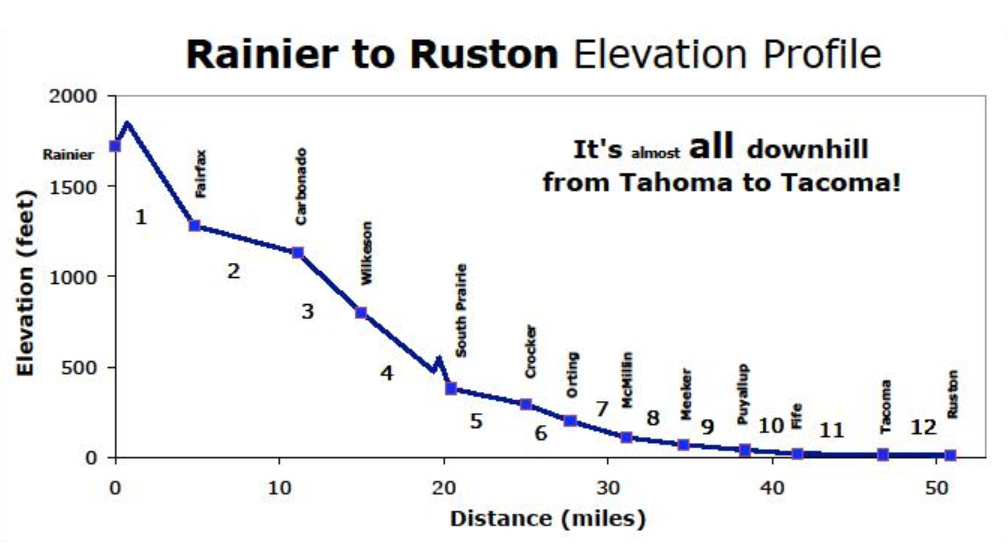
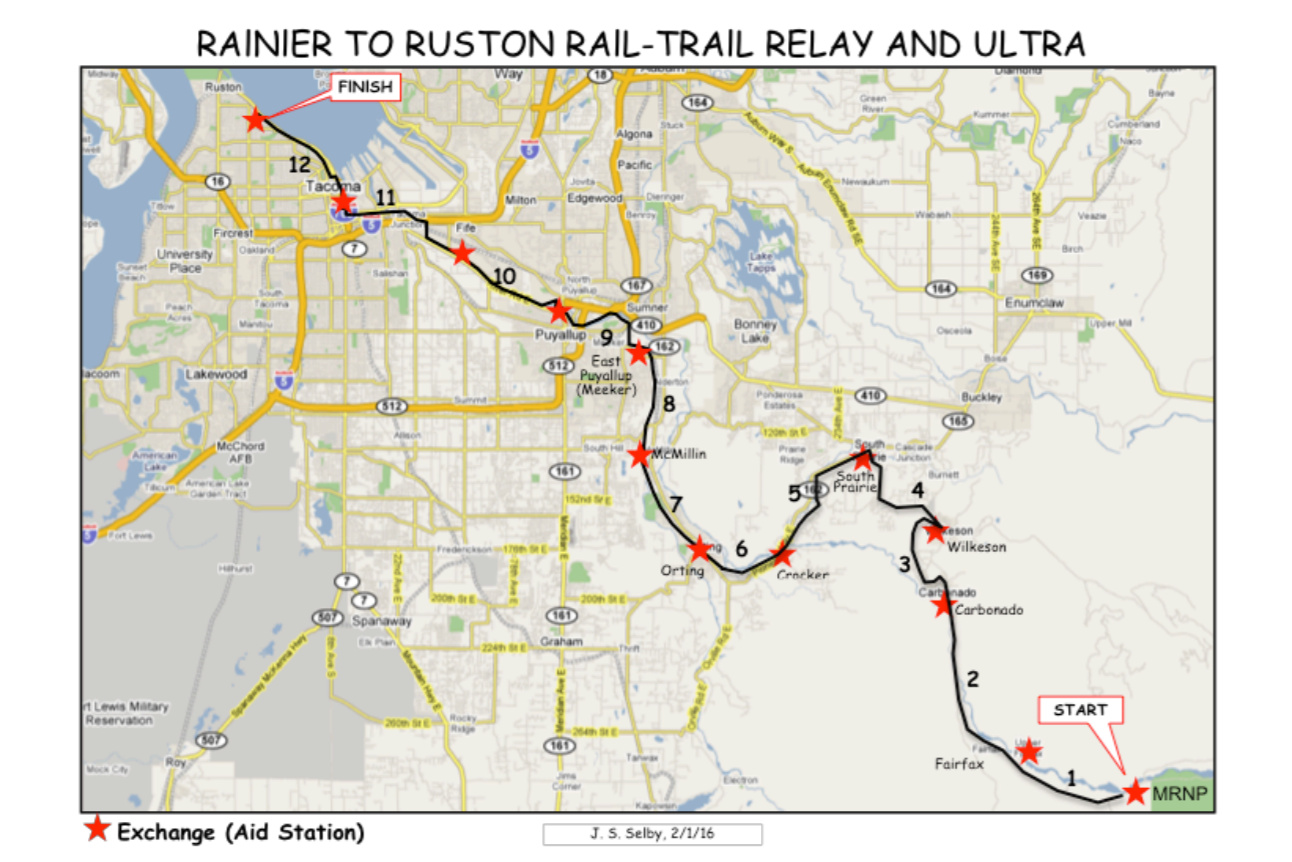
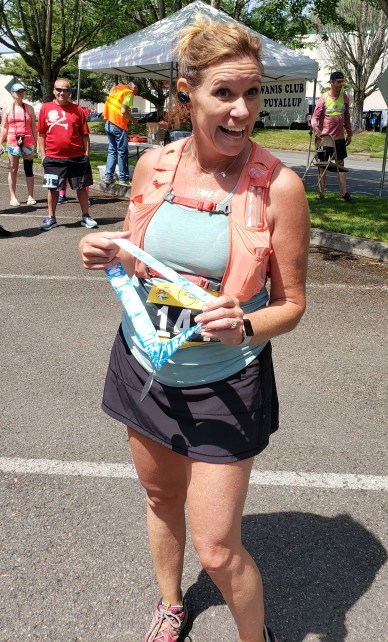
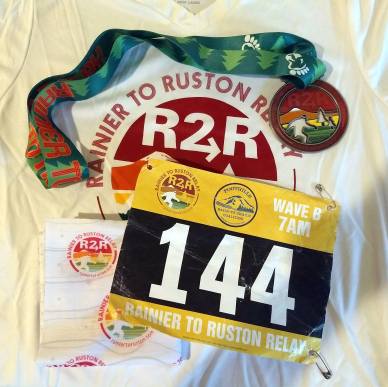
Eight hours and twenty minutes after our 7:00 am start, Runners One through Five joined Jennifer as she crossed the finish line. Mother-Daughter Pairs and Spares finished faster than expected. Our team, made up of two mother-daughter pairs and two spares, ages 25 to 56, placed 9th of 64 teams in the Women’s Open 6-Person Division. Several times during the day, JoDee suggested a return to the Rainier to Ruston in 2020. My thought (as I ran in the heat): too soon. Once done, we posed for a group photo, gained entry into the beer garden for foamy draft beer, then accepted the eagerly-anticipated half of a grilled-cheese sandwich we’d been hearing about all day (way overrated with its American cheese and lack of butter on the bread). But the race was not about the cheese sandwiches. It was about completing a 53-mile quest along a scenic course, uniting as a team of family and friends, old and new, with a common goal of running Rainier to Ruston.
Silence is Golden
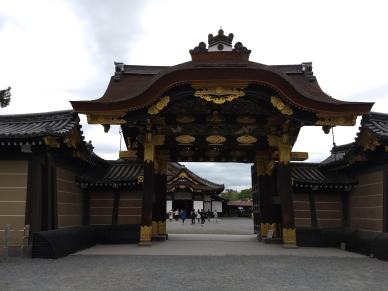
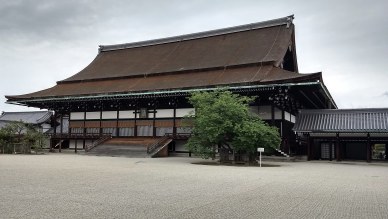
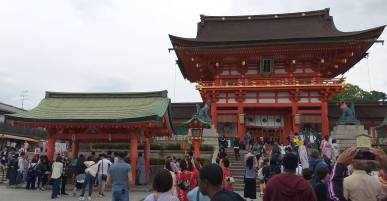
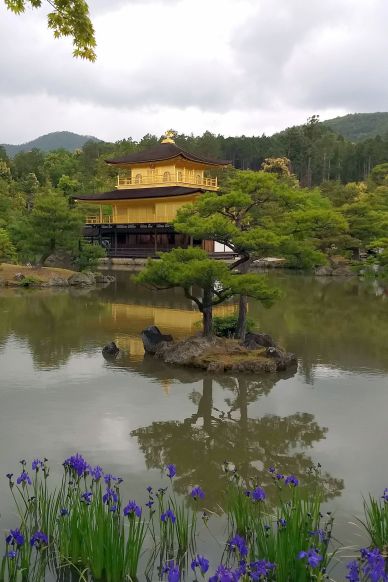
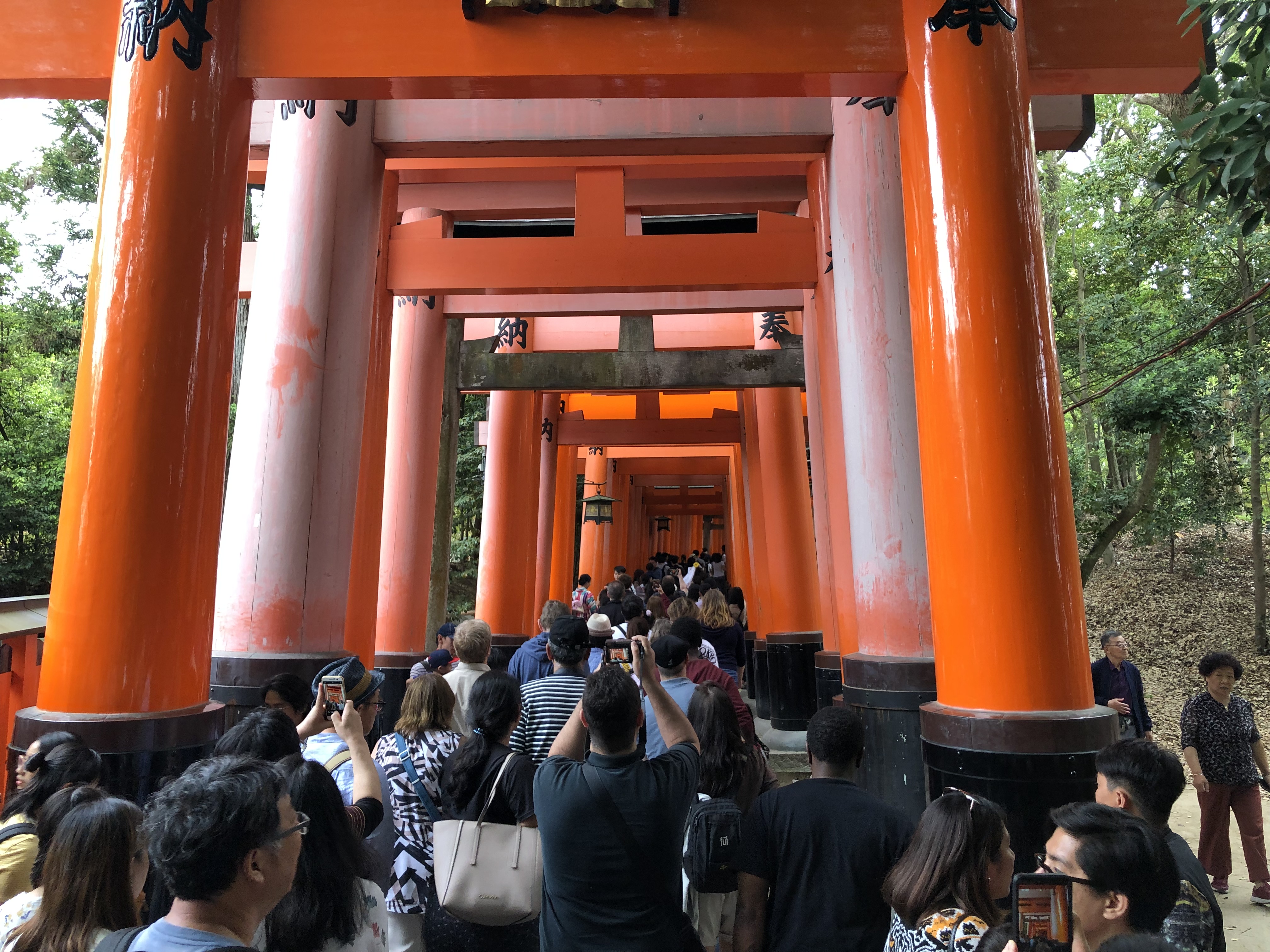
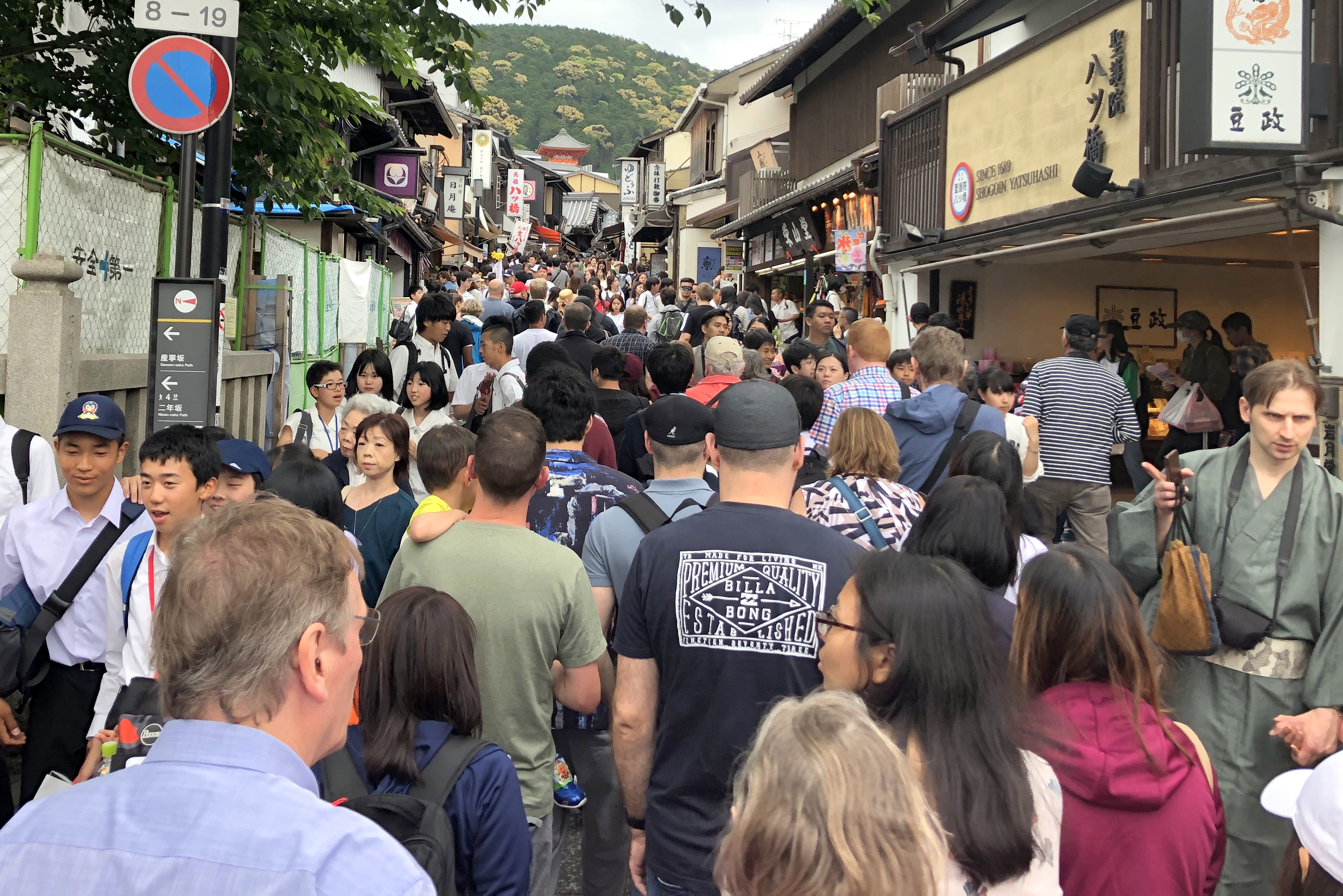
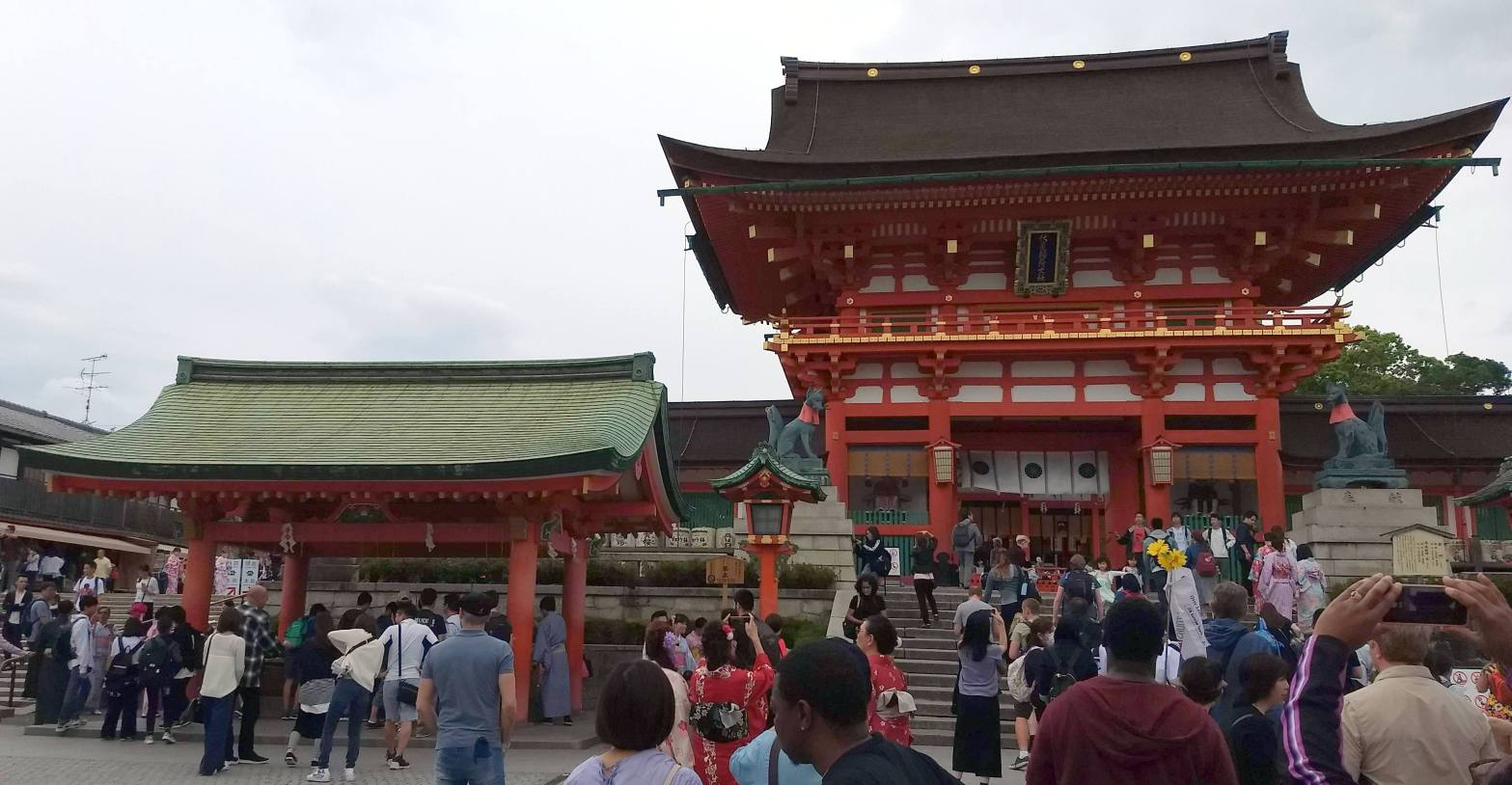
One of [Shusaku] Endō’s most powerful novels, Chimmoku (1966; Silence), is a fictionalized account of Portuguese priests who traveled to Japan and the subsequent slaughter of their Japanese converts. Catholic missionary activities in Japan began in earnest around 1549, but according to OnePeterFive, nearly five hundred years later, [o]nly 1% of the Japanese population, split evenly between Catholics and Protestants along with small pockets of Eastern Orthodoxy, claim to be believers in Christ. In 2017, almost 80 percent of the total population of Japan participated in Shinto practices. Closely behind is Buddhism, with more than 60 percent of the population adhering to its practices. Most Japanese thus practice both religions, so it should come as no surprise that Japan has a wealth of religious architecture – Kyoto alone is estimated to have well over 2,000 temples and shrines. During an eight-hour tour of the Old Capital, we visited several (along with hundreds and hundreds of fellow tourists). Fortunately, the last stop was the best stop: Kiyomizu-dera Temple. The expression “to jump off the porch at Kiyomizu” is the Japanese equivalent of the English expression “to take the plunge.” This refers to an Edo period tradition that held that, if one were to survive jumping from the terrace, one’s wish would be granted. 234 jumps were recorded in the Edo period and of those, [34 died].
Food
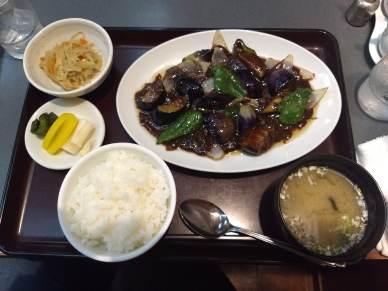

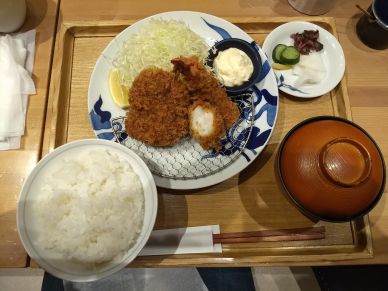
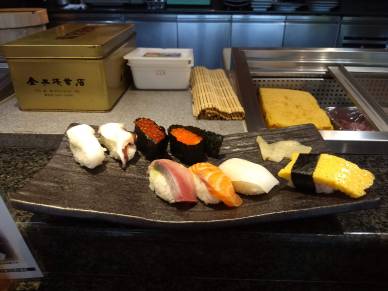
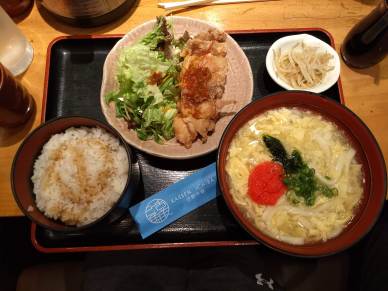

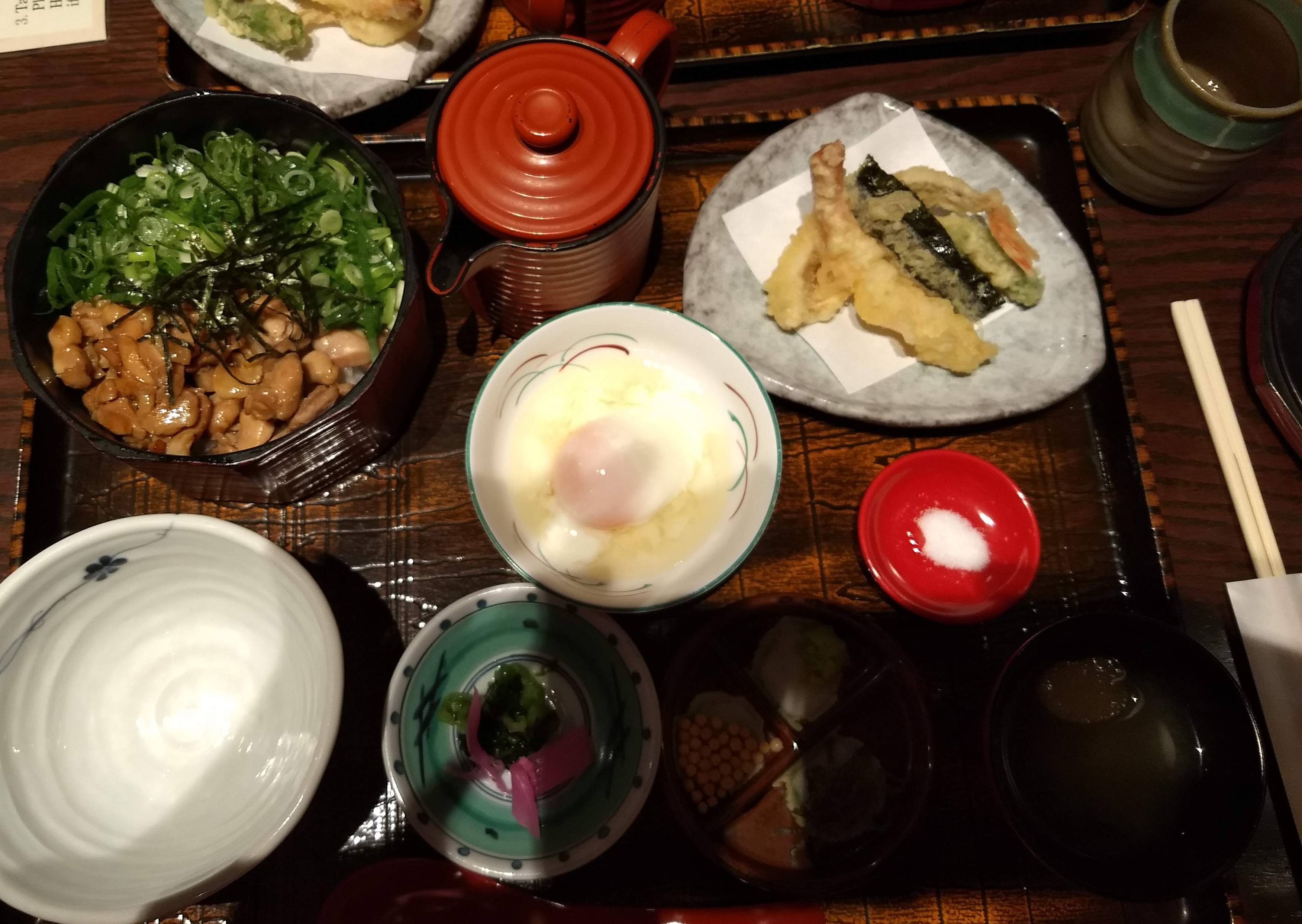
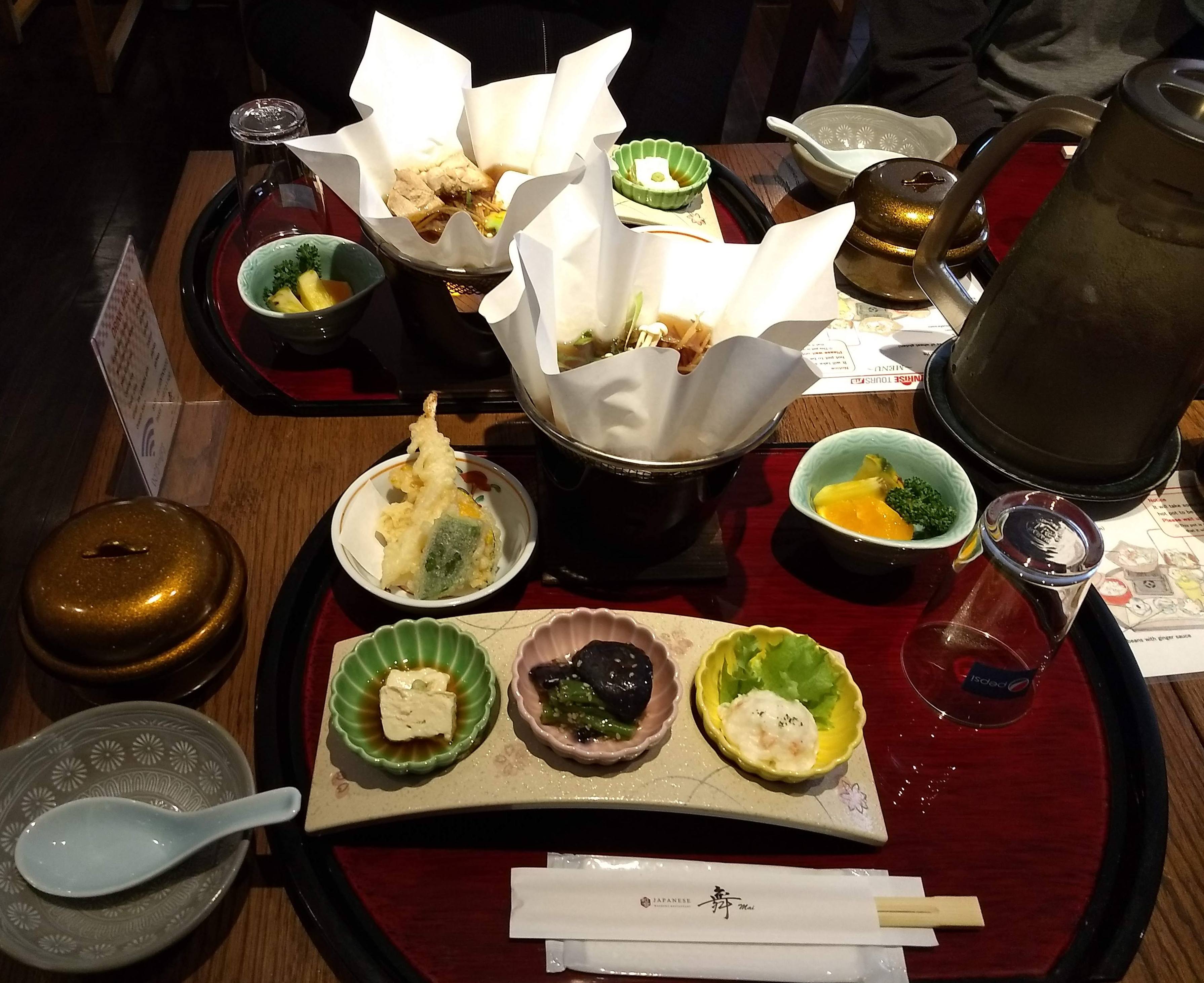
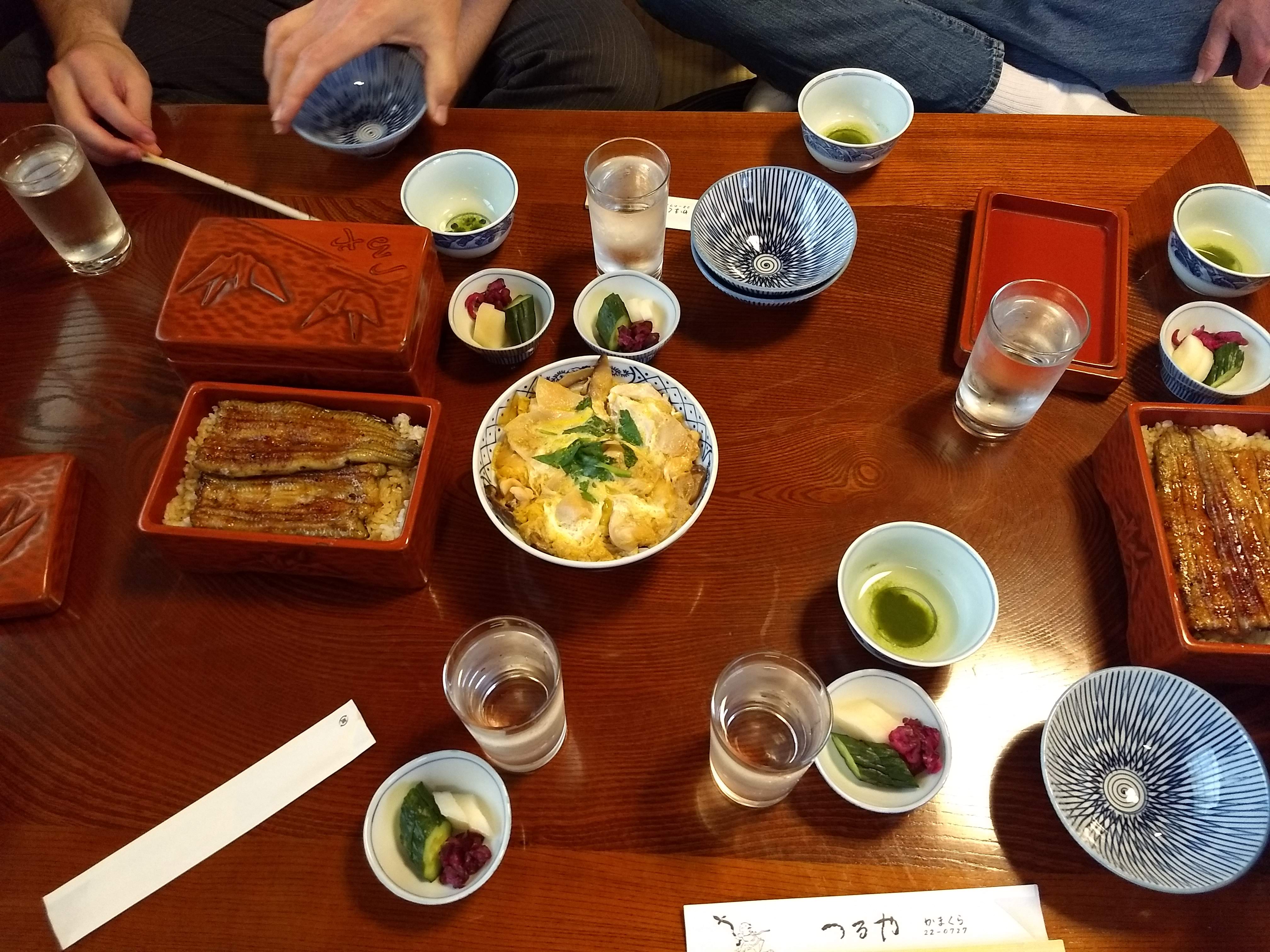
The toughest tuck in for me was sushi, which simply means vinegared rice, but in our case had plenty of raw fish (called sashimi) on top. After scoffing at Americans who live for the stale-by-Japanese-standards products served in the US, I thought that I was ready to return to a food I liked but had been avoiding for years for its comparative staleness. Turns out, I don’t like it. The sushi chef placed an eight-piece plate in front of each of us. I ate the tuna, octopus and sweet omelette, then started feeling queasy at the thought of keeping the super fishy, super squishy bright red salmon eggs and smaller orange-ier, stiffer flying fish eggs. I balked. Stalled. And made eye contact with my husband, who took care of things for me. I left with a sense of shame and a level of respect for those who willingly eat raw fish.
Excuse Me

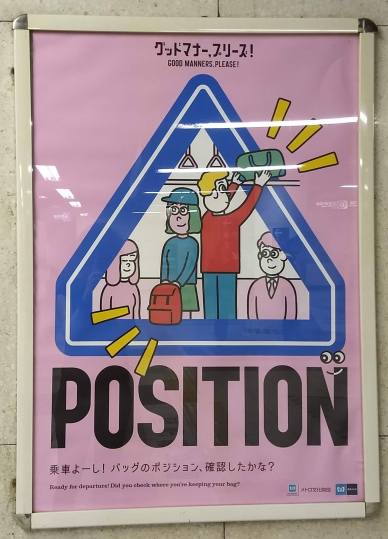
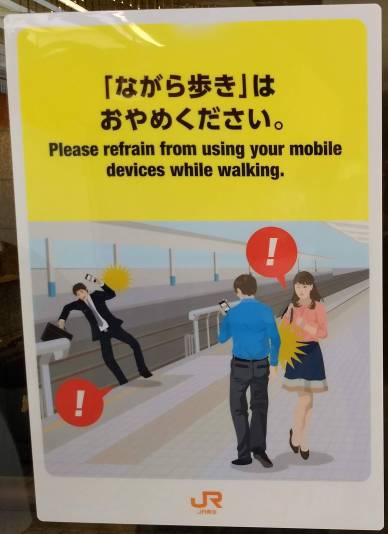
“The Japanese have five different ways to say ‘thank you’ – and every one of them translates literally as resentment, in various degrees,” says Stranger in a Strange Land‘s Jubal Harshaw. I’m not sure whether or not that’s true. In my experience, 3.5 years living outside Tokyo and a recent return trip, the Japanese are quite courteous. Whether that’s due to the conspicuous reminder signs, the accountability of conformity, some sort of deep-seated beliefs, or a combination of all three, I don’t know; however, I loved every polite-person minute of it. We spent hours riding the JR Line and subway trains with hundreds of people, and only twice did I hear a cell phone ring. The level of consideration for others was a refreshing change from the cell phone rudeness often experienced in America.
Immigration

Japan began fingerprinting and photographing foreigners arriving in the country Tuesday [November 20, 2007] under a revised immigration law to keep terrorists out, drawing criticism from rights groups and foreign residents that their data might be abused. U.S. airports (TSA) use biometric data, but only to match a person’s face with the photo on his or her passport. When we arrived in May of 2019, a dozen years after the implementation of the policy, being forced to provide my fingerprints came as a surprise. But then, Japan is a homogenous country (98.5% of its inhabitants are of Japanese ethnicity). Only recently, Japan’s parliament has approved a controversial new law allowing hundreds of thousands of foreigners into the country to ease labour shortages. They are also reluctant to accept refugees. In Germany and Canada around 40% of applications for asylum are approved, in Britain more than 30%. But in Japan the number is 0.2%. Both the US and Japan make the list of the 5 Hardest Countries for Getting Citizenship, but a comparison of the per capita immigration rate of the two countries shows the disparity between the two countries, [f]rom 2007-2012, with a population of about 314 million, the US accepted about five million immigrants per year (15.94 immigrants/1,000 inhabitants) while Japan, with a population of about 127.6 million, accepted about 350,000 immigrants per year (2.74 immigrants/1,000 inhabitants).
Do you speak English?

The Japanese language consists of about 50,000 kanji characters, plus 46 hiragana, literally “ordinary” or “simple” kana and 46 katakana, “fragmentary kana,” which are used primarily for foreign words and names, loanwords and onomatopoeia. Although there are plenty of places where you will find information (like the rail system) printed in English (plus Chinese and Korean) it’s useful and polite to learn some of the language before you go. Because most of us don’t understand the meaning of Japanese names, we find them difficult to remember; however, they are often quite simple. Let’s talk about Japanese car brands. Nissan means “sun”+”production,” in other words, “made in Japan;” Mitsubishi means “three”+”diamonds;” and Mazda=Matsuda and means “pine”+”field”=”field of pines.” While traveling, my family stuck with one main word, arigato “thank you,” while I re-learned hiragana, katakana, a dozen kanji, and about twenty words and phrases, which was adequate for our needs.
What Would You Do?
In 2018, forty-two percent of Americans owned passports and that number has risen steadily. As a person who has lived in several places throughout the United States and traveled outside of it several times, I think that doing so has not only helped broaden my horizons but also better appreciate “my” country more than if I had spent my entire life in the same place. International travel reinforces what I’ve always believed: the U.S. is the best country in the world. I ask myself (and my kids after our recent return from Japan), if you were given the chance to live in Japan and enough money so that you did not have to work, and your family and friends could visit you there, but you could never return to the U.S., would you do it? Their answers were easy to decide and the same as mine.

The dreaded line that said You’ve Been Dumped From Vine arrived with as little fanfare as had the invitation. Twelve years ago, Amazon rolled out a program that allowed select persons to receive free stuff in exchange for reviews. By the time I got my invite, I’d been snobbishly submitting book-reviews-only for a long time, simply because doing so forced me to pay better attention while reading.
The Amazon Vine program has changed over the years. Nowadays, each person may view his or her Queue at any time and choose any number of items; however, he or she is must submit a review on every single item (at his or her leisure). Amazon tracks the taxable value (typically less than the sale price, occasionally more) and provides a FORM 1099-MISC at the end of the year with a line by line account of taxable income for each item. The checking of one’s Vine Queue offerings feels a bit like waking up on Christmas morning as a kid. And you can do it whenever you want. The end was bittersweet. No longer would I get free stuff. Then again, no longer would I accumulate occasional items for which I had little use. And I’d have more time to spend on other interests. As with most Vine-related things, actions (like getting kicked) aren’t accompanied by an explanation, so I wasn’t exactly sure why; however, just before it happened, a strange snafu had Amazon freezing my account and removing my reviews. Once fixed, they asked me back. Of course, I accepted without hesitation, which means I must not be as much of a minimalist as I think I am.
Before you turn green, you should note a few things:
Items offered in each Vine reviewer’s Queue vary based on a bunch of things that remain secret. All Vine Voices are not equal–sometimes when I choose an item from my queue, I can see that fellow Vine Voices have already: ordered, received, tried out and submitted a review on the item. This leads me to believe that we are rated, reviewed and/or ranked in some way. And I’m not very high up. In addition, even though Amazon does ask for Vine reviewers’ clothing and shoe size as well as hobbies and activities, and the company may occasionally offer items that are exactly a reviewer’s thing, more often than not, it’s like being in kindergarten: You get what you get and you don’t throw a fit, from XS-XXL and for ages 1-100. My Queue typically contains about 60 items, of which 5-10% are things that might fit and/or be of interest to me.

All this seemed much more fun before I read Marie Kondo’s The Life-Changing Magic of Tidying Up: The Japanese Art of Decluttering and Organizing, which helped me better appreciate (and treat) my socks, my home, and my library, which I put through a purge of epic proportions. I’ve always been an anti-pack-rat, but Ms. Kondo’s suggestions led me down an even more minimalistic path. With her encouragement, I let go of about 800 books, every trophy I ever received (after photographing the entire lot), a limited number of photographs and a whole bunch of clothes that still fit that I rarely wore. I didn’t follow her signature statement of advice (p 41), ‘…the best way to choose what to keep and what to throw away is to take each item in one’s hand and ask: “Does this spark joy?” If it does, keep it. If not, dispose of it,’ to the letter, but I did get rid of a bunch of stuff. And after doing so, it became harder to accept new stuff, except when it’s good stuff.

Over the years, I’ve acquired some not so great items from Amazon Vine, primarily clothes that turned out not to fit quite right, and some absolutely amazing things, like running apparel, gear and shoes; an awesome computer monitor; and about a dozen pre-release books that I loved. Since being reinstated as a Vine reviewer armed with an understanding of the KonMari Method, I find it easier to resist items that the old me would have accepted, which is a good thing.
How might you join the Amazon Vine Program? That’s another mystery, “At this time, participation in Amazon Vine is limited to select customers who have been invited to join the program.” As for me, I’ll continue to try to walk the line between accepting free stuff and tidying up…until they dump me permanently.
On the surface, it appears that Wake County Public School System (WCPSS) did everything right in their high school mathematics curriculum adoption process. So how did they end up with Mathematics Vision Project (MVP), and why does this “free” curriculum cost so much?

Hire consultants with a discovery-style teaching philosophy and you’ll end up with a discovery-style curriculum
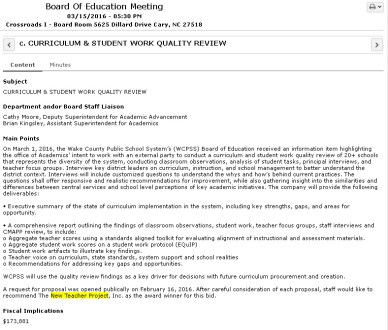
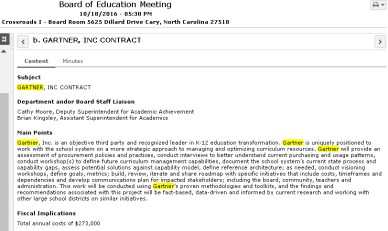
At the March 15, 2016, Wake County Board of Education Meeting (BoEM), the Board contracted with TNTP to “…conduct a curriculum and student work quality review of 20+ schools that represents the diversity of the system, conducting classroom observations, analysis of student tasks, principal interviews, and teacher focus groups,” and report their findings. This line from the non-profit’s proposal all but guaranteed that the District would end up with a curriculum that requires discovery-style teaching and learning, “We gather data on whether students have the opportunity to discuss mathematical thinking with their peers and teacher…[and] assess the extent to which students, rather than the teacher, are responsible for questioning and for explaining mathematical thinking.” Seven months later, at the October 18, 2016, BoEM, the District contracted with Gartner, Inc., “to work with the school system on a more strategic approach to managing and optimizing curriculum resources.” Nothing in the WCPSS’s Board documents indicates how the list of prospective products was narrowed down, but a slide from TNTP’s November 14, 2016, Student Achievement Committee Meeting (SACM) presentation Our Next Steps With Gartner reads, ‘Strategically position WCPSS to manage and optimize curriculum resources that cultivate a “marketplace” of content and resources.’ Sounds like a collection of Open Educational Resources (OERs) to me.




Big bad publishing company’s product competes against a handful of idealistic educators’ “free” open educational resources.
A Power Point Presentation from the April 17, 2017, SACM comparing the two shows the bias against Publisher Content, “It is estimated the top five textbook publishers control 80% of the market, and all 5 have revenues over $1B” while describing OERs as “…teaching, learning and research resources that reside in the public domain or have been released under an intellectual property license that permits their free use and re-purposing by others,” and, “Cost reductions in the purchase of [OER] instructional materials so that dollars can be dedicated to implementation.” In a May 3, 2017, News&Observer article (and several since), T. Keung Hui writes that MVP is a “nonprofit,” adding an ethical edge where none exists: MVP is an LLC. And Travis Lemon, one of its co-creators, inflated data a during his product pitch to a select group of District staff and community members.
Exclude the negatives and overstate the positives to win
Near the end of February of 2017, Wake County gave stakeholders the opportunity to check out the two short-listed Mathematics 1, 2 & 3 curriculums, Core-Plus Mathematics and Mathematics Vision Project. Ultimately, 496 teachers, 71 principals, and 58 community members provided feedback.
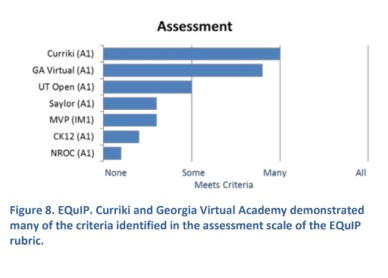
Mr. Lemon’s presentation included several graphs from a 2013 Washington State review of OER Mathematics 1 curriculum review that rated MVP high in several categories, including Alignment, Rigor & Balance, and I Would Use This in My Classroom. Of course, he left out those categories in which MVP performed poorly, including Assessment–teachers must create their own, Quality of Explanation of Subject Matter–rated between Very Weak and Limited and ranked last, and it didn’t even garner a rating in Quality of Technological Interactivity–because the student version of the curriculum consists simply of a collection of PDF-files.


Travis Lemon also shared a graphic that showed significant College and Career Ready proficiency gains on the Mathematics 1 End of Course exam in the Chapel Hill/Carborro City School District after their first year of MVP implementation; however, scores used for the pre-implementation year were incorrect, which inflated the improvement. Similarly, multi-year data for CHCC shows that the relative improvement in proficiency was no better than for (pre-MVP) WCPSS over the same span and less than relative improvement in NC statewide. The same slide states, “Take the opportunity to visit with two Chapel Hill Math Teachers while you are exploring the MVP materials. They are here tonight!” Let’s hope they weren’t paid.
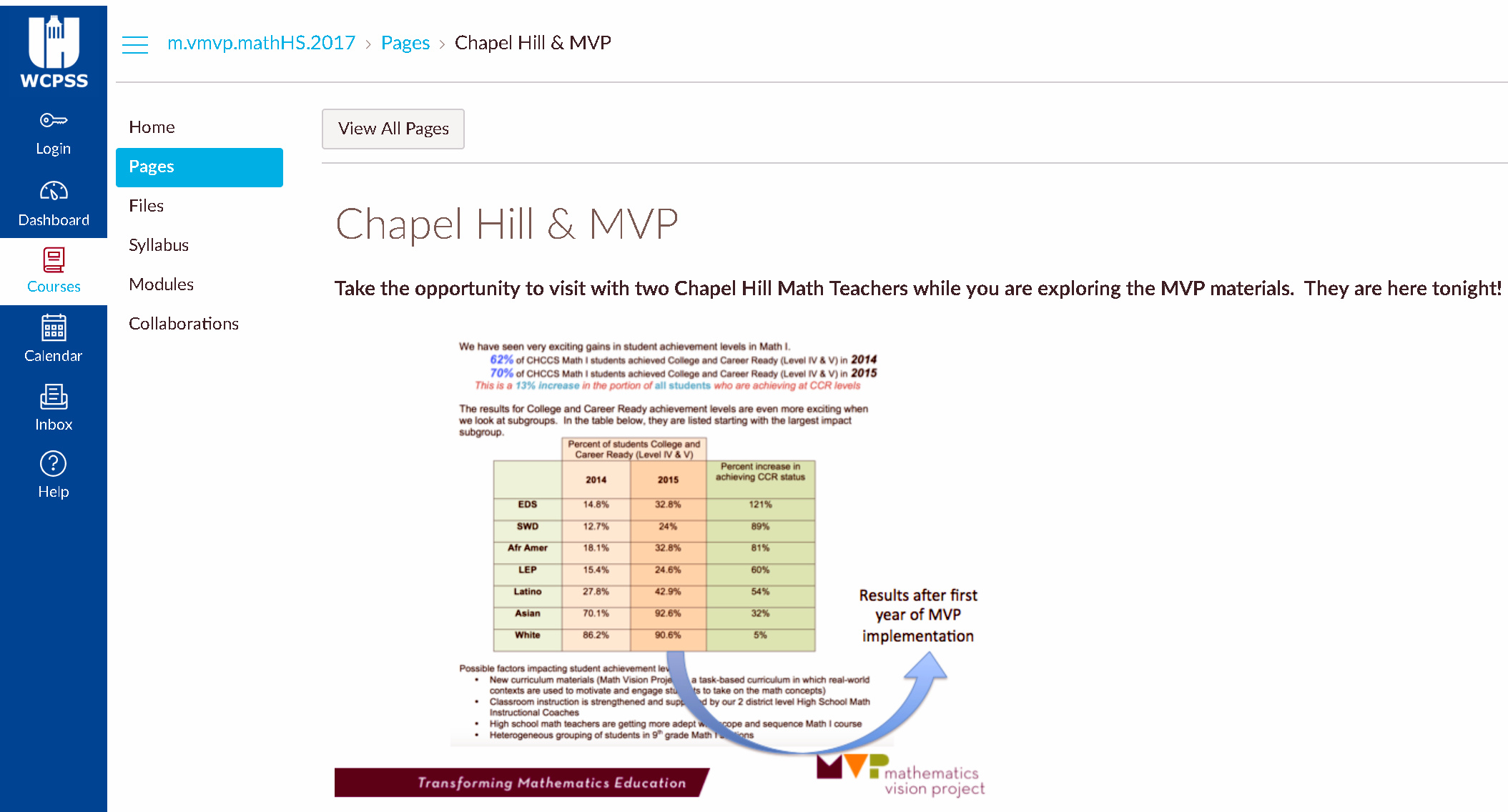
Lost in this Dishonest David versus Greedy Goliath contest: Which one would better suit WCPSS students and staff?
The student pages for the introduction to linear equations for MVP and Core-Plus Mathematics provide an example of the difference in approaches. The OER approach is very different, “In the MVP classroom the teacher launches a rich task and then through “teacher moves” encourages students to explore, question, ponder, discuss their ideas and listen to the ideas of their classmates.”
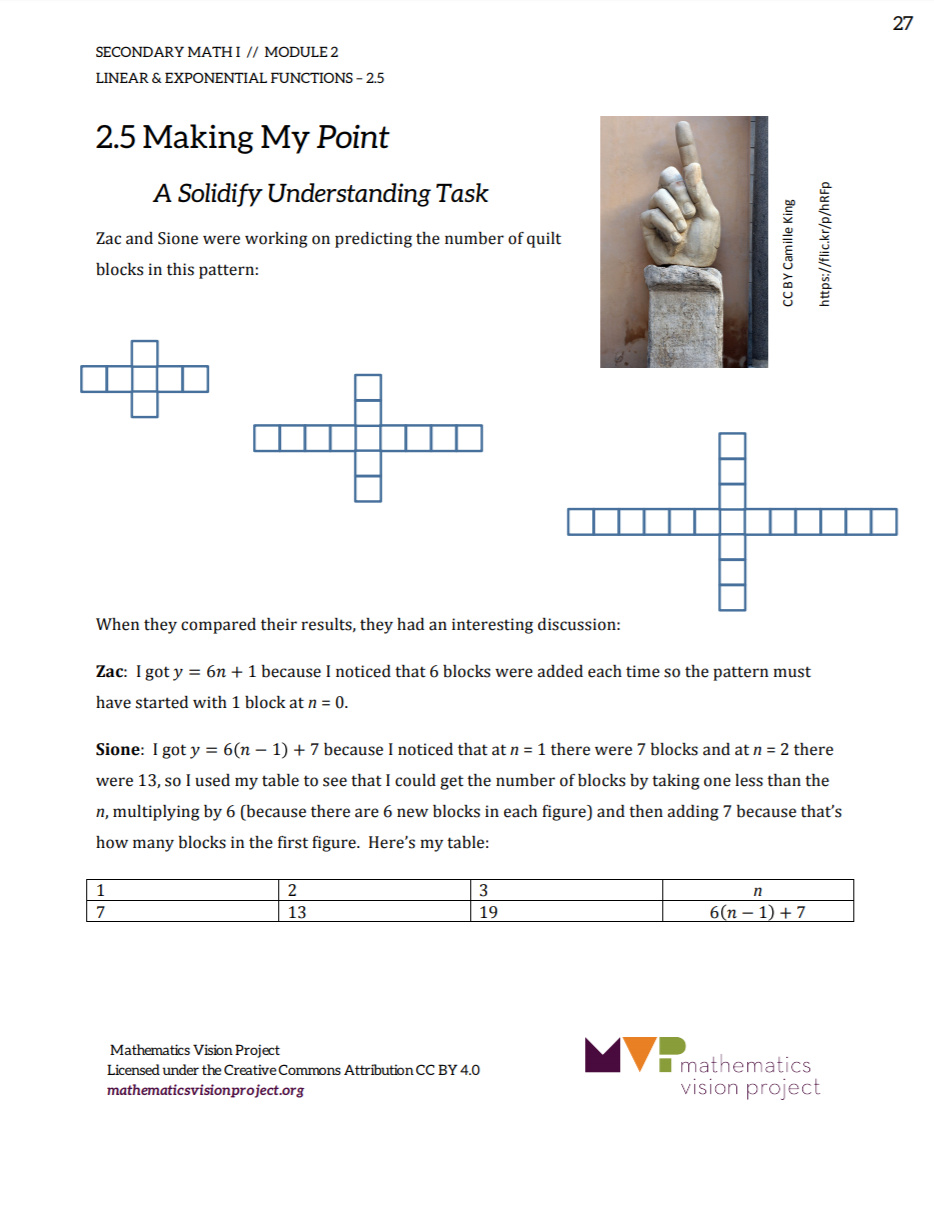

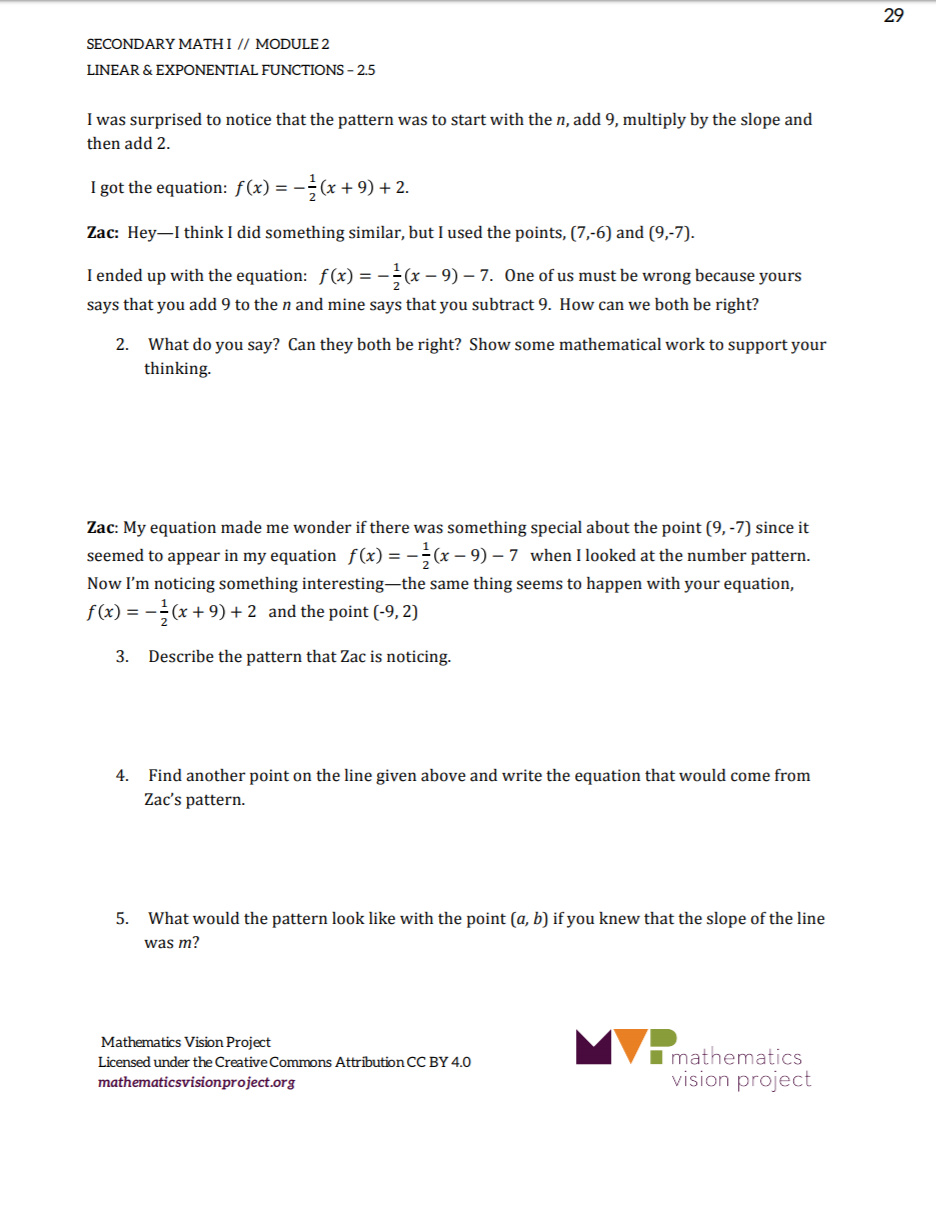
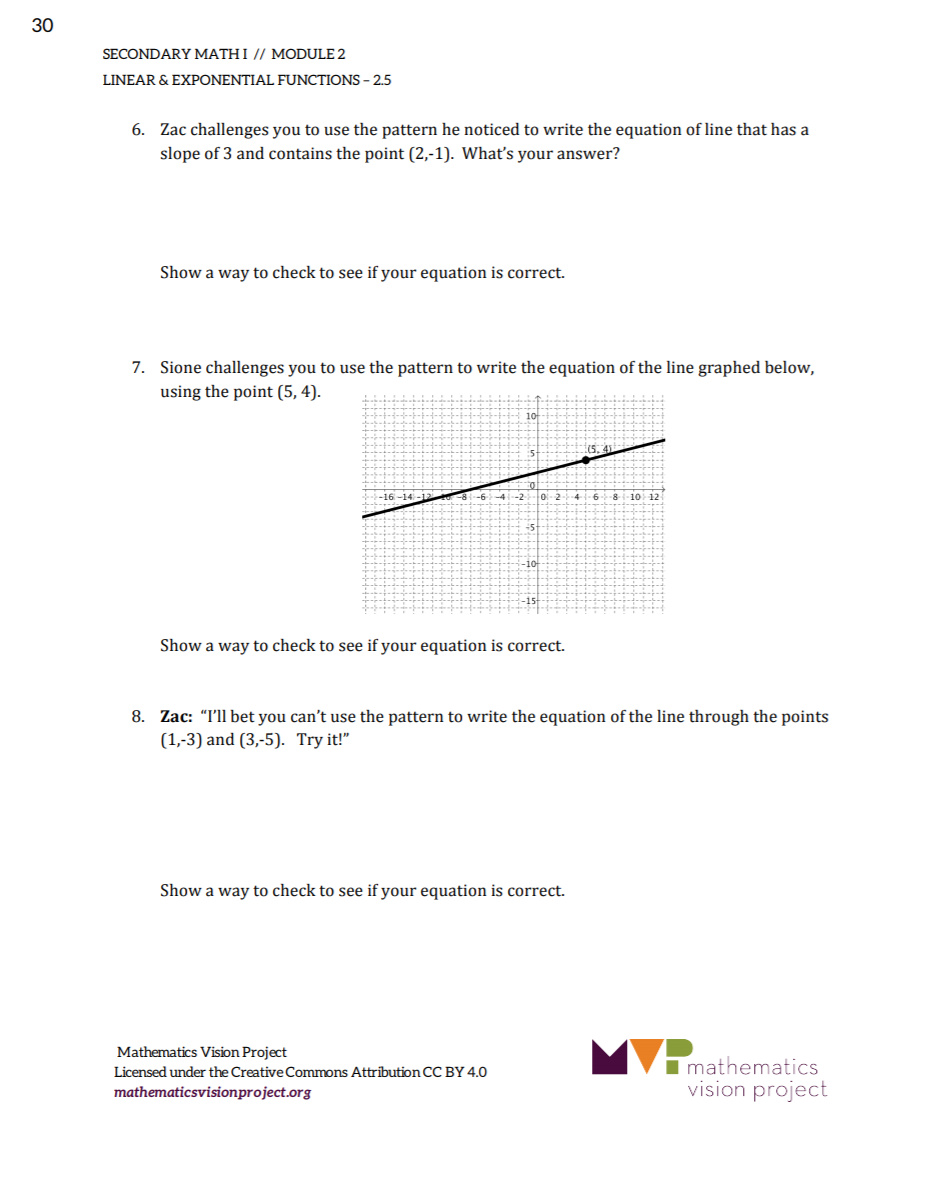








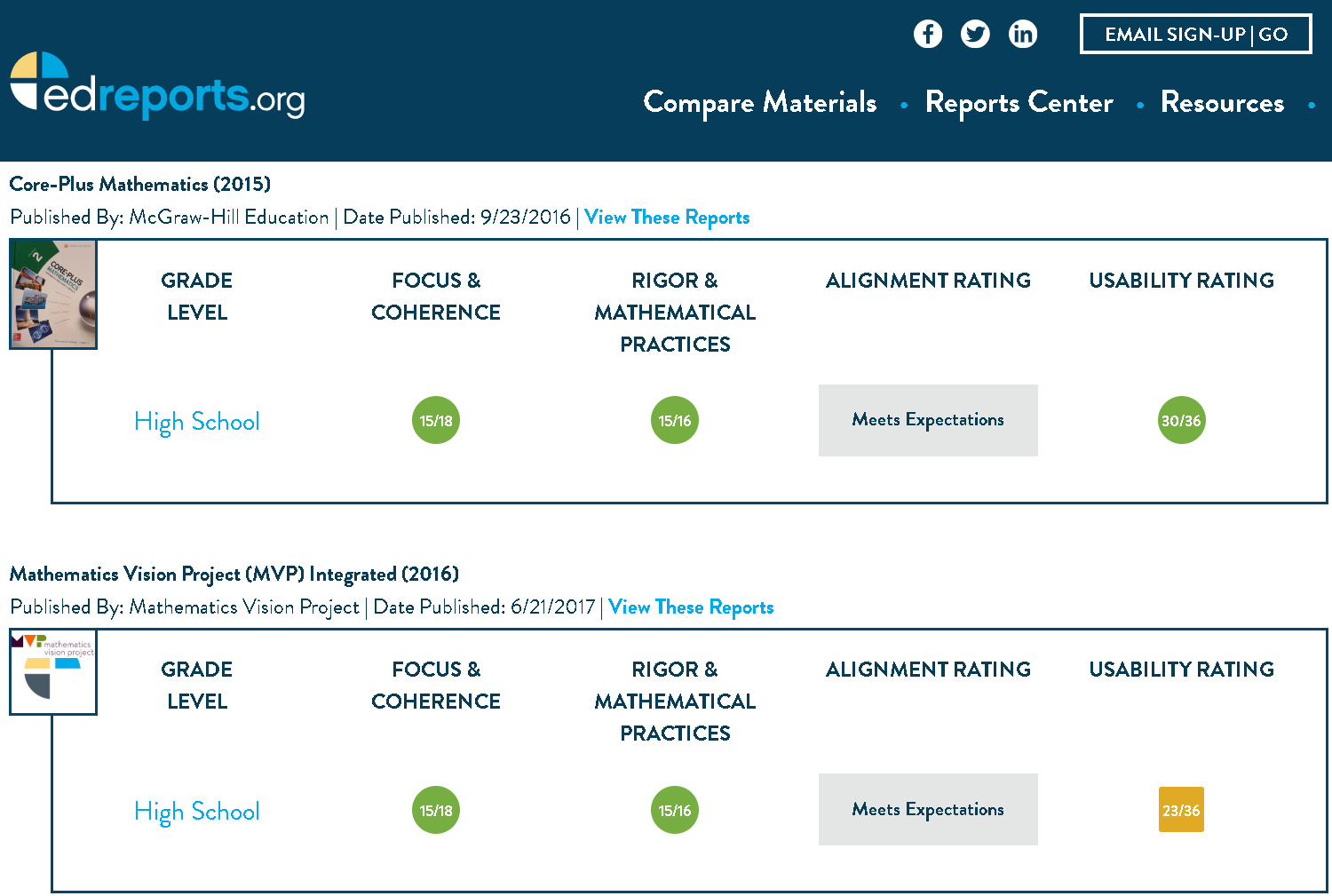
EdReports.org, “an independent nonprofit designed to improve education by providing reviews of K-12 instructional materials,” includes ratings for WCPSS’s two finalists. They scored dead even in both the Focus & Coherence and Rigor & Mathematical Practices categories, but in Usability, Core-Plus scored 30/36 (equivalent to 83%), while MVP scored 23/36 (64%). In spite of all this, WCPSS chose MVP over Core-Plus.
You get what you pay for. Then you pay for what you get (for “free”).
In preparation for the 2017-2018 rollout of the MVP Mathematics 1 curriculum, the WCPSS Board authorized $255,550 for staff training, $40,050 for Teacher Access to digital material, and $51,350 for Student Video access. At the June 5, 2018, BoEM following the first year of implementation, the Board authorized additional funding for the next three years that, when combined, totals over a million dollars in MVP-related costs. That’s in addition to $448,881 paid to consultants TNTP and Gartner. And it doesn’t include a dime to print the large PDF files that make up the Student (and Teacher) Editions. Mathematics 1 is 512 pages long, 2 is 399, and 3 is 465. The cost (at 4 cents per copy) to print one set of each for all 14,305 students per grade (512+399+465)*0.04*14,305=$787,347, include teacher copies and replacement costs, so say at least a million. Ignoring inflation, the projected cost per year for ongoing access to content for teachers and videos for students is $200,000, that’s $1,200,000 for years 6-10. Then add at least $200,000 in additional training. So, the rough cost for this “free” curriculum over 10 years is at least $3,500,000.

Once rolled out, it didn’t take long for Wake County students and their parents to notice big differences in MVP’s teaching and learning techniques versus what they were used to. In New Common Core materials are changing the way kids learn math in Wake County teacher Stephanie Herndon, “tells students their answer is OK even if it’s wrong as long as they can explain and justify their response to show they have deep understanding of the concept.” And explains how MVP requires a different approach, “Instead of me saying, ‘Here is a linear equation: It’s y=mx+b,’ it’s much more, ‘Let’s get to this equation,’ ” Math instruction has moved towards “real world” situations, which is good, but being okay with wrong math answers in the real world is bad.
You can fool all the parents some of the time, and some of the parents all the time, but you cannot fool all the parents all the time…especially Wake County Public School System parents.
In Wake parents concerned about new math curriculum in schools, “Drew Cook, assistant superintendent for Academics for the Wake County Public School System, says the system has only received a few complaints about MVP math since last year and there doesn’t seem to be a system-wide problem.” If so, then how did Parents of MVP Math Students in WCPSS’s Facebook page attract nearly 600 followers in two month’s time? And how did the same group’s Fight MVP in Wake County, NC, School System GoFundMe campaign page exceed its $1,500 fundraising goal within one day?
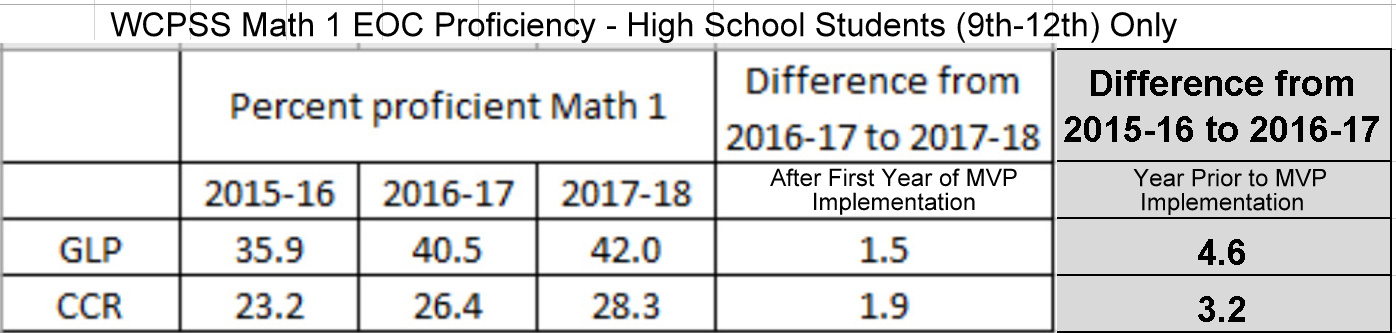
The author of Wake changed how it teaches high school math. Some parents say it’s hurting students quotes Michelle Tucker, Wake’s director of K-12 math, as she discusses student proficiency, ‘Typically…scores drop when a new curriculum is used…Wake’s passing rate on the state’s end-of-course Math 1 test went up last school year.’ Initial Data – Math EOC Results reported during the November 19, 2018, SACM indicated Grade Level Proficiency (GLP) (Levels 3, 4, 5) increased by 1.5% and Career & College Ready (CCR) (Levels 4, 5) proficiency increased by 1.9% after the first year of MVP implementation, but scores rose statewide. WCPSS parent Blain Dillard requested and obtained the data behind these claims, which include only high school students (9th-12th) who sat for the Math EOC 1 during the specified year.
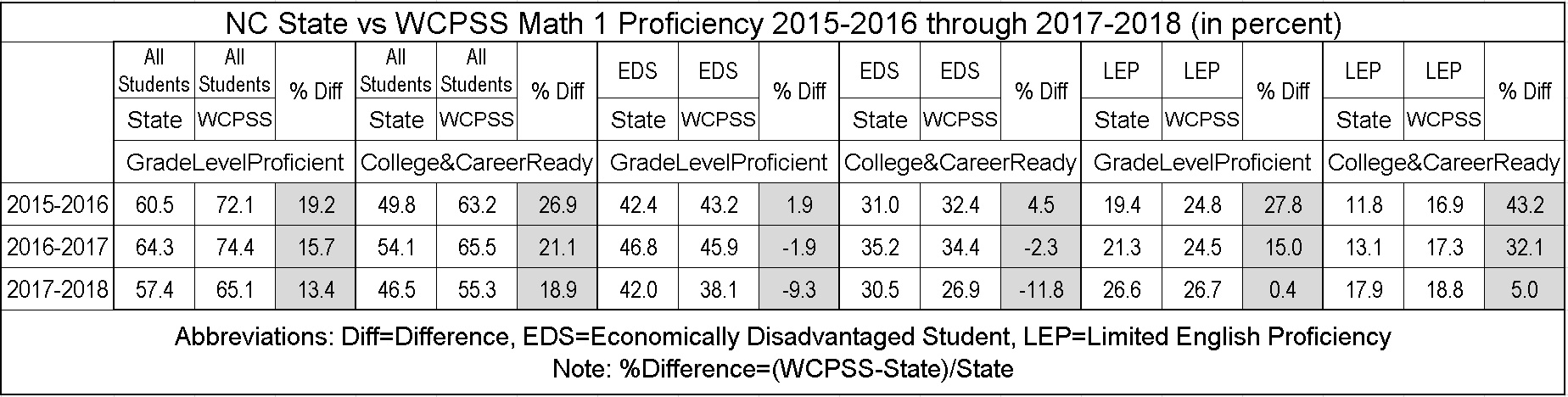
A better comparison is of WCPSS versus North Carolina (NC), which shows that the comparison gap between the two has tightened over time. The CCR proficiency in 2015-2016 for All Students in WCPSS was 26.9% better than NC. That gap closed to 21.1% in 2016-2017, and even more, to 18.9%, in 2017-2018-the first year of MVP implementation. The trend for GLP proficiency was similar. The comparison gap between WCPSS and NC students with Limited English Proficiency (LEP) tightened even more than that of All Students. The CCR proficiency from 2015-2016 for WCPSS was 27.8% better than NC. After one year of MVP, the gap (WCPSS was 0.4% better than NC) all but disappeared. The trend for GLP proficiency was similar. And the Economically Disadvantaged Student (EDS) performance gap between WCPSS and NC was worse. The CCR proficiency in 2015-2016 for EDS in WCPSS was 4.5% better than NC. In 2016-2017, NC EDS outperformed WCPSS by 2.3%, and in 2017-2018, by 11.8%. The trend for GLP proficiency was similar over the same period.
Due to an Every Student Exceeds Act exception implemented in May of 2017, “For proficiency in the 2017–18 school year only, the NC Math 1 EOC scores of grade 9 students who took the NC Math 1 EOC in middle school in 2016–17 or earlier are banked to the students’ current high school.” That is, during the first year of MVP implementation, high school (9-12) Math 1 EOC proficiency scores include data from students who previously passed the Math 1 EOC in middle school before MVP was implemented. The 2018-2019 high school (9-12) NC Math 1 EOC proficiency scores will not include students who previously passed. For WCPSS, that means that the data from 2018-2019 NC Math EOC 1 will be a better indicator of MVP’s effectiveness (or not) than 2017-2018.
And so it goes
Wake County’s MVP-adoption experience is similar to what’s happened before and will likely happen again. Someone decides that Common Core State Standard learning requires discovery-style teaching (it doesn’t), which sends the District down a path towards OERs, which leads them to MVP. And it’s not free. Parents, initially inspired that their anti-MVP efforts will succeed, are beaten down by new knowledge of MVP curriculum selection, implementation and ineffectiveness-related indignities and District leaders’ apparent insouciance. Time flies and another academic year goes by. Meanwhile, the curriculum becomes further entrenched and more difficult to dislodge as the District continues to allocate resources to support it while being unable to show significant gains in student math proficiency due to its use. Through a process of attrition, parents beat down by repeated assurances that the District leaders “appreciate their willingness to share their concerns” (while forging full speed ahead) give up.
But maybe not this time. Parents of MVP Math Students in WCPSS is a well-organized, highly motivated group. And I wish them the best of luck.
Thousands of years ago, glaciers roamed the earth. “The sheer weight of a thick layer of ice, or the force of gravity on the ice mass, causes glaciers to flow very slowly. Glaciers periodically retreat or advance, depending on the amount of snow accumulation or evaporation or melt that occurs. Alternatively, glaciers may surge, racing forward several meters per day for weeks or even months.”1
“The Puget Sound is part of the larger geologic province of the Puget Lowland. Both were sculpted by the thick and extensive glaciers that advanced south to just beyond Olympia. Glacial till (sediment deposited directly by the ice) and outwash (sediment deposited by meltwater in front of the glacier) make up most of what is found at or near the surface. These glacial sediments were deposited during the last 2 million years by numerous glacial advances, the most recent of which was around 15,000 years ago.”2

| “The Vashon Stade, part of the Fraser Glaciation was the latest major incursion of ice into the Puget Lowland. Ice advance as south as Tenino, WA, and was upward of 4,200 feet thick in the northern Puget Lowland.”³ Remnants of Whidbey Island’s glacier-covered past appear in several ways, including through a large concentration of kettle formations near Coupeville. |

“Glacial kettles are small depressions that form when a retreating glacier leaves a bit of ice behind which then becomes buried by sediment shed from glacial streams. When the block of ice melts, the ground collapses, forming a kettle.”⁴ In 2005, the Washington Department of Natural Resources published a geological map of Coupeville created by Michael Polenz, Stephen L. Slaughter, and Gerald W. Thorsen with a level of detail about Pleistocene and Holocene deposits to make a non-geologist’s eyes bleed (so be careful). In addition, 20′ contour intervals clarify the locations of at least a dozen of kettles within Fort Ebey State Park/Kettles County Park. Storms during the winter of 1990-1991 exposed fossils within a kettle at Partridge Point (indicated by the encircled number two on the map), “With the exception of Ursus americanus (Black Bear) skeletons discovered in a cave on Vancouver Island…Cedar Hollow contains the only known early Holocene paleofauna west of the Cascade Range…[they] show that the ecosystem that developed within 2,000 years following deglaciation was populated by many species that presently inhabit the region.”⁵
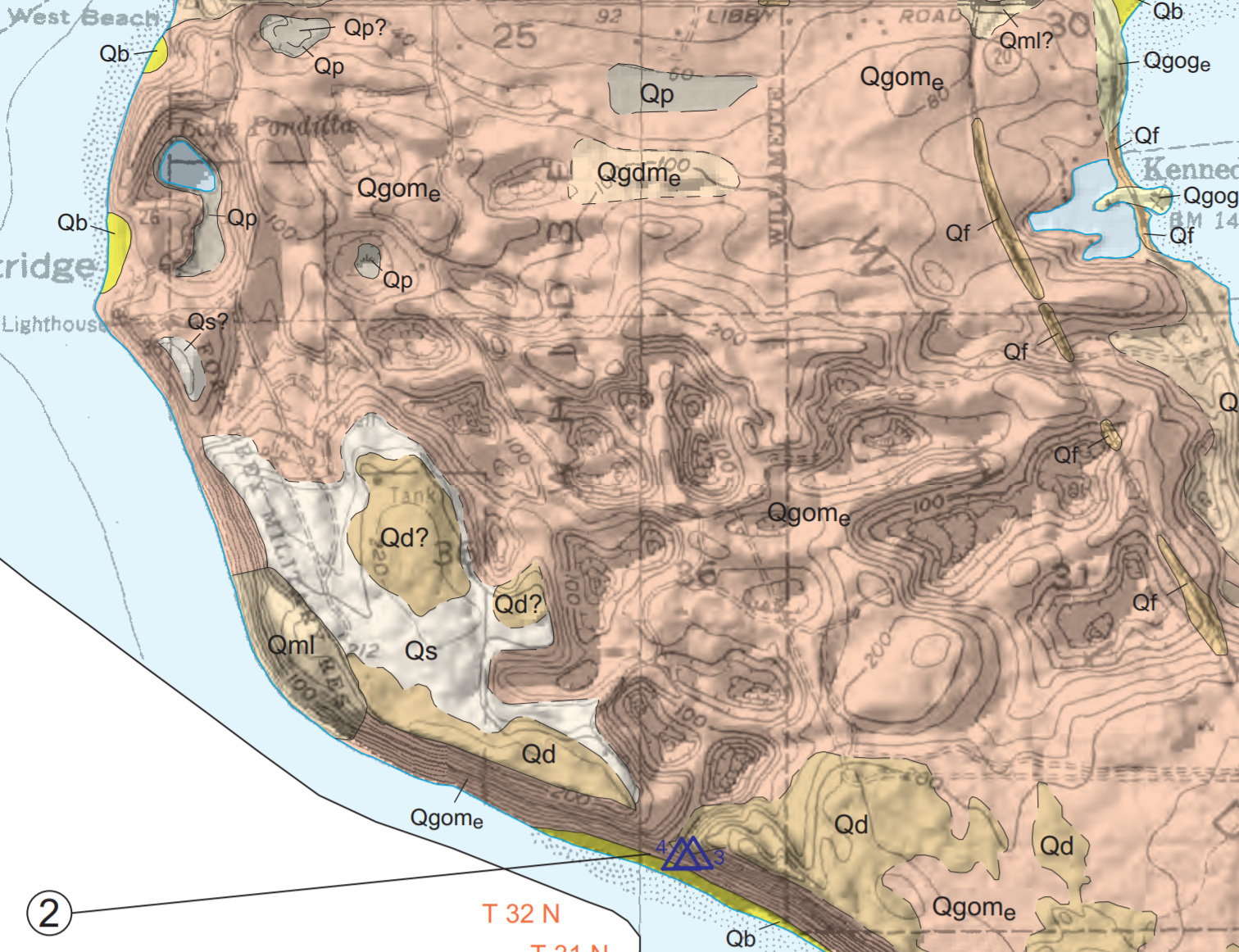
“The final retreat of the Cordilleron ice sheet was accompanied by the extinction of most large mammals, and the Cedar Hollow paleofauna provides evidence of repopulation of the region. Although [the Gray Wolf] and [Brown Bear] were driven to extinction during the past century by humans, and [the Meadow Vole] no longer resides west of the Cascade Range, all other Cedar Hollow fossils are from species that still inhabit coastal Whidbey Island.”⁵

This winter, after several summertime runs along a fraction of the 35 miles of trails of the Kettles Trails system, I still had no idea how to identify a kettle, so I set out to do so in preparation for the Fort Ebey Kettles Trail Run, held the last weekend in February. The half marathon with 2,800′ of climb and the full marathon (two loops of the half course) took place on Saturday, February 23, 2019 followed by a 5K and 10K, with 660′ and 1,320′ of climb, the following day. In order to avoid competing against, likely losing to and having to shove the face in the dirt of my mostly faster sister, I decided to sign up for the 5K after she chose the 10K. Between the four events held in two days’ time, 500 runners traversed 5,700 miles of mostly single track trail, encountering several kettle formations in addition to awesome views of the Olympics and the Salish Sea. I was disappointed to learn on race day that my decision to hit the easy button meant I’d miss out on seeing Cedar Hollow. In spite of the cold and clouds, both my sister and I loved our respective routes and were surprised at the amount of climb in an area that doesn’t rise much higher than 200′ above sea level.
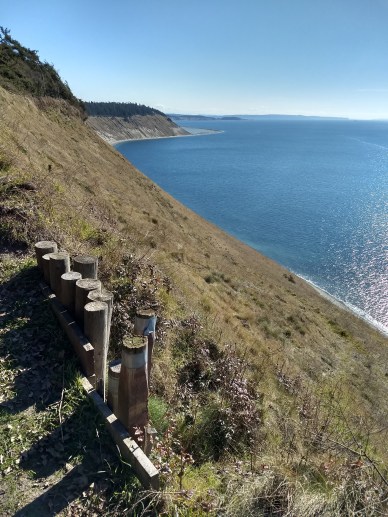
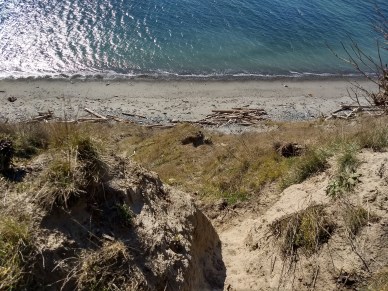
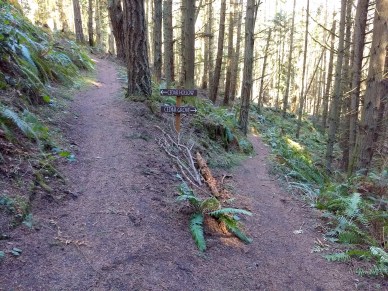
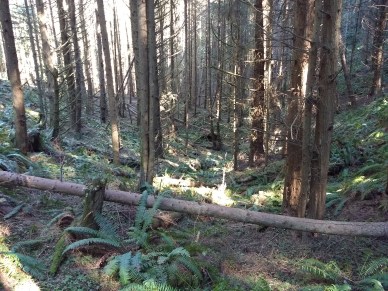
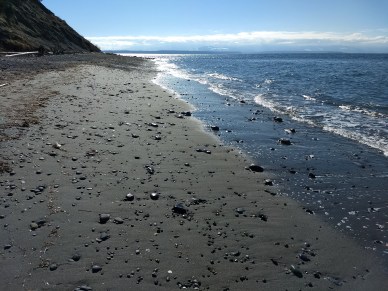

Days later, I returned for more, parked near the gun battery and headed south along the bluff trail. As I descended along the Cedar Hollow Trail, I hoped that I might end up near the beach, but even at its lowest point, it was way too dangerous to do more than look longingly at the eroded bluff. Fortunately, a local hiker arrived in time to help lift my spirits by insisting that I visit Cedar Grove. The cedars were spectacular, but that wasn’t the best part: this kettle was so conspicuous that even a person who had no clue could see that she was descending into an enormous, oddly shaped, high-sided bowl. The second best part was that I didn’t encounter another soul on my return route to the parking lot when I followed Kettles Trail, Forest Run, and Campground Trail. Next I headed north to visit Lake Pondilla (filled with shorebirds) and the nearby beach. I happened to arrive during high tide, which prevented me from walking to Cedar Hollow along the shore, but I spied a pair of Harlequin ducks and two seals that submerged a couple of times and then disappeared, which made the beach trip worthwhile.
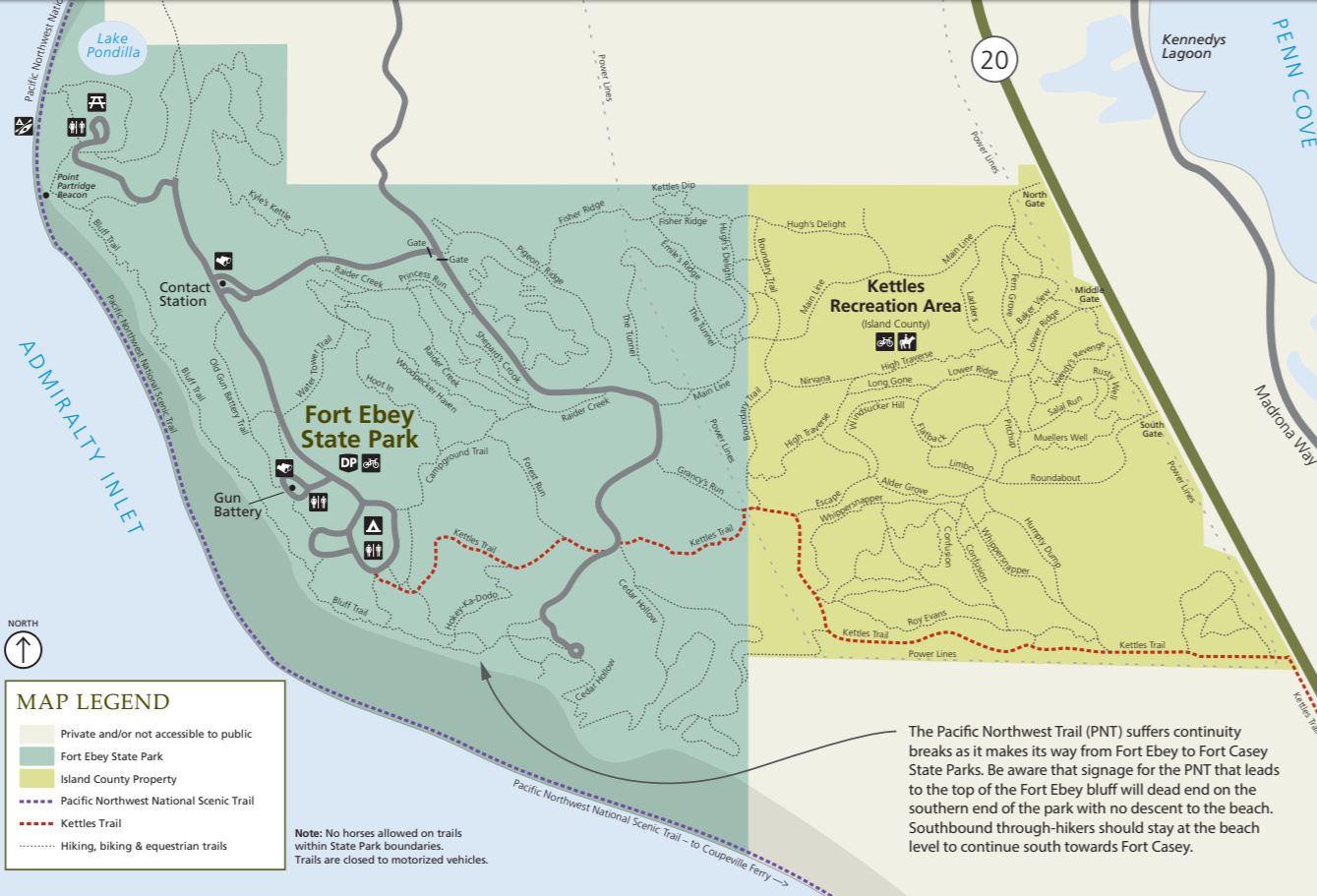
Now that I know how to identify a kettle, I can’t wait to return (again and again) to traverse more of the trails, check out the trees and think about what life might have been like when bears and wolves roamed Whidbey Island.
Sources:
 The word was easy to read even from my vantage point, upside down from the doctor’s view. In front of her lay a sheet of paper. Across the top, she’s written “antidepressants.” The word may have been followed by a question mark. And it was placed there because of what I’d shared. My son: didn’t like school, had few friends and seemed sorta sad. He was only ten years old. The offer came as a complete surprise. Don’t get me wrong, I’m not against antidepressants. In fact, I have taken them myself.
 Fifteen years ago, a doctor troubleshooting gastrointestinal symptoms, prescribed me metoclopramide. A month into the planned six-week treatment, I experienced one of its “serious side effects,” namely, thoughts of suicide. A switch flipped inside my formerly rational brain. My thinking became conspicuously different. To counteract this medication-related symptom, another doctor prescribed a tricyclic antidepressant and a benzodiazepine. A few weeks later, when I started watching the clock between doses (impatient for the return to the feeling of uncaring calmness that came every time I popped another pill) I knew it was time to stop taking it (against my doctor’s advice). And did. The anxiety I experienced under withdrawal was many times higher than that that led me to it in the first place. Six months later, with the addition of talk therapy, my thinking returned to normal and my use of antidepressant ended.
 My son’s neurotransmitters survived his teenage years without perturbation, but my daughter’s weren’t so lucky. She survived a mental health nightmare that we learned about in the fall of her junior year that continued for nearly fifteen months. I’m not at liberty to share the specifics, but there was collateral damage: she missed so much school that she had to transfer from the traditional to the alternative high school. The experience involved six trips to three different emergency rooms plus related care during which we had interactions with dozens of mental health care professionals in addition to repeated contact with a counselor and a psychiatrist. More often than not (except, for the most part, the staff at Seattle Children’s ER), these professionals’ actions and recommendations (or lack of): did not help, helped minimally, and/or made things worse. Too many times along this journey, we should have been given better advice. And my daughter, better care. When this scary scenario was over, her psychiatrist recommended a book with non-medication techniques to help her help herself with the symptoms. Although useful, it came 265 days late, thousands of dollars short and with an incomprehensible amount of irony.
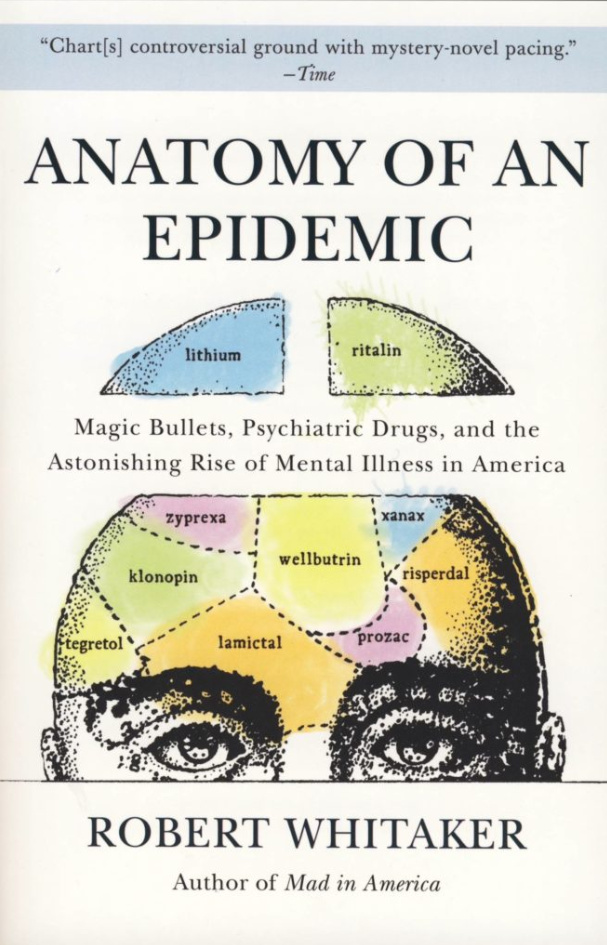
 As things returned to normal, I discovered Robert Whitaker’s Anatomy of an Epidemic. Within 24 hours, I’d read it cover to cover, highlighting helpful passages. Within a week, I’d read it again and ordered several copies to share. The biggest takeaway was two paragraphs (p 83) in which Whitaker elucidates neuroscientist Steven Hyman‘s paper Initiation and Adaptation: A Paradigm for Understanding Psychotropic Drug Action, ‘Antipsychotics, antidepressants, and other psychotropic drugs, he wrote, “create perturbations in neurotransmitter functions.” In response, the brain goes through a series of compensatory adaptations. If a drug blocks a neurotransmitter (as an antipsychotic does), the presynaptic neurons spring into hyper gear and release more of it, and the postsynaptic neurons increase the density of their receptors for that chemical messenger. Conversely, if a drug increases the synaptic levels of a neurotransmitter (as an antidepressant does), it provokes the opposite response: The presynaptic neurons decrease their firing rates and the postsynaptic neurons decrease the density of their receptors for the neurotransmitter. In each instance, the brain is trying to nullify the drug’s effects. “These adaptations,” Hyman explained, “are rooted in homeostatic mechanisms that exist, presumably, to permit cells to maintain their equilibrium in the face of alterations in the environment or changes in the internal milieu.”¶However, after a period of time, these compensatory mechanisms break down. The “chronic administration” of the drug then causes “substantial and long-lasting alterations in neural function,” Hyman wrote. As part of this long-term adaptation process, there are changes in intracellular signaling pathways and gene expression. After a few weeks, he concluded, the person’s brain is functioning in a manner that is “qualitatively as well as quantitatively different from the normal state.”‘
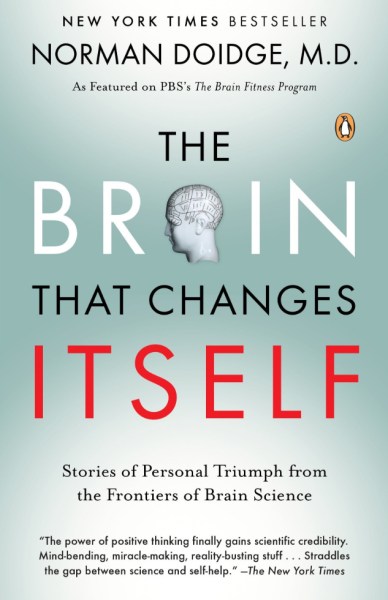
 The content of Whitaker’s book opened my already skeptical of long-term-use-of psychopharmaceuticals eyes. I have since read, reread or revisited several books about mental illness and studied two new ones. Elio Frattaroli, MD, author of Healing the Soul in the Age of the Brain claims (p 394), “…dramatic changes in personality can be produced in three different ways: through the action of body-brain over mind, as typified by Prozac; through the action of spirit over mind, as typified by a religious conversion experience; and through the dialectical integration of body-brain, mind, and spirit as it occurs in the psychotherapeutic process. Of these three, I believe the one one that reliably produces genuine, deep, and lasting personality change is the psychotherapeutic process.” In Norman Doidge, MD’s absolutely fascinating The Brain that Changes Itself, the author dedicates an entire chapter to the use of psychoanalysis as a treatment for mental health issues and asserts that it leads to neuroplasticity.
I avoided going down the rabbit hole myself while all this was happening by a sort of self-psychotherapy that involves a combination of mindfulness and thinking about thinking, which I was surprised to see Susanna Kaysen explain in Girl, Interrupted (p 138), “There is thought, and then there is thinking about thoughts, and they don’t feel the same. They must reflect quite different aspects of brain function…The point is, the brain talks to itself, and by talking to itself, changes its perceptions.” This idea has worked for me and others who I care about and I hope that, with practice, it will work for my no longer medicated daughter.

During the past year and a half, I’ve learned more than I ever wanted to about psychopharmaceuticals, the mental health care system, mental health care professionals, and mental illness. While I believe that there is a place for short-term use of these medications (typically in conjunction with talk therapy), I think that doctors overprescribe them and patients, under-informed about potential pitfalls, over-expect (and accept) them. In hindsight, I wish that we had refused neurotransmitter perturbing medications to treat my daughter’s mental health condition. If we knew then what we know now, we would have. My advice to those considering the use of psychopharmaceuticals: read Anatomy of an Epidemic first, so that you can make your decision with eyes wide open.
The wave felt like an enormous ocean swell, except that I was nowhere near the water. It was January 17, 1994, hours after the 6.7 magnitude Northridge Earthquake struck, when a 5.0ish aftershock sent me and a dozen other onlookers scurrying for safety from our vantage point atop a concrete bridge from where we could see several derailed train cars below. On that day (the best of my 10-year career as an engineer), I observed houses, apartment complexes, parking garages, businesses and bridges that had failed in expected and unexpected ways. Later, from the safety of my home in San Diego, I spent hours over a period of months looking at photos of the damage, especially of structures made of wood–most relevant to my then job, and bridges–at a short-lived but much-loved stint at a bridge design firm, I had learned the basics seismic retrofit of bridges.
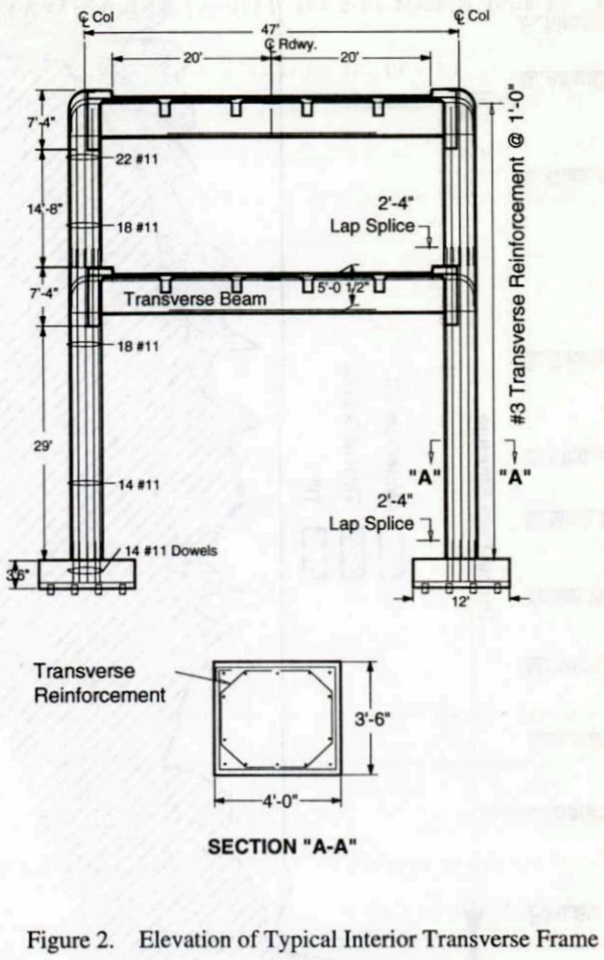
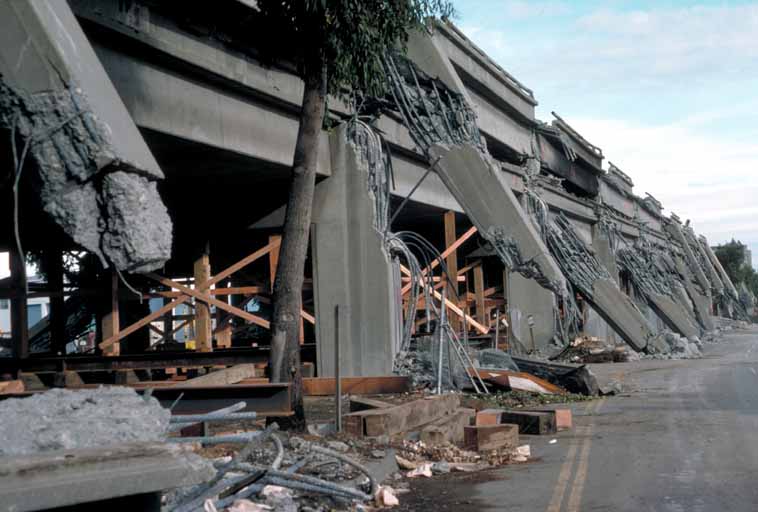 After the magnitude 6.9 Loma Prieta earthquake on October 17, 1989, WSDOT “asked engineers from the Washington State Transportation Center at the University of Washington to study the viaduct’s seismic vulnerability.” Catastrophic failure of the Cypress Street Viaduct’s columns, “a 1.6-mile-long (2.5 km), raised two-tier, multi-lane (four lanes per deck) freeway constructed of reinforced concrete” raised concerns about the potential collapse of the similar in several ways Alaskan Way Viaduct. “The Transportation Center report explained that the viaduct was built before the 1971 San Fernando Earthquake, also in California, that led to changes in construction practices. The viaduct is a strong structure, but it has too little transverse reinforcement, too little overlap in the splices at joints, and is at risk of excessive stress on the column foundations because of the high likelihood that the soil around the foundations and pilings, which had been brought in to fill behind the Alaskan Way seawall in the 1930s, would be subject to destabilizing liquefaction.” The Summary Report, published in July of 1995, confirmed what engineers had suspected: the Viaduct was structurally vulnerable to a significant seismic event.
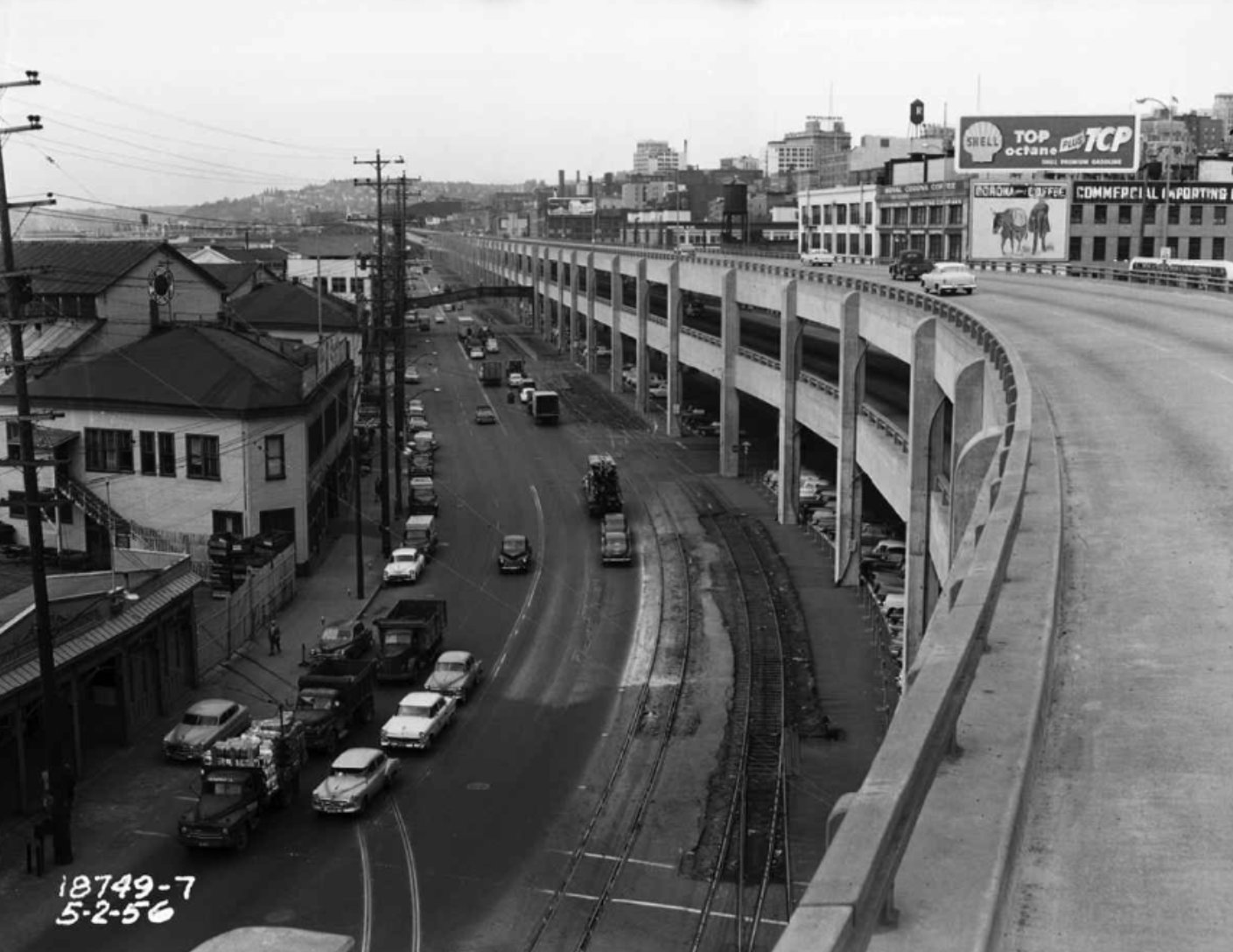
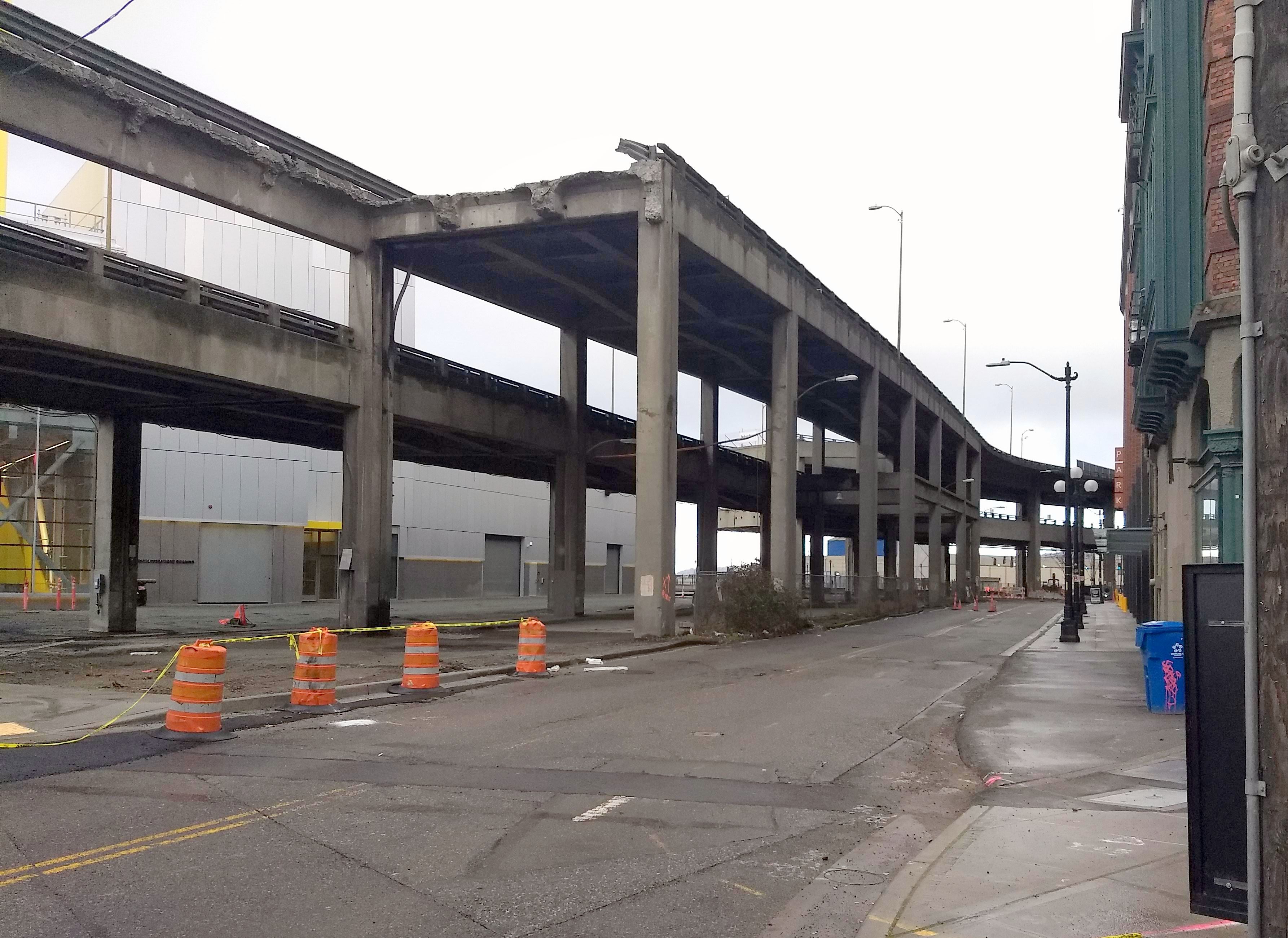 “The viaduct was built in three phases from 1949 through 1959, with the first section opening on April 4, 1953.” “In the mid-1960s it carried 88,000 vehicles per day. When the Seattle Freeway opened, that number dropped to about 54,000, where it stayed for some time and then began to climb again as the region’s population grew.” “By the end of the 20th century, it was among the state’s busiest and most important sections of highway, carrying 110,000 cars each day.” “In February 2001, a 6.8 magnitude earthquake struck Seattle. When the shaking stopped, sections of the viaduct had sunk several inches. Crews stabilized the structure, but engineers agreed that had the quake lasted a few moments longer the viaduct would have collapsed…In January 2009, leaders from the state, county, city and port recommended a bored tunnel – along with a host of other improvements – to replace the waterfront section of the viaduct.” What they couldn’t know then was that this replacement wouldn’t be open for traffic for another ten years.
A July 2016 AP article summarizes the planned versus actual costs and construction schedule of the 99 Tunnel, “The troubled project to replace an aging double-decker highway bridge hugging Seattle’s waterfront with a tunnel faces $223 million in cost overruns…originally budgeted at $3.1 billion, because of repeated delays…the tunnel boring machine broke down in late 2013, leading to a more than two-year delay while it was fixed…The original completion date for the tunnel was the fall of 2015 but the opening of the double-decker highway project is now projected for early 2019.” In addition, Seattle Tunnel Partners, “is seeking $642 million for delays and repairs after Bertha [the boring tunnel] broke down.” If successful, this would put the actual project cost at 28% over budget.
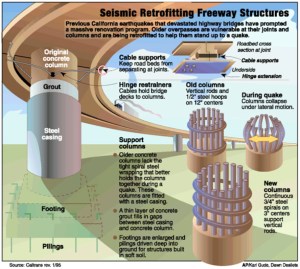
It’s been 25 years since I ran for (what felt like) my life off of that bridge on the day of the Northridge Earthquake and my fascination with the performance of structures under seismic loads hasn’t diminished. When I pass a bridge, I look for the tell-tale signs of seismic retrofit, like cylindrical steel casings around columns and restraining devices designed to prevent bridge decks from falling from their supports. The Washington State Department of Transportation’s Bridge Seismic Retrofit Plan spells things out for our state (1) prevent deck collapse, (2) address lack of redundancy in single-column-pier bridges and (3) jacket multi-column pier bridges with steel casings. Victor Gray, engineer and leader of the Viaduct Preservation Group led an unsuccessful attempt for retrofit of the viaduct over replacement, citing cost savings and the retention of the original six lanes versus the bored tunnel’s reduction to four lanes.
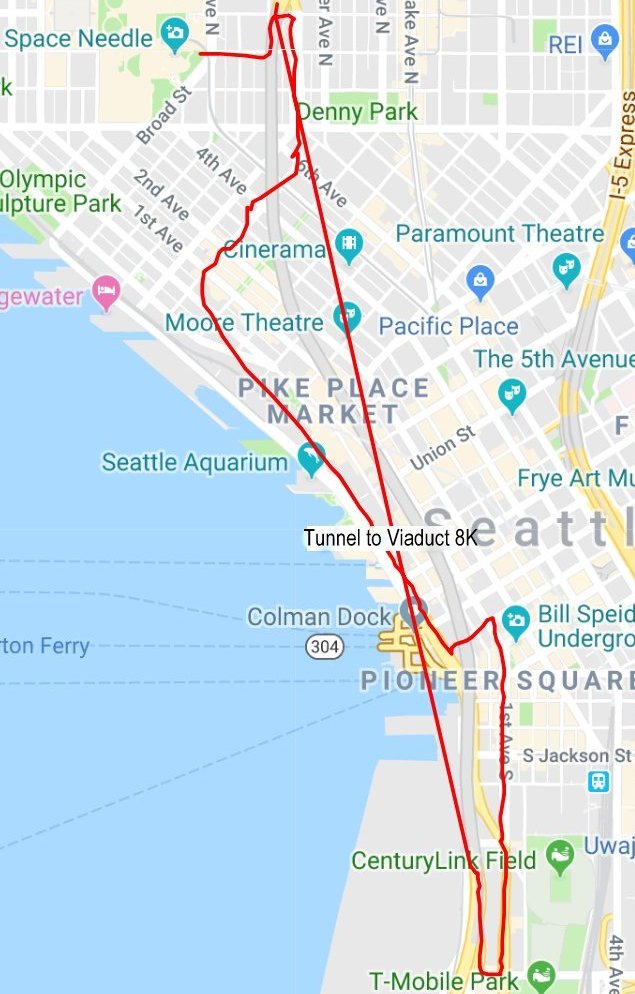
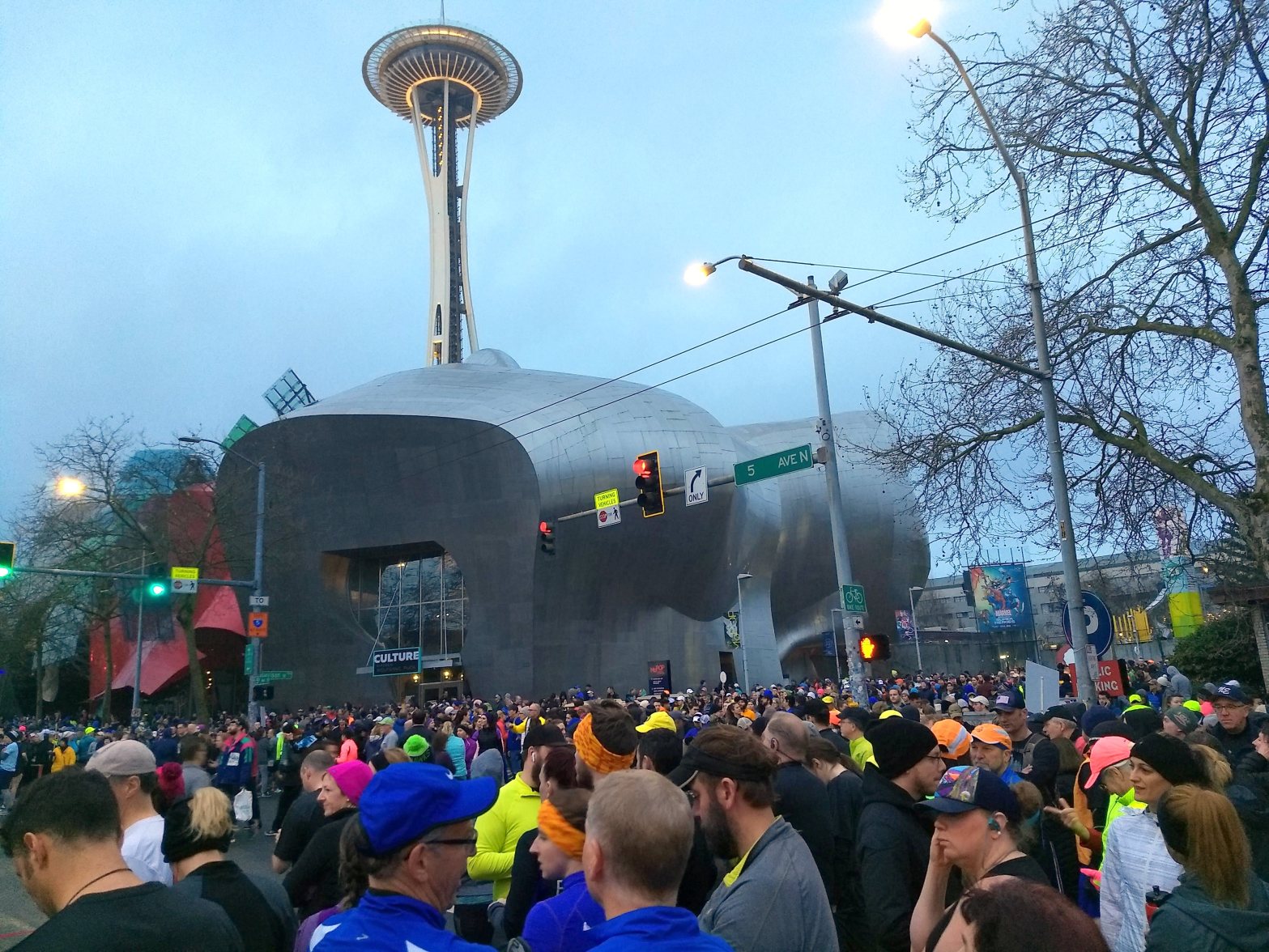
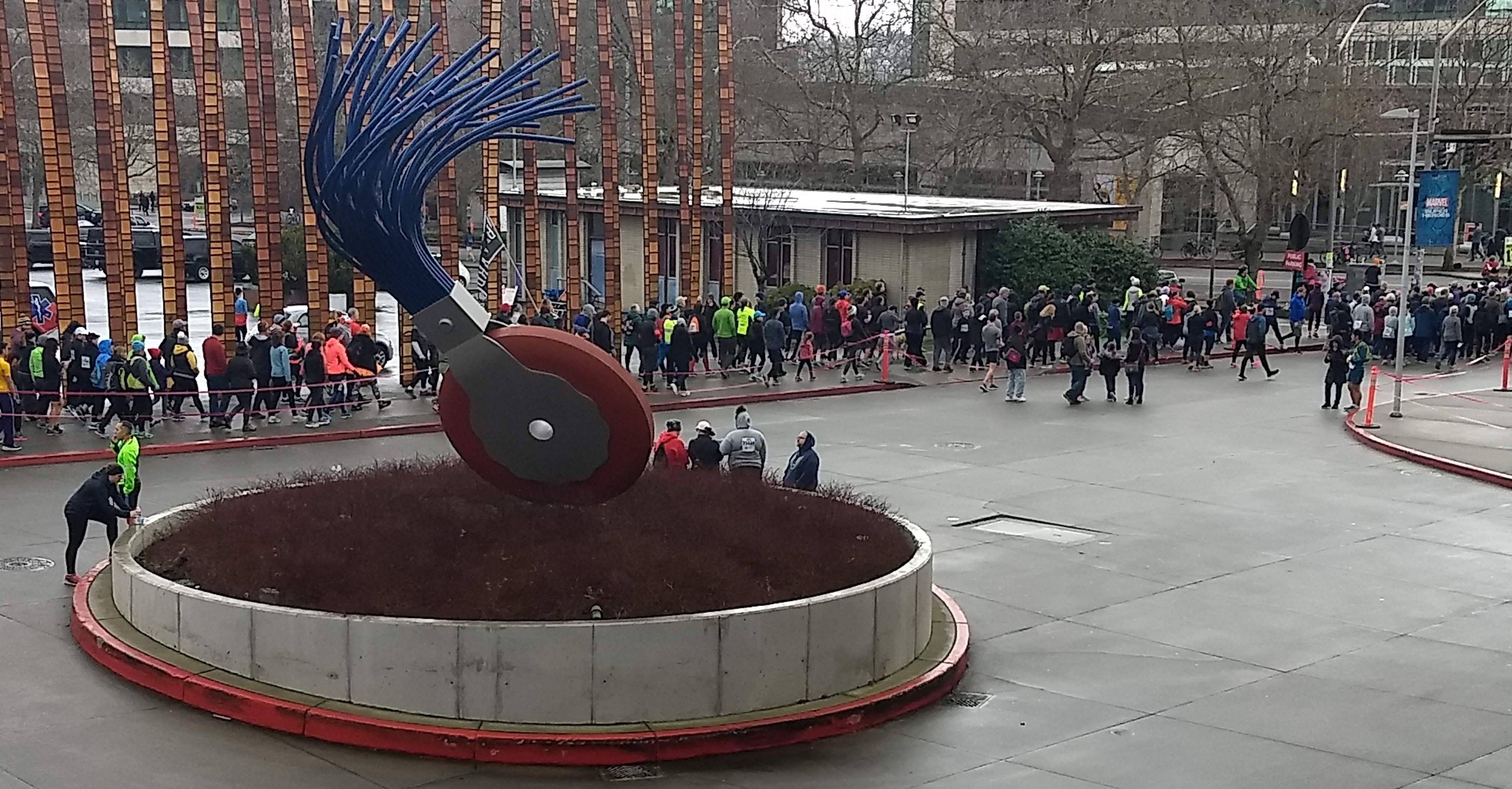
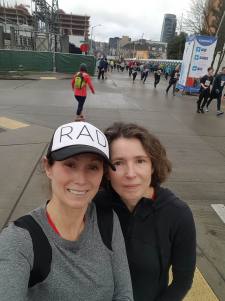
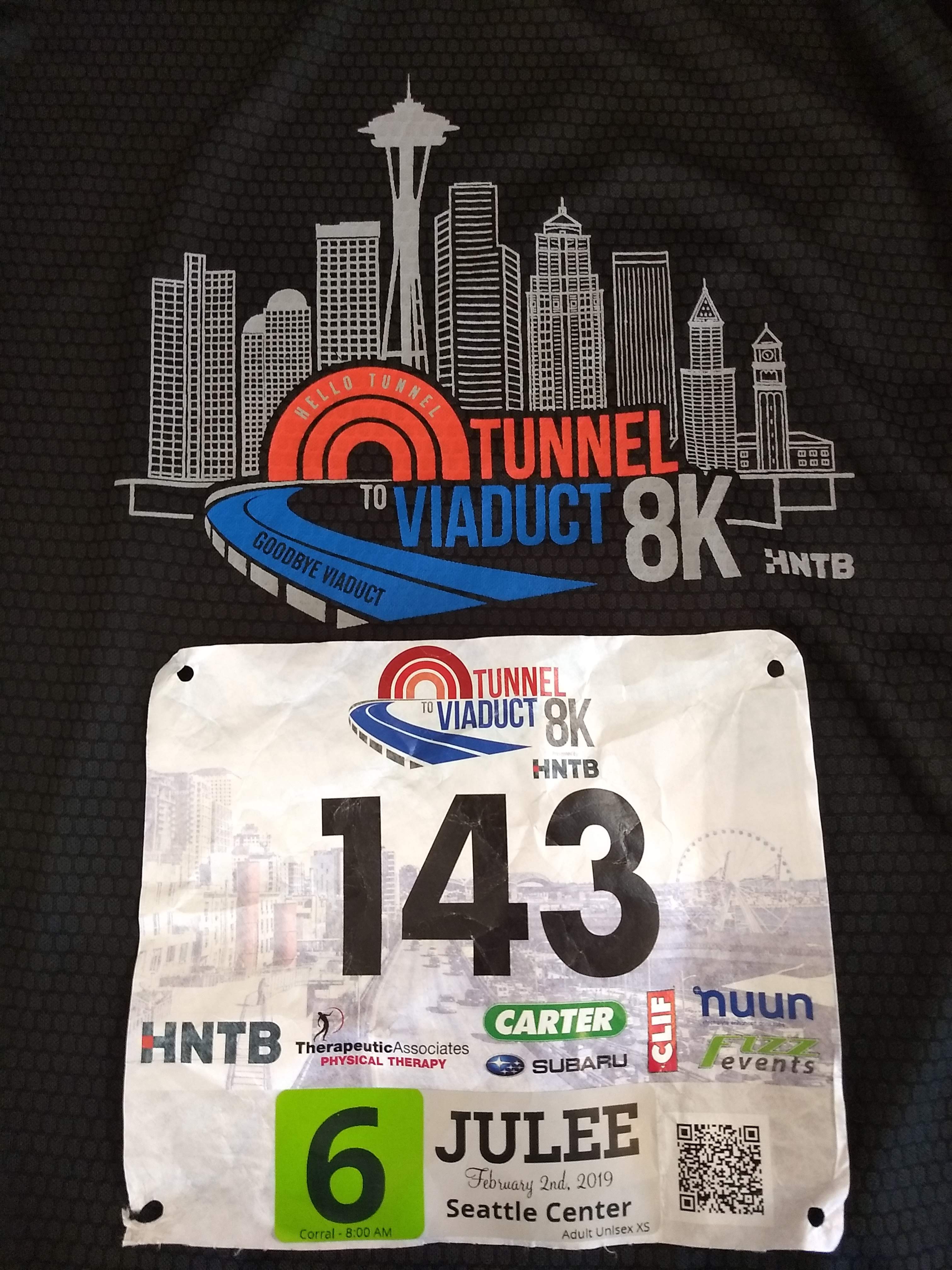
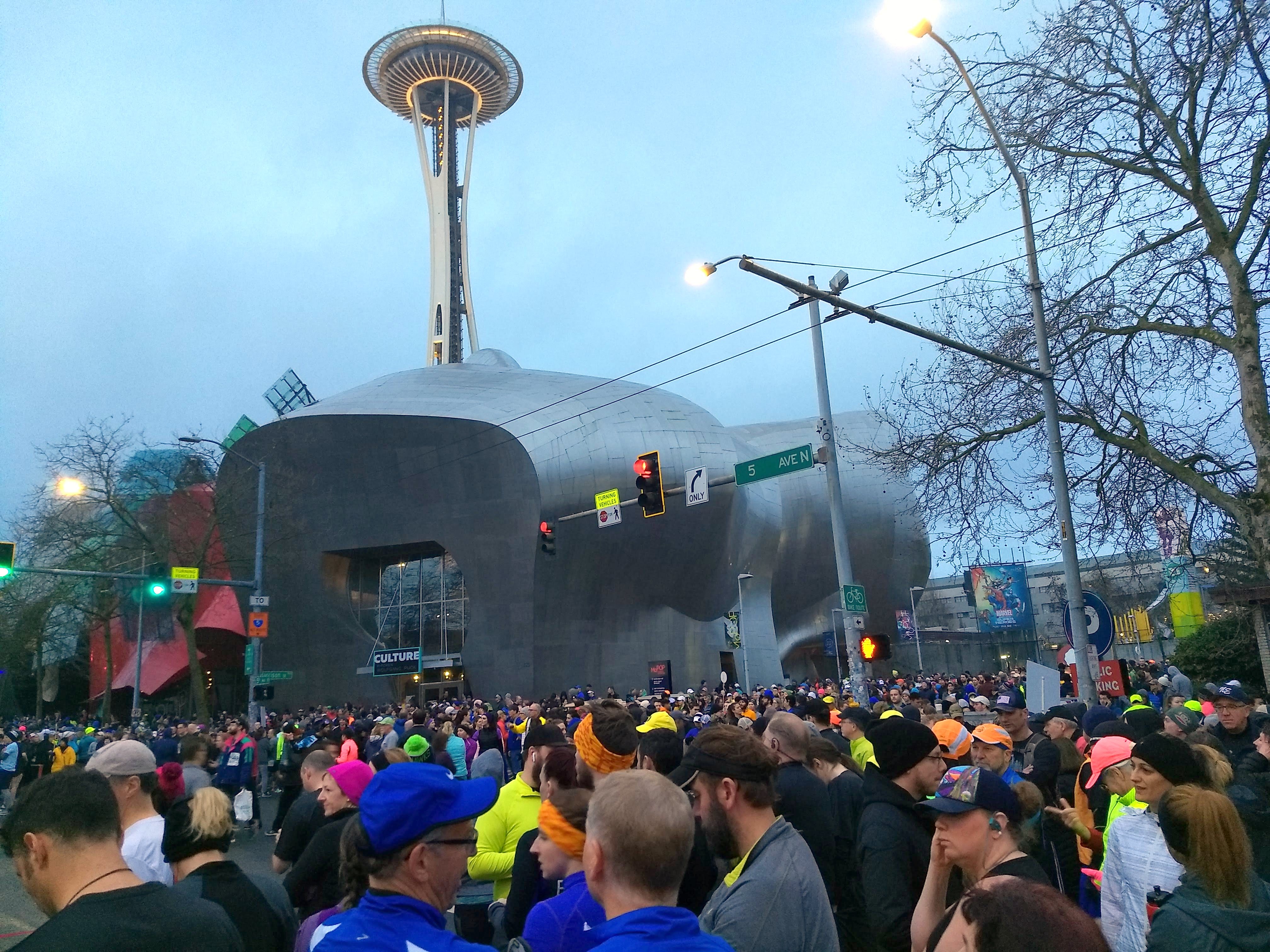 On February 2, 2019, my sister and I and thousands of others participated in the Tunnel to Viaduct 8K. Race morning, we walked in darkness along Seattle streets towards the Space Needle, where we were to wait until our 8:00 am assigned start time. Corrals designated from 1 to 12 were supposedly (but not actually) based on pace, and supposedly (but not actually) set to start every six-minutes after the first wave–scheduled for 7:30 am. Runners and walkers of all ages, shapes, and sizes chatted with friends and snapped selfies while waiting for their corral to advance to the tunnel. Damp, cloudy skies promised rain.
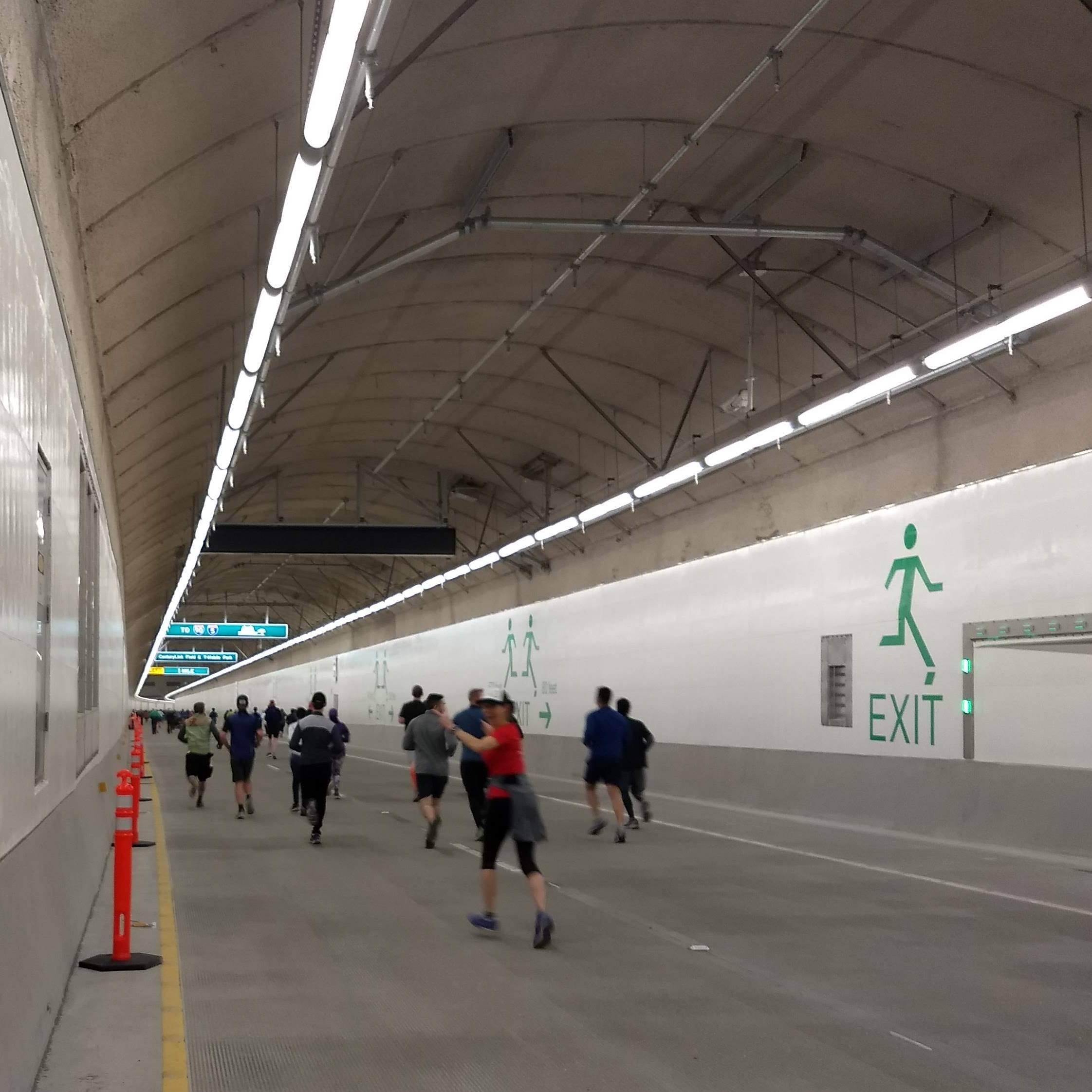
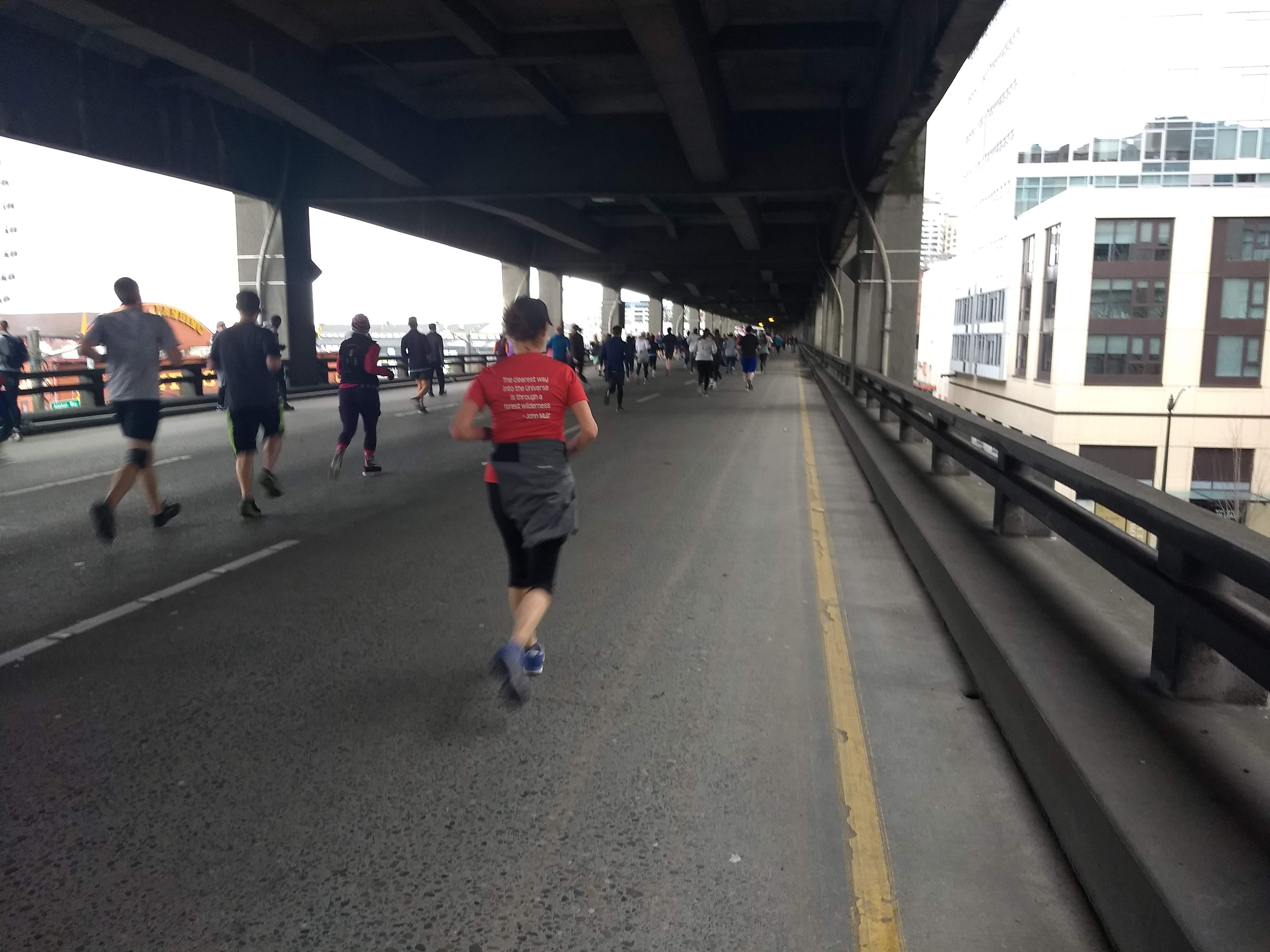 Finally, at 8:45 am, organizers us in Corral 6 towards the tunnel entrance and sent us on our way. My sister and I reached the Mile 1 sign earlier than expected. Our GPS watches were useless so far underground, but we knew we’d be exiting the tunnel just after Mile 2. We ran along surface streets to the entrance to the Viaduct near Columbia Street and from the exit until we entered the one-third-mile-long, dark and damp Battery Street Tunnel. Upon exiting the BST, we returned once again to surface streets, made a couple of left turns, then a right, passed a long line of green and white porta-potties, ran up a barely noticeable hill and crossed the finish line. As we exited the finish area, the last wave prepared to start. Results indicate that there were 25,244 finishers (57% women). Dan Sloat came in first, completing the course at a 5:07 min/mi pace. Ruth Perkins was the first woman to finish, at a 5:57 min/mi pace. We finished at a respectable 9:00 min/mi pace.
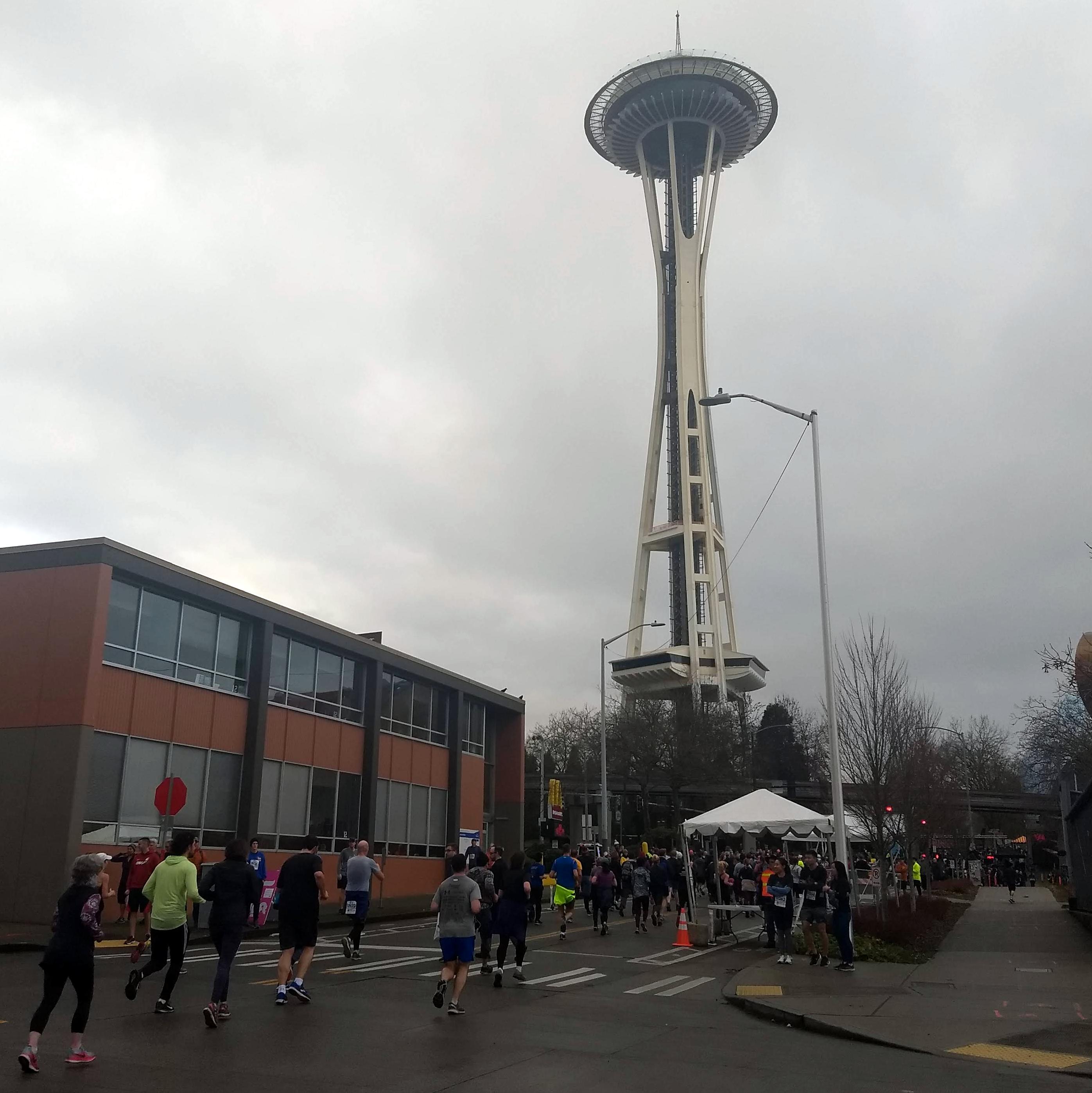
After the all is said and done, my one and only feeling about the Alaskan Way Viaduct’s demise of total and complete annihilation at the hands of demolitionists is–relief. The structure was vulnerable to a significant seismic event for over 60 years, during the entirety of its existence. That it was taken out of service before The Really Big One hits Seattle should bring some level of comfort to all Seattleites.

 Site Title