“Some one was drawing water and my teacher placed my hand under the spout. As the cool stream gushed over one hand she spelled into the other the word water, first slowly, then rapidly. I stood still, my whole attention fixed upon the motions of her fingers. Suddenly I felt a misty consciousness as of something forgotten–a thrill of returning thought; and somehow the mystery of language was revealed to me. I knew then that “w-a-t-e-r” meant the wonderful cool something that was flowing over my hand. That living word awakened my soul, gave it light, hope, joy, set it free!” Helen Keller made the connection between Anne Sullivan’s spellings into her hand and the word itself in a mere month, but we are well aware that the young learn more easily than the old.
Several years ago, I bought a set of silver bells that hang from a black ribbon, designed to provide a dog the freedom to inform her person, with the slap of a paw, when she wants to go outdoors. For about a month I rang the bell religiously every time I let my six-year-old terrier out. She’d dash through the door without showing a bit of interest in the bell. After about a month, I gave up. Then last year, I tried to teach a six-month-old puppy who seemed smart. When it took her nearly 100 days to make the connection, I realized that I’d been impatient with my old dog. 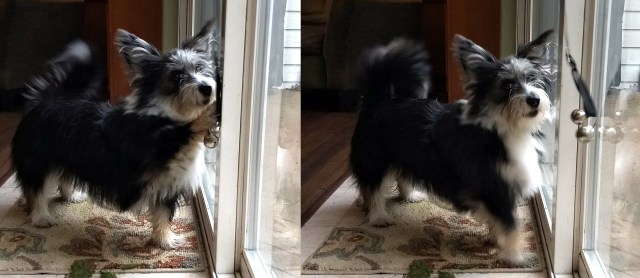
 This winter, I decided to learn something new: snowboarding. The sport has been around in some form or another for hundreds of years, but its popularity didn’t start to take off until the sixties. According to the International Skiing History Association, a man by the name of Sherman Poppen first “dented the marketplace,” for the item that would become the modern-day snowboard. “Poppen created the Snurfer [=snow-surfer] on Christmas morning in 1965 by cross-bracing two skis together…Launched in September 1966, the Snurfer was a hit as more than 750,000 were sold nationwide during the 1960s and 1970s. More than any other invention, the Snurfer inspired a generation of kids to surf the snow.”
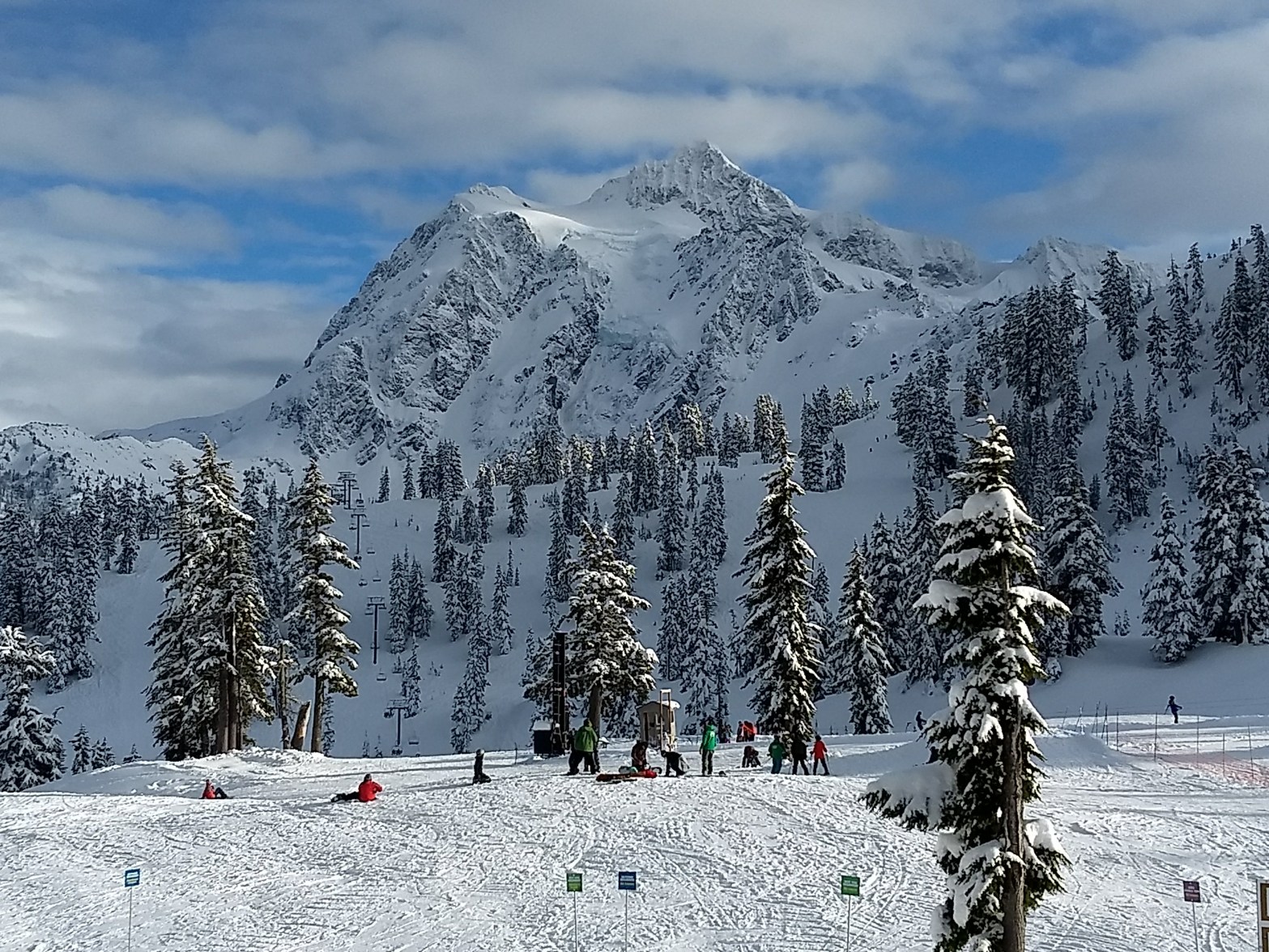
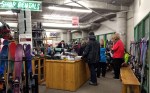
 Two teenage boys and I arrived at the Mt Baker Ski Area on December 22, 2017, at 8:00 am, early enough to land a parking spot just outside the entrance to the Heather Meadows Base Area, where lessons are available on weekends and holidays. We completed the rental forms, signed the waivers, and I paid for a package deal (snowboard/helmet rental/Chair 2 lift ticket/group lesson), which set me back about sixty bucks per person, about the same price as an all-day adult lift ticket. We put on our boots and helmets and headed outside carrying our snowboards (about a foot wide and 88% of a person’s height) with the awkwardness of inexperience. The snow was soft and powdery and the skies were cold and nearly clear with temperatures in the mid-30s. We spent the next hour at the short, steep hill adjacent the lodge and learned that for a beginner: rising from a seated position is difficult, as is fastening your bindings while standing, as is remaining upright for more than a few seconds. What’s easy? Flying down the hill at breakneck speed with the knowledge that you are likely to cartwheel out of control before you smack into the snow in an uncomfortable heap, sometimes hitting your helmeted head. At 9:30, my teenage son and I joined three other first-timers at the assigned (beginner) sign. A small, wiry guy I’ll call Jerry (because that was his name) inquired as to our footedness (Goofy or Regular), explained a few moves (like engaging the heel edge and the toe edge), demonstrated the moves, helped each of us to an upright position, and watched us all wipe out spectacularly…over and over again.
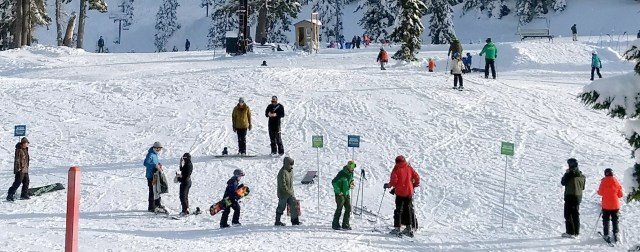 After countless crashes on what could barely be called a slope, we braved the “rope” tow (not actually made of rope) to the top of the bunny slope a few times and, finally, traversed our way down the hill to Chair 2 where Jerry encouraged us to give it a try on our own. For me, it was a fall-filled trip from the top of the lift (fall #1) to the foot of a short, steep hill (fall #s 2,3,4) to the bottom of the relatively short run (falls #5 and 6), after which I was ready to go home. During my first 2.5-hour snowboarding adventure, I fell all told more times than I had during my previous 53 years. The most useful thing Jerry the instructor taught me that day: the area on which we attempted to snowboard is not located on its namesake mountain.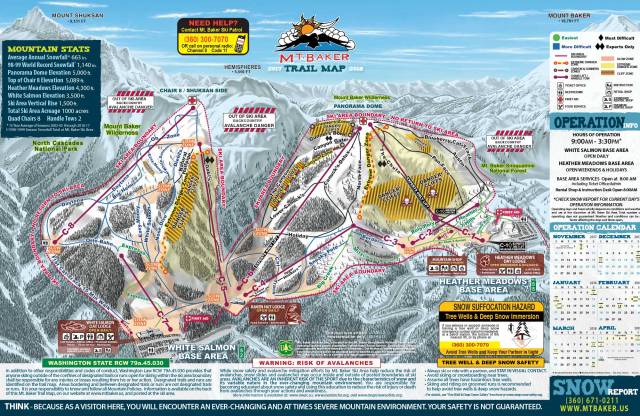
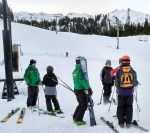
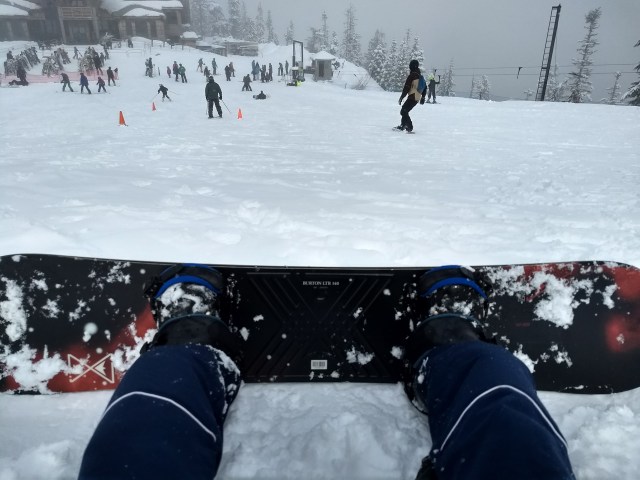
 A week later, we returned. I snowboarded while my son skied. I joined two other women in the beginner snowboard group outside the White Salmon Base Area where weekday lessons are given. Spencer, an instructor of instructors, led us to the flattest of slopes near Chair 7 and taught us two ways to rise from a seated position, toe and heel edge turns, the snowboard version of snowplowing (controlled, slow-going on either the toe or heel edge), and how to link turns. Before we’d mastered these skills, we hiked to the top of the bunny hill and attempted the maneuvers in scarier territory. I only wiped out about half as much as I had on my previous visit, which was an improvement, but still involved a lot of falls. The most useful thing Spencer the instructor of instructors taught me that day is: learning from an excellent instructor is much better than learning from one who is just okay.
  I’d heard that snowboarders tend to get it on or about their third try, so I made one last trip to Mt Baker by myself. On a crowded pre-President’s Day Friday, I made my way to the bunny slope near Chair 7 where I spent about an hour practicing what I’d learned previously. It was so full of students that most of my falls were self-initiated in order to avoid collisions with other beginners (no, really). Watching others wipeout more than I did and falling less often felt great. Next winter, I’ll be back. I know I’m not out of the woods yet, but I’m on my way: living proof that with a little patience and perseverance, old dogs can learn new tricks.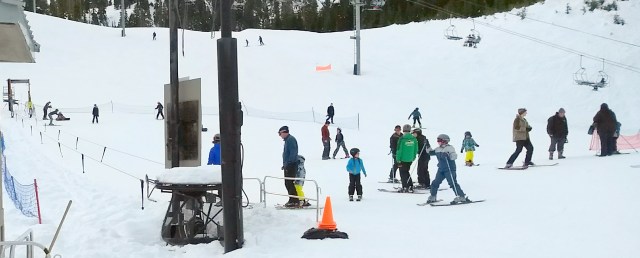
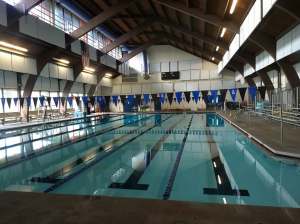 The water surface was as smooth as glass during its last week of limited operation in mid-February, when it was open to accommodate the OHHS Boys Swim Team and the North Whidbey Aquatic Club. All appeared calm from above, but underneath swirled the stormy seas of controversy that have plagued the Vanderzicht pool for several years. With the failure of the NWPRD Levy, Executive Director Steve “Caz” McCaslin and one of the remaining pool employees wear more hats than before, including custodian, cashier, and water quality manager in addition to those of their regular duties.
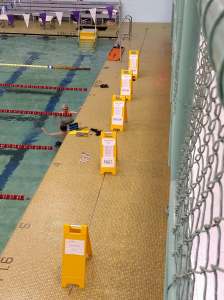 I learned three months ago that the NWPRD Levy had failed about the same time that circle swimming signs appeared at the
  November 2015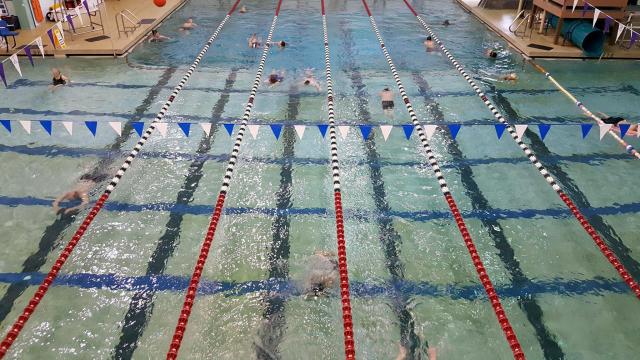

 It’s time to end exit testing requirements for Washington state high school students. Setting the bar high to ensure high school graduates achieve an adequate level of understanding in English, Math, and Biology is important. The
 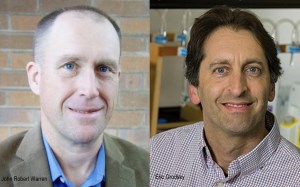 In the 2008 article,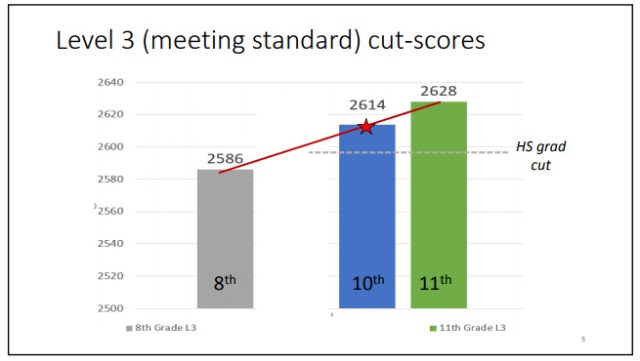

 Last June,
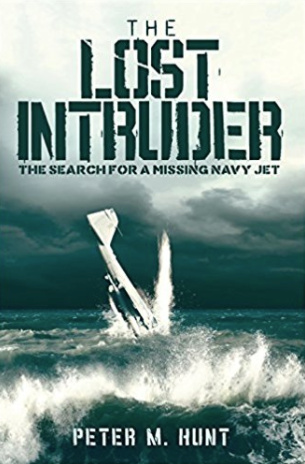
 I opened my front door to the quietest of knocks. Our six-year-old son waited with a stranger. My heart raced at the realization of what could have happened while he stood, wondered where I was, and walked the half mile from the bus stop to our house by himself. It was a Monday. And I’d forgotten that students were released one hour earlier than usual. The kindness of eleven-year-old Emily Hunt–who walked Garrett to the door, and her mother Laurie–who accompanied the pair by car, averted infinite scary scenarios that swirled around inside my head on that day and many more into the future. This was but one of a number of interactions between our family and the Hunts, who’d moved to the community long before we arrived. Within the year, Peter had asked me to join the board of our community association. Two years later, Hunt chose to Lean In and become a member of the
  Full disclosure: I know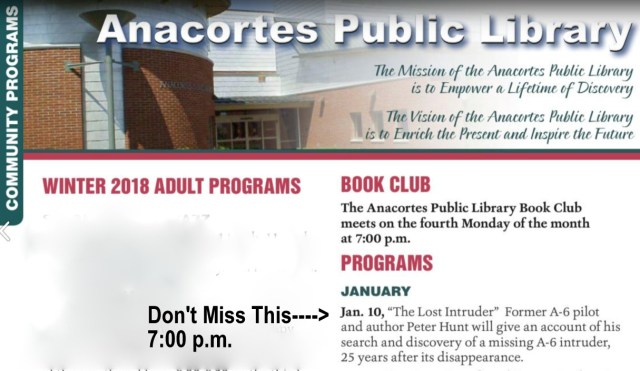

 Dr. Suess’s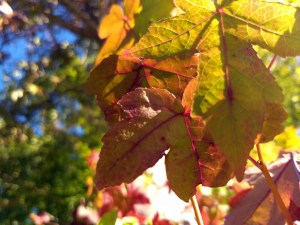
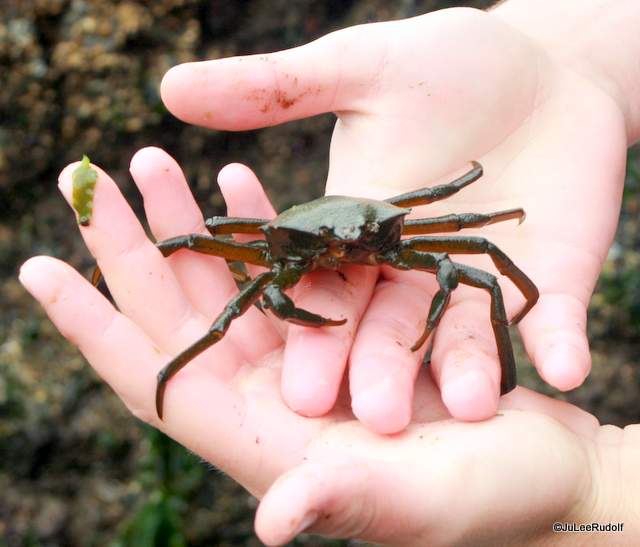
 Making my way over and between barnacled, blunt-edged rocks and boulders along the north shore of Bowman Bay, quiet clickings increase in proportion to my pace. Shore crabs in a dozen different colors drop from the rocks on which they rest as I pass by, then scurry to safety. It’s one of several super-low-tide days in late July that expose many sea creature species, some common, like sea stars and anemones, some less so, like
 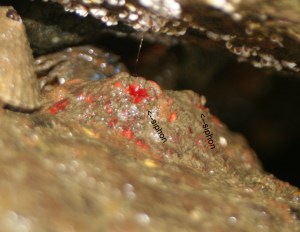 Digital photos in camera, I plead my case to Dr. David Cowles at Rosario Laboratories, a researcher and professor who hosts the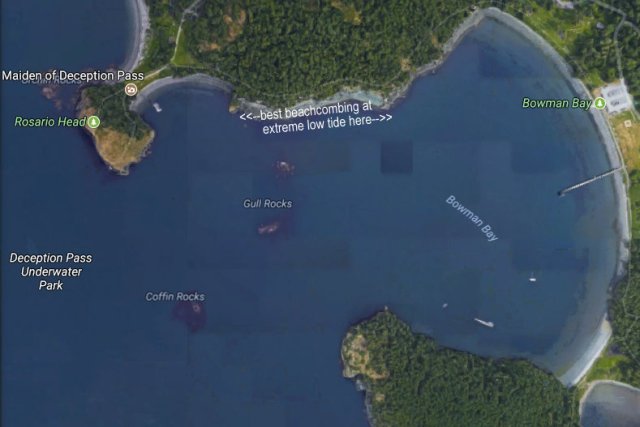
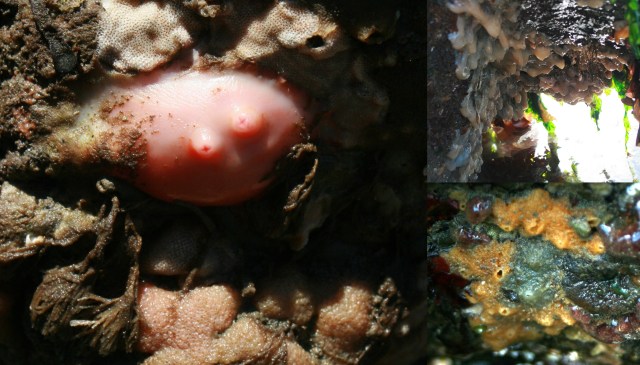

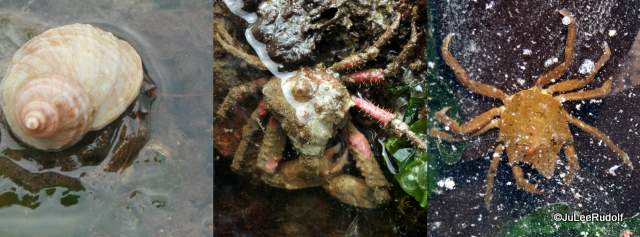
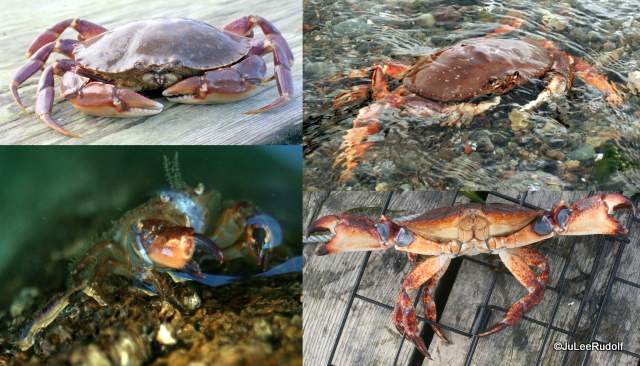
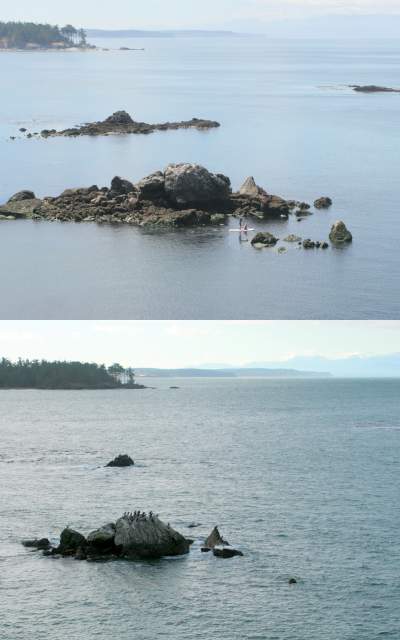 Beachcombing at Bowman Bay is possible only during extreme low
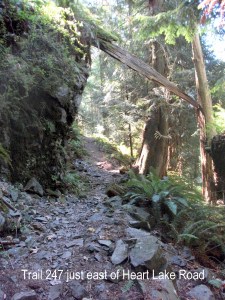
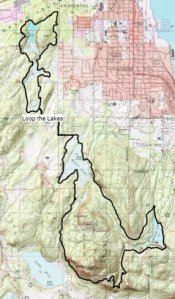
 When my friends and I checked it out a few weeks later, we realized why we’d never run it before. From its start just north of Two Big Trees along Heart Lake Road, it climbs about 250′ in the first two-thirds of its 1.5-mile length. This critical section is the toughest and most scenic of the 25K (15.3 mi) Loop the Lakes course. Except for a recently-constructed house visible south of the trail (that led to a newspaper article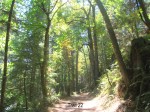
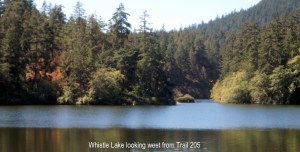 Over the next few months, we proceeded to add pieces to this key section using a trial and error approach and a GPS watch to track the distances. I checked in with the City of Anacortes Parks and Forest Lands Manager about the mileage shown on the
  The route reaches the Heart Lake parking lot at about mile 6.5 and continues along the longest trail (210) within the Heart Lake trails. While the Whistle Lake trails boast the most climb, those around Heart Lake contain the flattest trails within the Forest Lands. This is the section of trail where we’ve observed several dead moles and one live baby mole, probably Scapanus townsendii, the Townsend mole.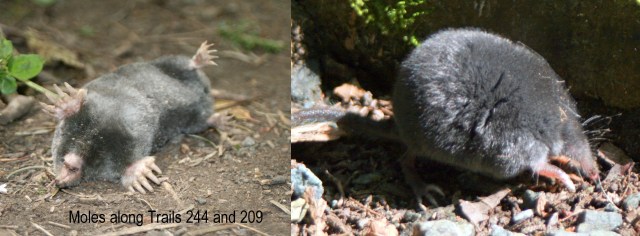
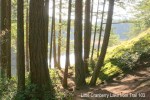
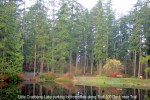
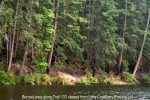 A mile from the Heart Lake parking lot, the course crosses Havekost Road and reaches Trail 226, the link to the Little Cranberry trails. Last year’s fires forced modification of the section that nears the burned area. Heading north along Trail 103, high above the lake, we exit (as it was closed beyond that point) at Trail 133.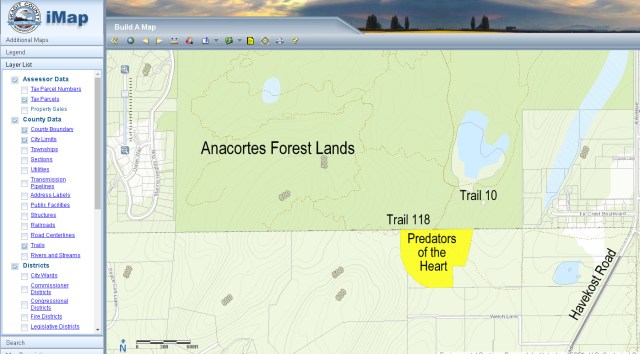
 Several wolves call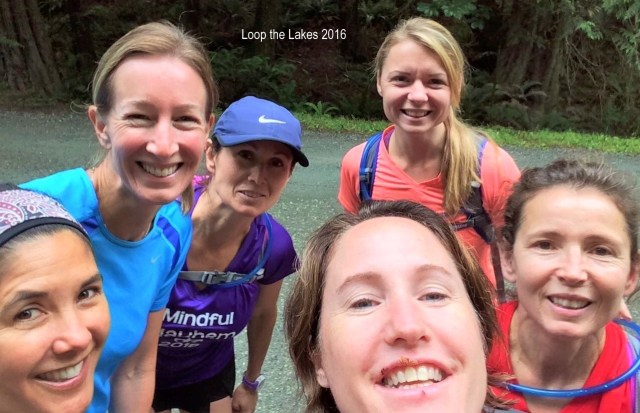
 Nina left us as planned when we reached Trail 313 and Megan became the new leader. That’s when my sister’s knee started to hurt. Erin led as we crossed Havekost Road and entered the Little Cranberry Lake trails. Within a mile, JoDee’s IT band discomfort turned to pain. We sent the other three ahead and hiked around the lake. Once we crossed Havekost Road for the second time, she insisted I finish and made her way back to my place. Two miles short of the finish, her Loop the Lakes experience ended. Erin, Michelle, and Megan were long done and gone by the time I completed the last couple of miles. My watch read 15.1 miles, within the margin of error of a typical GPS watch used in the forest. Three weeks later, Erin joined Nina as she completed the Looped the Lakes course. Wanda, with part-time help from Erin, Marcy, and Marilyn, was the last of the six runners to complete the course in 2016.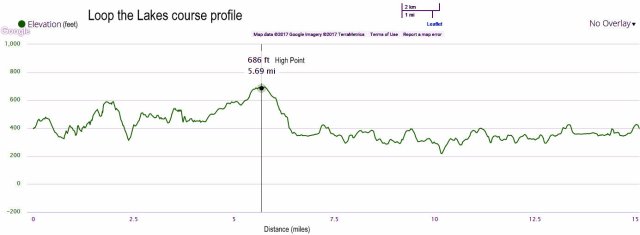
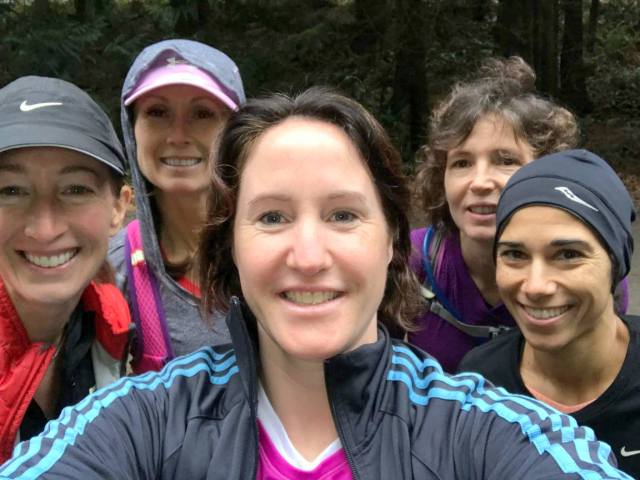 Five of us started at Mt Erie on Sunday, November 12, 2017: Erin, Leylan, JoDee, Nina and me. Two stopped at Heart Lake (as was the plan). The rest of us continued on. JoDee’s knee started hurting with 2.5 miles to go, so we sent Nina off to finish on her own and completed the course together. The trails were wet, but blanketed in maple leaves and flanked by the occasional mushroom. We completed the course just in time to avoid all but the beginnings of rainfall.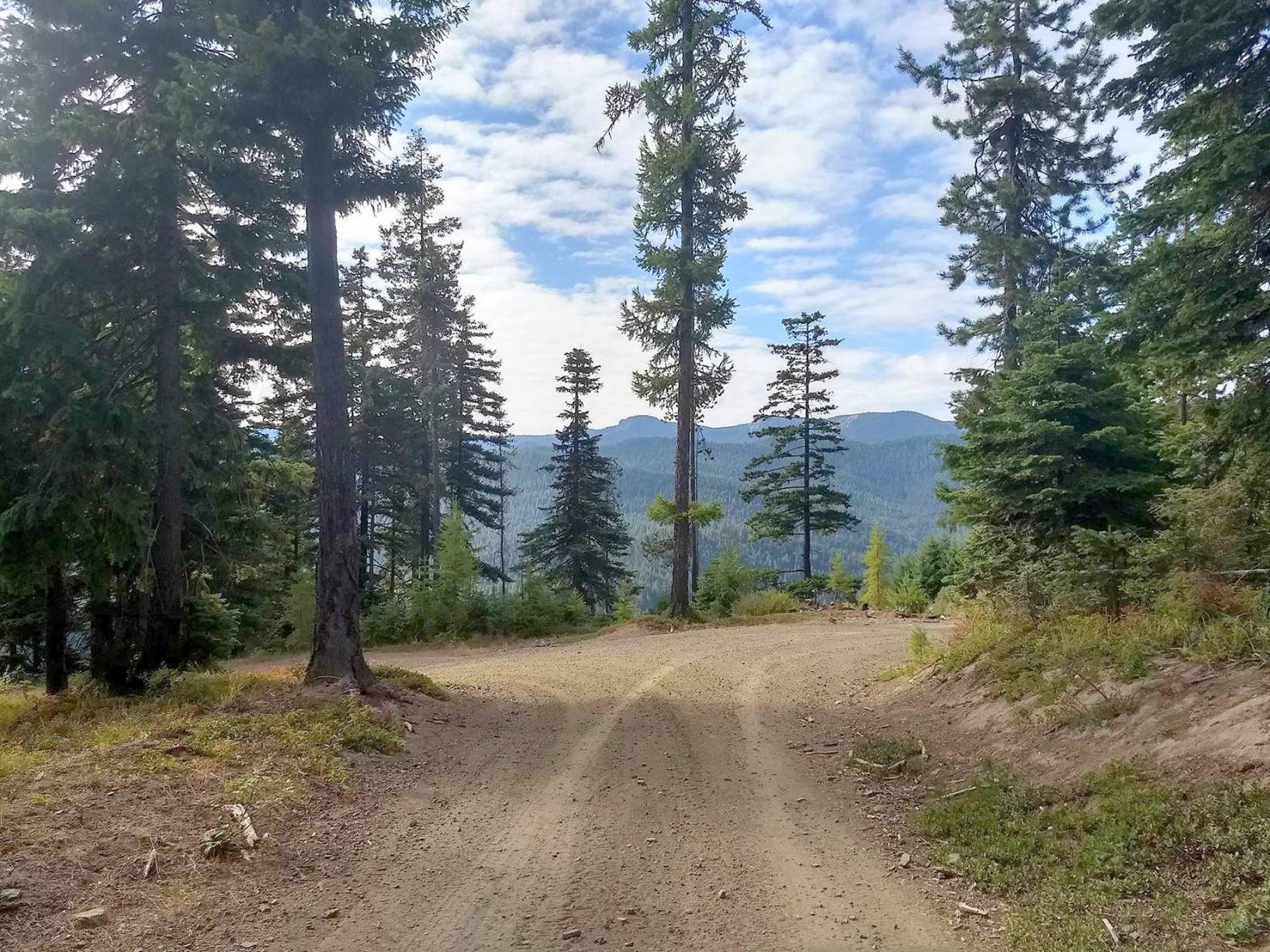
 A line of bibbed runners file past as we enter the Taneum Junction Campground parking lot in Cle Elum. This is not a good sign, but it’s what we expected. We had just made our way back down a windy, washboard-y gravel road, marked 3330 instead of the intended Forest Service Road 3300, confusing the similarly-numbered roads, that led us a mile or more towards Gooseberry Flat and away from the start.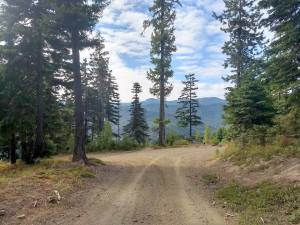
 We chose to run our own races rather than stick together, so it wasn’t long after we started before Tiffany disappeared from view. That was the last I’d see of her and her kelly green shorts until the finish line. My goals were take it easy, complete the course without falling, and hopefully avoid the hip flexor discomfort that had caused me to crumple into a pile several times during the day I completed Cutthroat Classic.
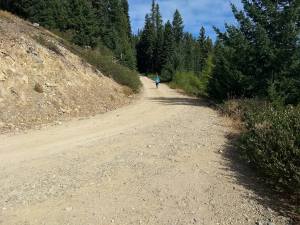
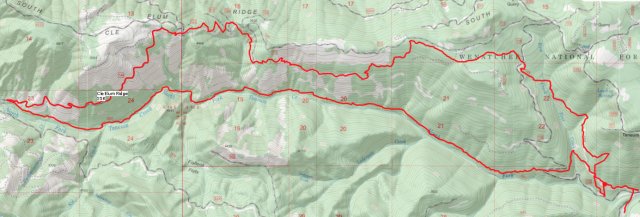 As the race profile promised, the course ascended gradually for the first 7 miles to Cle Elum Ridge and was steepest during the final mile before the summit. I chose to hike much of what I would normally try to run slowly. Even so, I passed a dozen participants on my way up, which was the only thing to do as we’d started at the back of the pack. Miles 8 and 9, downhill along a dirt road, allowed the best views of nearby tree-covered hills and was my favorite part of the race.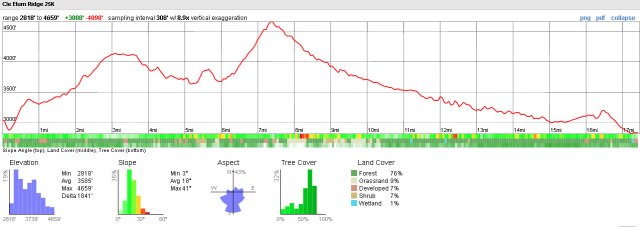
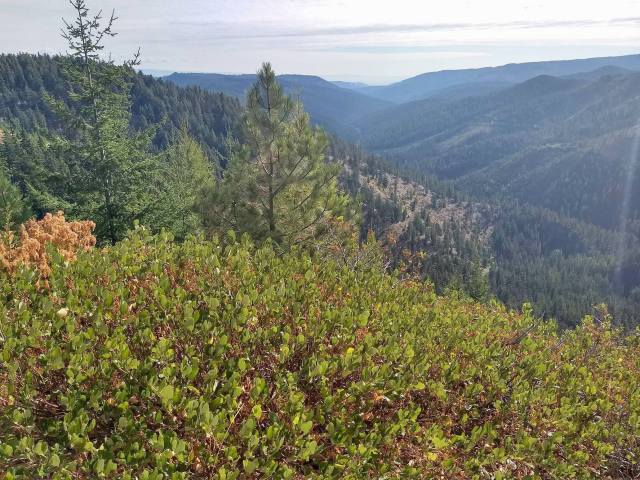
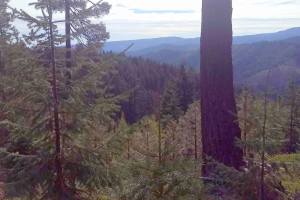
 At the second aid station, at mile 10.5, the course returned to rolling hills along single track trail. I continued running solo crossing back and forth over North Fork Taneum Creek five times within a couple of miles. From mile 8 to the half marathon point, I encountered only two runners, then passed several more as I reached what should have been the 25K mark, had the race actually been the advertised distance. I passed a few more runners by running slowly up the short uphill sections while they walked. At mile 15.3, I knew I had at least two miles to go based on the race profile. I don’t know if I bonked, having drunk nearly all of the Glacier Cherry Gatorade in my CamelBak, but each of the final three miles felt like several. The trail along the later parts of the race was dusty with a noticeable uphill section along mile 16. Just past mile 17, a sign read “fight to the finish,” which I suspected meant I was nearly there. I was wrong. By the time my watch beeped indicating 18 miles, I could see the upside down u shaped blue inflatable finish line, crossed, accepted my wooden medal, and high-fived Tiffany, who’d come in a few minutes before me.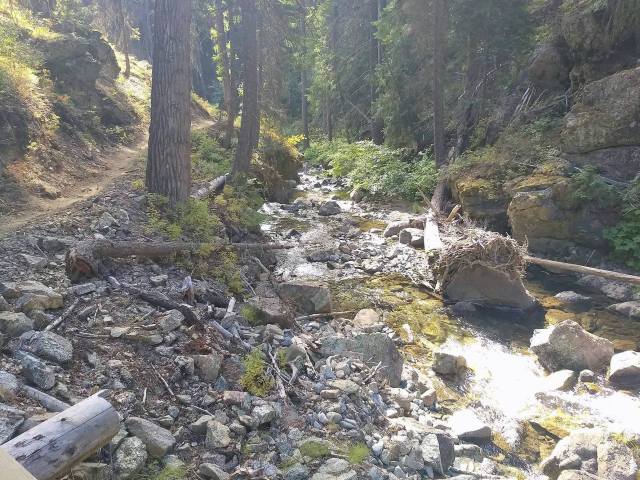
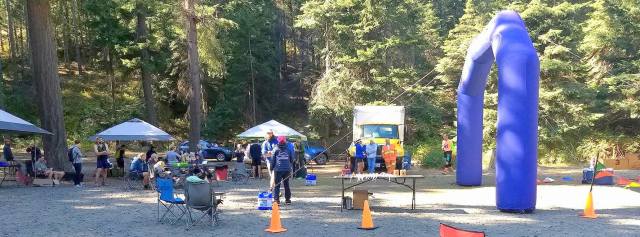
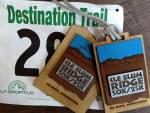 Bees buzzed around our heads, landing on us and our food as we sat in camp chairs eating tacos and waiting for race organizers to announce division finishers. Sure enough,
  I recently read Jonathan Beverly’s book: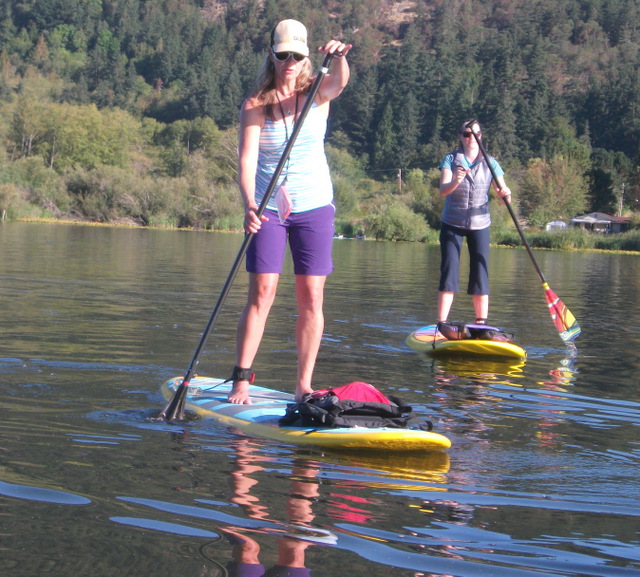
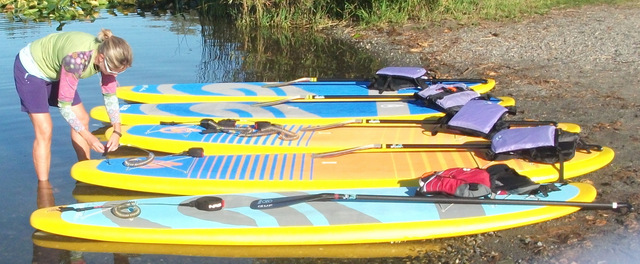
 The second day of summer 2017 was the best one ever for a couple of stand up paddle boarders lucky enough to book a tour with Jennifer and Shawn McFarland of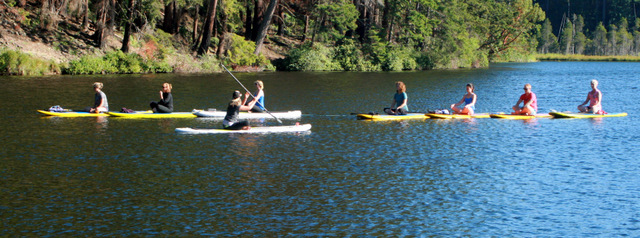
 An excerpt (Pp 126-7) from Dan Harris’s book about mindfulness and mediation
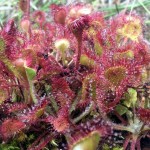 But Jennifer won’t take no for an answer. She finally figured out how to get me to say yes, offering my friends and I a group tour of Little Cranberry Lake with a promised encounter with a plant about which I’ve been obsessed for ten years,
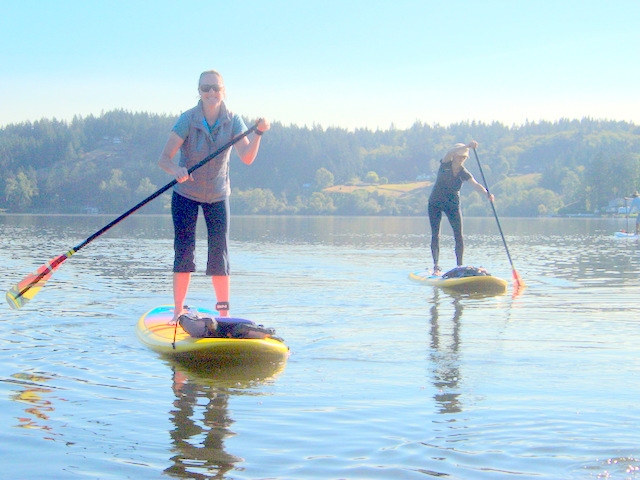
 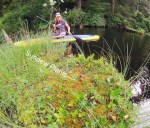 On July 27, four of us joined Jennifer at the north end of Little Cranberry Lake for a paddle boarding adventure. After providing safety instructions and adjusting our paddle lengths, she sent us off in a kneeling position near the shore before suggesting we brave the slightly scarier experience of standing up in deeper water. It was a group tour and lesson, so she explained proper techniques, which we tried to employ, mostly successfully. It wasn’t long before we neared the south end of the lake, where the sundew plants live. My tourmates barely blinked before gliding past while Jennifer sent me over to observe and photograph the surprisingly small plant. I can’t believe it took ten years for me to see a species that has lived nearly right in my back yard. We floated over logs and past bogs for nearly an hour before returning to our departure point. Nobody fell in and we couldn’t’ wait to go again.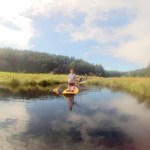
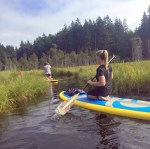
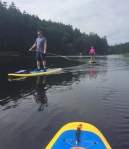
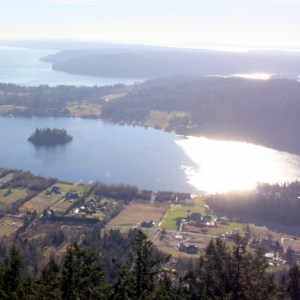
 A month later, Jennifer took us on a second guided tour and lesson at Campbell Lake, which, according to
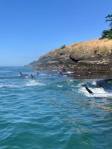
 The water was flat calm as we departed from the boat launch and headed towards the island. There wasn’t much to it except a bunch of trees and rocks with steeply sloped sides, so we continued towards a mass of lily pads near the Naked Man Valley area of Deception Pass State Park and passed by The Rock, a 20-acre parcel once owned by a famous artist named
  Two weeks later, when I crossed the Deception Pass Bride from Whidbey to Fidalgo Island, I noticed that the often swirling waters of the pass were calm. My first thought was that of a SUP Convert: looks like the perfect conditions for stand up paddle boarding.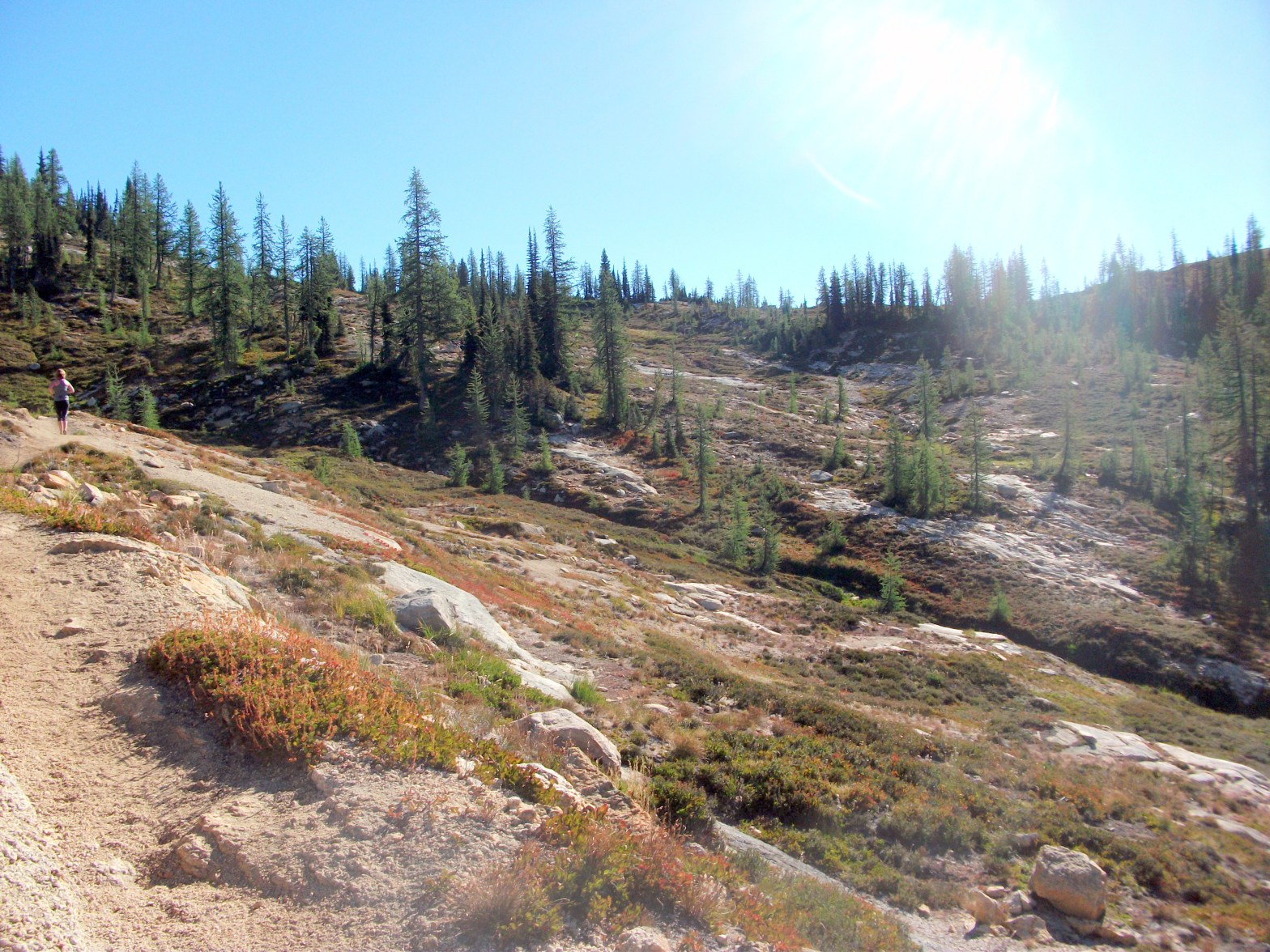
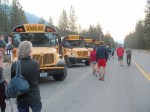
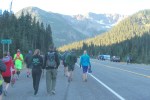
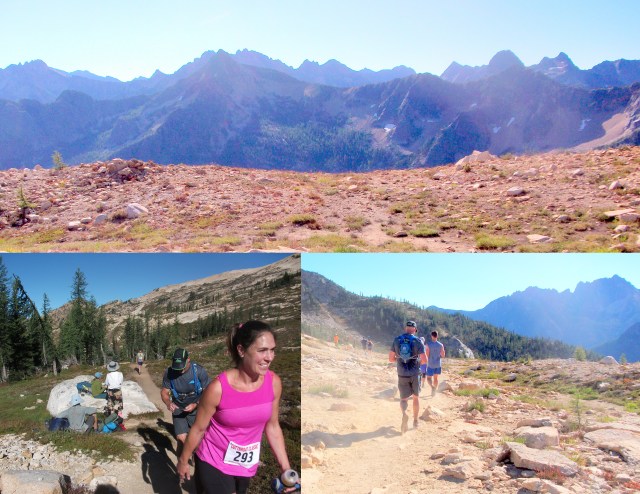
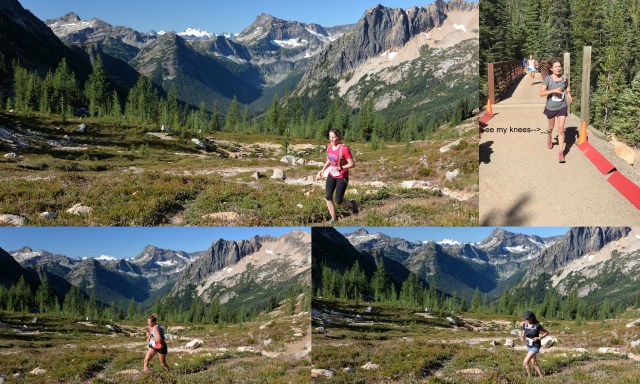
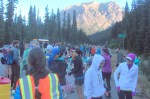 Three of the four of us racers stayed at the KOA in Winthrop on a tip. I don’t camp, so I didn’t get why anyone would want to go to such a place. Race morning, we Wave 3 starters watched as our Wave 2 (no walking) friend Erin took off from the Rainy Pass trail head in Mazama. She was right to choose it based on her predicted finish. By the time folks started, nobody knew who’d begun in the No Walking wave and who hadn’t. Concerned about falling, I watched my sister and Marci head off in front while I carefully picked my way along the trail, faux running behind a friendly young gal from Issaquah named Jenny, who sported brunette braids and reminded me what the race was all about by remarking on the amazing views at appropriate times.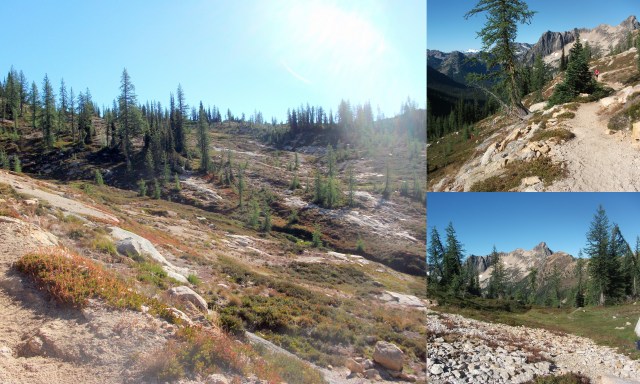
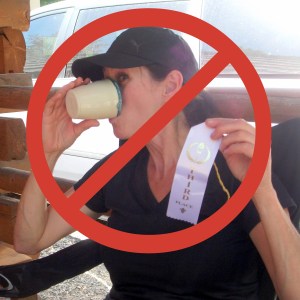 On the shuttle bus back, we connected with runners from Bellingham, possibly forming a complete Hood to Coast 2018 team. At race headquarters, it appeared that JoDee had placed 3rd in the 50-59 Division, so we left for lunch with an hour to go until the 12:30 Awards presentation. I watched her face as they called the 3rd place finisher…Bad News: a different runner! The race director suggested she be contacted immediately about any discrepancies, and she was. After asking about the Women’s 50-59 finishers, a volunteer handed JoDee an extra third place ribbon and mug while we awaited the official results, which wouldn’t be posted for days (JoDee placed 4th by 18 seconds). Our return was not for naught, Erin won a pair of $160 shoes from
 Site Title