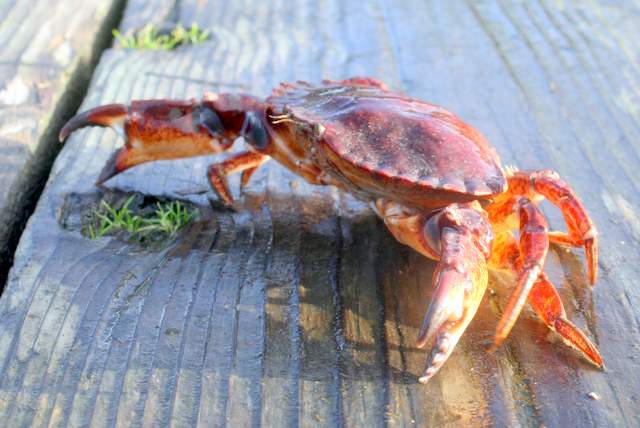
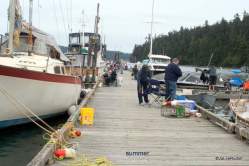
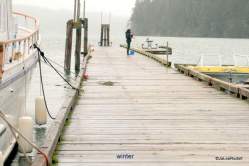
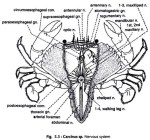
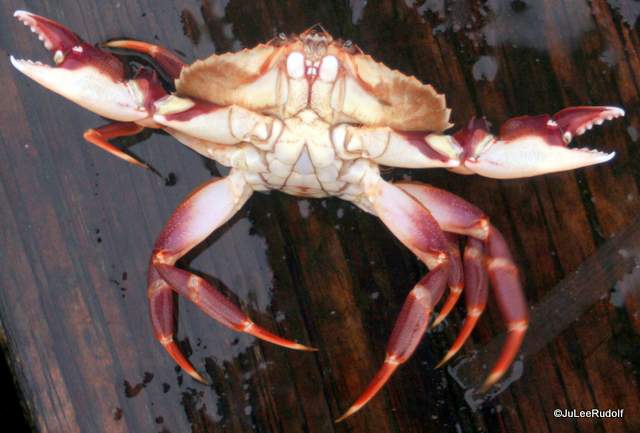
 The crab I trapped overnight at Cornet Bay tap-scratched the inside of the blue bucket. That the foursome was a winter season record for me was great, but I dreaded what I needed to do next: kill ’em. The Washington State Department of Fish and Wildlife (WDFW) site’s section on Cleaning and Preparing Crab suggests either cooking (read “boiling alive”) then cleaning, or the reverse. Removing a crab’s shell while he’s still kicking (read “skinning alive”) seems cruel. It also says, “If handling live crabs proves to be a problem when removing the back, the crab can be killed quickly by a blow to the abdomen.” The method makes sense considering crustacean’s anatomy. Fig 5.3 illustrates its nervous system, a tiny brain between the eyes and a concentration of nerves along the central abdomen, like the root system of a tree.
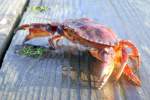 If you don’t think these creatures can feel pain, think again. A 2013 study in the Journal of Experimental Biology, Shock avoidance by discrimination learning in the shore crab (Carcinus maenas) is consistent with a key criterion for pain, indicates otherwise. Researchers placed shore crabs in a lighted tank with two darkened shelters, allowed them to choose one (or not), and subjected them (or not) to a mild shock,
 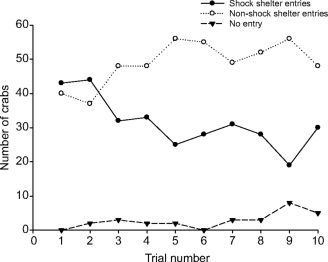 “Those crabs not receiving shock in the second trial tended to persist with their choice of shelter; however, those receiving shock in the second trial were significantly more likely to switch choice of shelter… In this way the majority of crabs came to use the non-shock shelter (Fig. 1). These data show swift avoidance learning and discrimination that is consistent with expectations should these animals experience pain.”
At home, I tipped the bucket, slid the crab onto the pavement, flipped them onto their backs, and hatcheted each of them two or three times along the midline, first near the top, then the abdomen. Sometimes the legs twitch for up to a minute afterwards, but I think it’s more humane than boiling them alive.
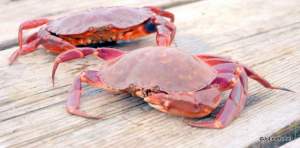 Pulling a crab pot from the dock at Cornet Bay is like scratching the stuff off of a lottery ticket: more likely than not, you wind up empty handed. With many bait-filled traps vying for the attention of a few legal sized crab, everyone has a theory on the best tide, bait, and location along the dock to improve his or her chances of success. During the winter season there is less competition than in the busy summer months, so it’s a good time to go if you can handle wind, rain, cold, and occasionally, snow. My theory on optimizing your chance of catching crab from the dock at Cornet Bay is–no can do. If there are crab, you’re as likely to catch them as anyone else with whatever they are doing. WDFW recommends crabbing at slack tide because the tidal movement is reduced, allowing crab to forage for food, which is what most people do. Several have suggested that flood tide pulls crab into Cornet Bay. Others have mentioned that the water is less silty allowing crab better visibility during flood than slack tide; however, they have an excellent sense of smell.
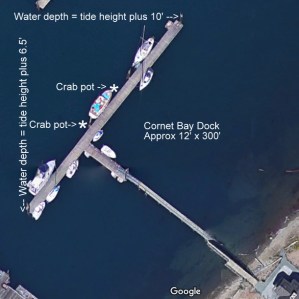 This December, I hypothesized, “I’ll catch more legal sized crab at high tide than low tide.” I also wondered whether the tidal coefficient and/or solunar activity might affect the amount of crab I could catch. I dropped a weighted yellow rope with knots at one foot intervals at several locations along the outside face of the dock, from which everyone crabs (except sometimes in the summer when it’s insanely crowded) and found that the water level variance from the shallowest (sw) end to the deepest (ne) end is only about 4.5 feet. I chose two spots near the center of the dock to place the pots and dropped them twelve times from December 12 through December 31, during which the average air temp (Oak Harbor) was 38°F and water temp was 47°F (Port Townsend).
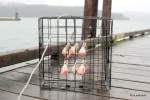
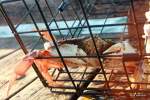 Controlled variables:
Number of traps, location, quantity and type of bait, time in water (four hours)
Dependent variables:
Quantity and size of Dungeness and Red Rock crab trapped, legal-sized (6.25″ between the spines) male Dungeness crab trapped, aka “keepers.”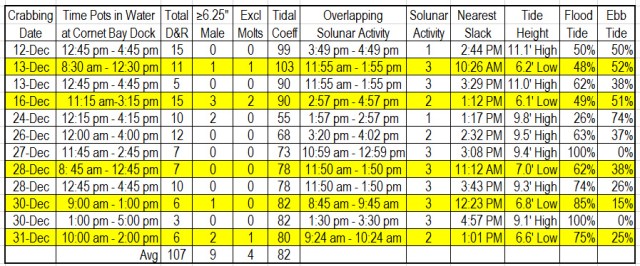
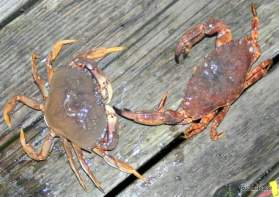
The results: with the two pots in the water for a total of (4 hours/time)x 12 times=48 hours, I trapped 107 crab. Of those, 9 were legal-sized males, but five were soft, leaving four keepers. The data shows that I caught most of the keepers (7 of 9) during low tide, which doesn’t support my hypothesis. Neither the solunar activity nor the tidal coefficient correlated with the quantity of crab trapped. I also caught several Red Rock keepers. Even though they taste delicious, they are small and less meaty, so most folks prefer Dungeness.
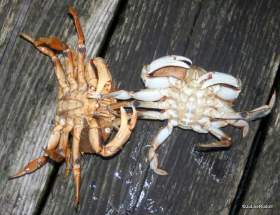
During all that time I spent around crab, I observed some interesting behavior. Once, a hard-shelled, barnacled male pincered a soft-shelled’s leg…and tried to eat it. The Pacific States Marine Fisheries Commission Dungeness Crab Report 2014 claims, “cannibalism is prevalent among all age groups.” From the same report, I learned more about molting, “Growth is accomplished in steps through a series of discrete molts. Dungeness crabs of both sexes molt an average of six times during their first year and attain an average width of one inch. Six more molts are required to reach sexual maturity at the end of their second year, when they are approximately four inches across. Once maturity is reached, growth of females then slows as compared to males. Females molt at most once per year after reaching maturity and rarely exceed the legal size of males. Maximum female size is about seven inches. Male crabs usually molt twice during their third year and once per year thereafter. The average size of males three, four and five years of age is about six, seven and eight inches, respectively. Males may undergo a total of 16 molts during a lifetime, reaching a maximum size of nine inches and age of six to eight years.”
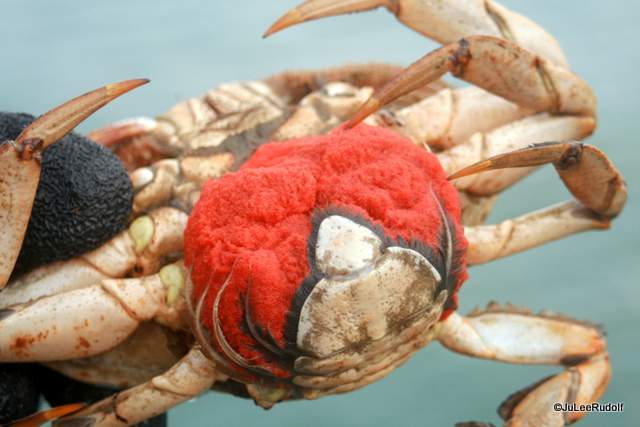
A bonus: the chance to see a female with eggs that a fellow crabber caught, “The smallest females carry about 500,000 eggs and the largest from 1.5 to 2 million.”
At the Cornet Bay dock, scarcity of crab and competition from fellow crabbers are probably the biggest obstacles to catching keepers. Shellfish harvesting rules in our state are more strict than in Oregon or California.
 WDFW allows a daily catch limit of:
5 male Dungeness crab greater than or equal to 6.25″ and 6 male or female rock crab greater than or equal to 5″
ODFW
12 male Dungeness crab greater than or equal to 5.75″ and 24 male or female red rock crab any size
CDFW
10 male or female Dungeness crab greater than or equal to 5.75″ and 35 male or female red rock crab greater than or equal to 4″
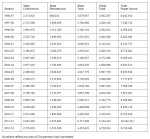
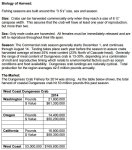 Since 1996, when WDFW began tracking the crab catch, the total (of recreational, commercial and tribal) caught increased by about 50% by 2012. With such strict laws in Washington state, you’d expect us to have the lowest catch total on the west coast, but we don’t. According to the Pacific States Marine Fisheries Commission (PSMFC) Dungeness Crab Report 2014, commercial fisherman in all three states abide by the same rules…Washington’s rules! Most were caught along the Washington coast (21.8 million pounds), then California (16.8), then Oregon (14.4). Total value for 2014, nearly $170,000,000 (that is not a typo). According to Don Velasquez, WDFW Fish and Wildlife Biologist, the difference in pounds caught between the two data sources is due to the fact that the PSMFC data includes only the crab caught along the Washington coast. Crab fisheries within Puget Sound are managed separately, and the harvest totals are typically not included in PSMFC data. Velasquez shared that Puget Sound crab is often sold live, to destinations inside and outside the United States, and so nets a higher price per pound than that caught outside the area, which are more often slated for processing. The most important thing he taught me was also the most surprising: placing crab in a bucket of water without an aeration device kills them! They will quickly run out of oxygen and die, particularly in warmer weather. The best way to keep crabs alive is to set them upright in a cooler or bucket and place burlap sacks or towels soaked in salt water over them. If the temperature is very cool, they can survive for days this way, which is why commercial crabbers use this method to keep their catch fresh.
But back to my crabsperiment. In the end, I could only conclude: during the winter crabbing season, you might have better success during low than high tide. The data supports what I already knew, catching keepers from the Cornet Bay dock takes patience, persistence, and a little luck. In other words…it’s a crabshoot.
Note: Unless noted otherwise, information in quotes is from the Pacific States Marine Fisheries Commission Dungeness Crab Report 2014
 Every Whidbey and Fidalgo islander has likely encountered a rusty-maroon eight-lobed blob lying along the shore: Cyanea capillata or Lion’s Mane jellyfish.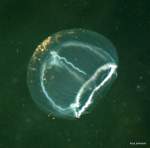
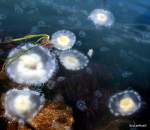
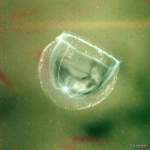 Another local species: Mitrocoma cellularia aka the cross jelly. This smallish species has been abundant at Deception Pass State Park during the last couple of years. I’ve observed cross jellies from the docks at Bowman Bay, Cornet Bay, Sharpe Cove and the Urchin Rocks at Rosario Beach. The
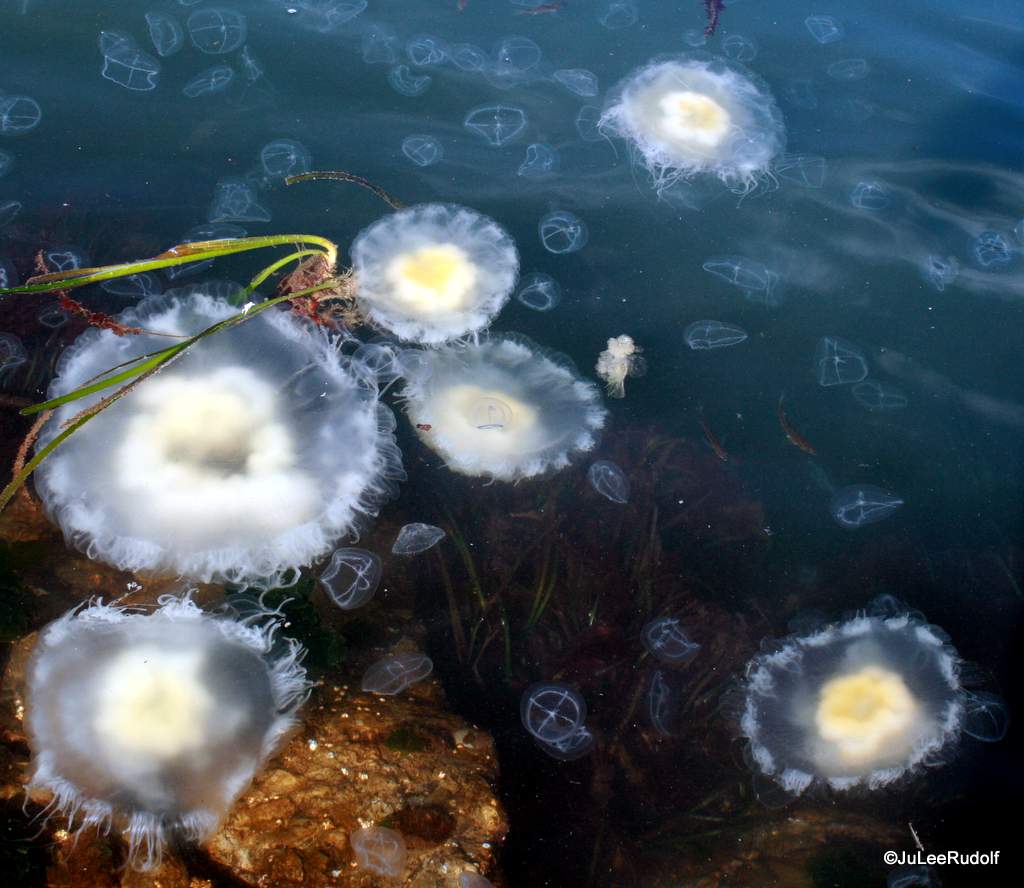
 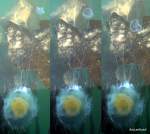 Too bad they can’t smell predators. This fall, at the Cornet Bay dock I noticed an encounter between a cross jelly and a third locally common species, Phacellophora camtschatica, or egg-yolk jelly, a relative of the Lion’s Mane. It was attempting to do what the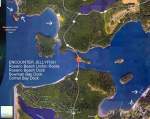
 Walla Walla University owns and operates the
 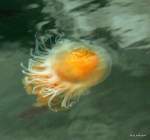 I mentioned that I hadn’t seen a Cyanea capillata in over two years, not since I’d helped one escape imminent stranding in Sharpe’s Cove opposite Rosario Beach by moving a floating log blocking its way to deeper water (It probably waited until I was out of sight, then properly stranded itself). Although Lion’s Mane jellyfish are nowhere to be found lately, during the past two summers (they tend to disappear in late fall) I’ve seen many Phacellophora camtschatica and Mitrocoma cellularia in recent years, significantly more than in the years before.
 Dr. Cowles wrote, “I have also definitely noticed that the abundance of different jellies in the area changes dramatically over time. It appears that the population dynamics of most jellyfish are not well understood. At least I have not seen many explanations in the scientific literature. Certainly, some are seasonal, such as the Aequorea victoria, which tends to be more common in late summer. Cyanea capillata is usually one of the more common ones, but although I searched multiple times I could not find even one all last summer. I have no idea why. On the other hand, the Phacellophora camtschatica were very abundant, as you noticed as well.”
 And what about the strandings? “Jellyfish often do things that do not seem to ‘make sense’, like stranding themselves. Although they do have a very simple nervous system they do not have a brain, and that could be why. They seem to respond to very basic cues such as temperature, gravity, and water movement in stereotyped ways that on average work well for the population, but may not make sense for a particular individual. Most of them have a ‘statocyst’ organ which helps them tell which way is up, but many of them do not even have eyes. It is really doubtful that they ‘know’ anything, since their nervous system is much less complicated than even a fly’s.”
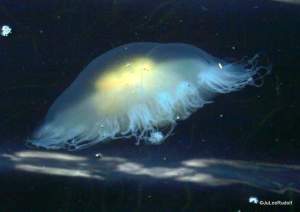 Late this summer, I took a ride with Deception Pass Tours and saw what the guide called “a swarm” of egg yolk jellies. The
  One last thing I wondered. Have all 13 species listed at the Invertebrates site been observed at Rosario? Dr. Cowles replied, “Most of the jellyfish on my web pages were found fairly near Rosario. Some of them were from as far away as Friday Harbor. Also, many jellyfish are quite small—the size of a raisin or small grape. There are still quite a few species out there that I have not found yet, so I am still looking!” This time of year-when we are busy focusing on the holidays-is a great time to take a walk in the woods or along the shore, stop and smell the roses…mushrooms…marine life!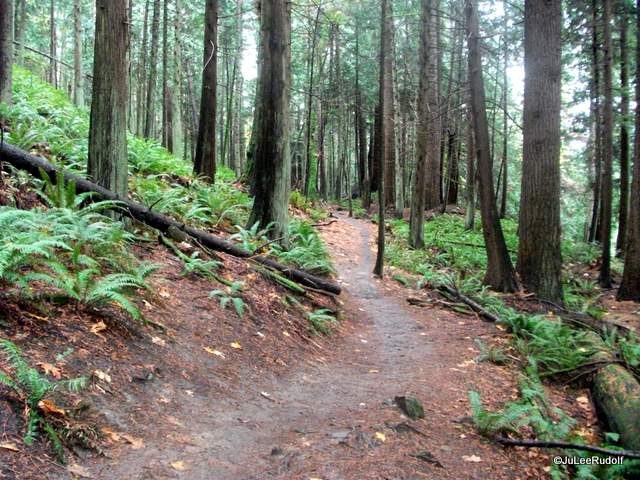
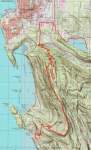 Race day morning: raindrops barraging the skylights, wind whipping through the trees, and a forecast of 100% chance of rain from nine to noon, the duration of the Bellingham Trail Half Marathon. So, I did what any self-respecting person would do, went back to bed. As I lay there, I knew I wouldn’t be able to face my sister (nor text or call) to tell her I’d backed out because of inclement weather. If given the chance, she’d have done it, so I needed to do it. I was running late as I dragged myself out from under the covers, packed up and set out for Lake Padden Park in near total darkness.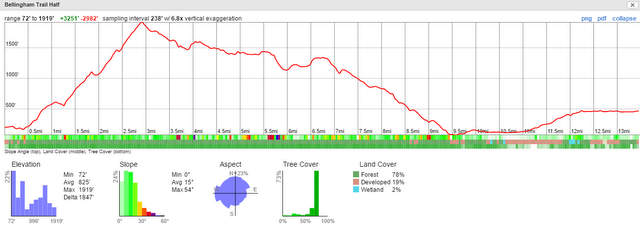
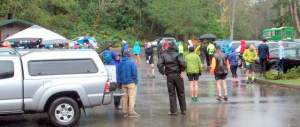 Former school buses painted kelly green transported runners from Lake Padden Park to the Fragrance Lake Parking lot across from Larabee State Park. From there, we’d run a point to point course leading back to the lake. Wearing the shirt from my toughest trail race: Oregon Coast 30k, for inspiration, I rode with a Seattelite named Rob. We commiserated during the 20 minute trip about keeping injuries at bay after running for so many years and shared favorite trail race courses. His recommendation
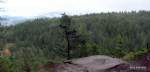 Runners and spectators in waterproof gear huddled together under cover in the parking lot while waiting for the start. Race director Candace Burt provided pre-race instructions, displayed a sample trail marker, and sent us on our way at 9:00 am. After a short half mile flat section on Fragrance Lake Road and the Interurban Trail, runners headed uphill along the section known as the chinscraper (Double Diamond Trail). Under a canopy of Douglas Firs, it was drier than in the open parking lot, but the muddy trails were eroded from recent rains. After the aid station at mile 2, it was only a mile to the course’s summit. The Ridge Trail section was my favorite, though fog obscured what I know to be beautiful views.
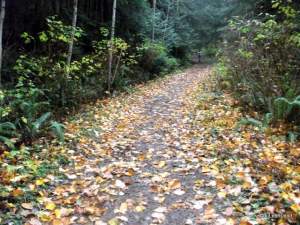 On the descent, rolling hills with maple leaf covered paths as we followed the Lost Lake, Madrone Crest, Hush Hush Trails, then back to the Interurban. A gal I’d passed earlier followed me for a quarter mile before continuing on by. When I first checked my watch at a beep, it read mile 7. With nearly the same to go, I slowed, thinking I’d gone out too quickly along the hard part which might mean walking a lot at the end. Three marathoner men flew by during a twenty-minute time span. Just before the second checkpoint at mile 10, a woman sporting French braids and mud-spattered calves passed me. I recognized her as last year’s female winner. I caught her at the aid station at mile 10 for me and she confirmed my suspicion, she was the female marathon front-runner.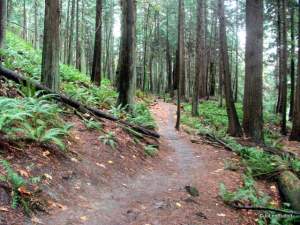
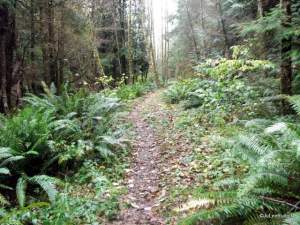 When I next checked my watch at the lap beep, it read 11 miles. I realized with relief that I’d misread mile 9 as 7. We ran exited the trails at Old Fairhaven Parkway and followed the roads to and under I-5, then back to the trails leading to Lake Padden.
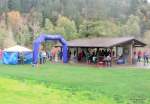
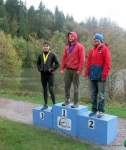 One of the prettiest moments, which I would have enjoyed more had I not felt so awful, was as I ran along the trail towards the lake. I couldn’t see the blue inflated awning marking the finish, but knew I had nearly two miles to go. Minutes after I crossed, Candace presented the awards for the half marathon. Michael Seiser, a local 27-year-old, was the overall winner in 2:05:00. The first female finisher was also a local, 28-year-old Amelia Bethke, who owns four of the five fastest female times. After the ceremony, I sat near a guy who flew by me at about mile 11. He’d taken a wrong turn at the first aid station, run an extra five miles, and still finished ahead of me.
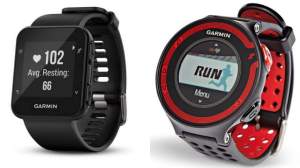 I was glad to have finished the race, but a strange thing happened afterward. I was wearing two watches, the Garmin 220 Forerunner, which I’d bought recently, and the Garmin 35, which I’d acquired for free through the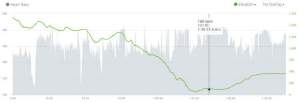

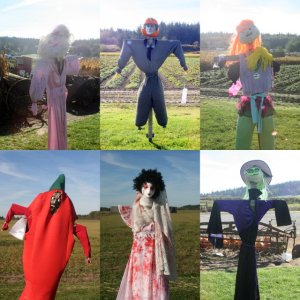
 Last year, Halloween approached. Arrived. Departed. When the kids were little, the holiday brought excitement and anticipation: parties, costumes, traveling house to house collecting candy. Now that they are long beyond the age to trick or treat, it brings melancholy: Gone are the days of kids clothed in cute costumes, trips together to collect, carve and display pumpkins transformed into jack o’ lanterns. While mothers of youngsters continue the tradition, I put up the decorations, purchase the candy…and sigh.
 USA Today
 According to
  Americans’ participation in the pagan-based holiday might seem inconsistent with peoples’ beliefs. A


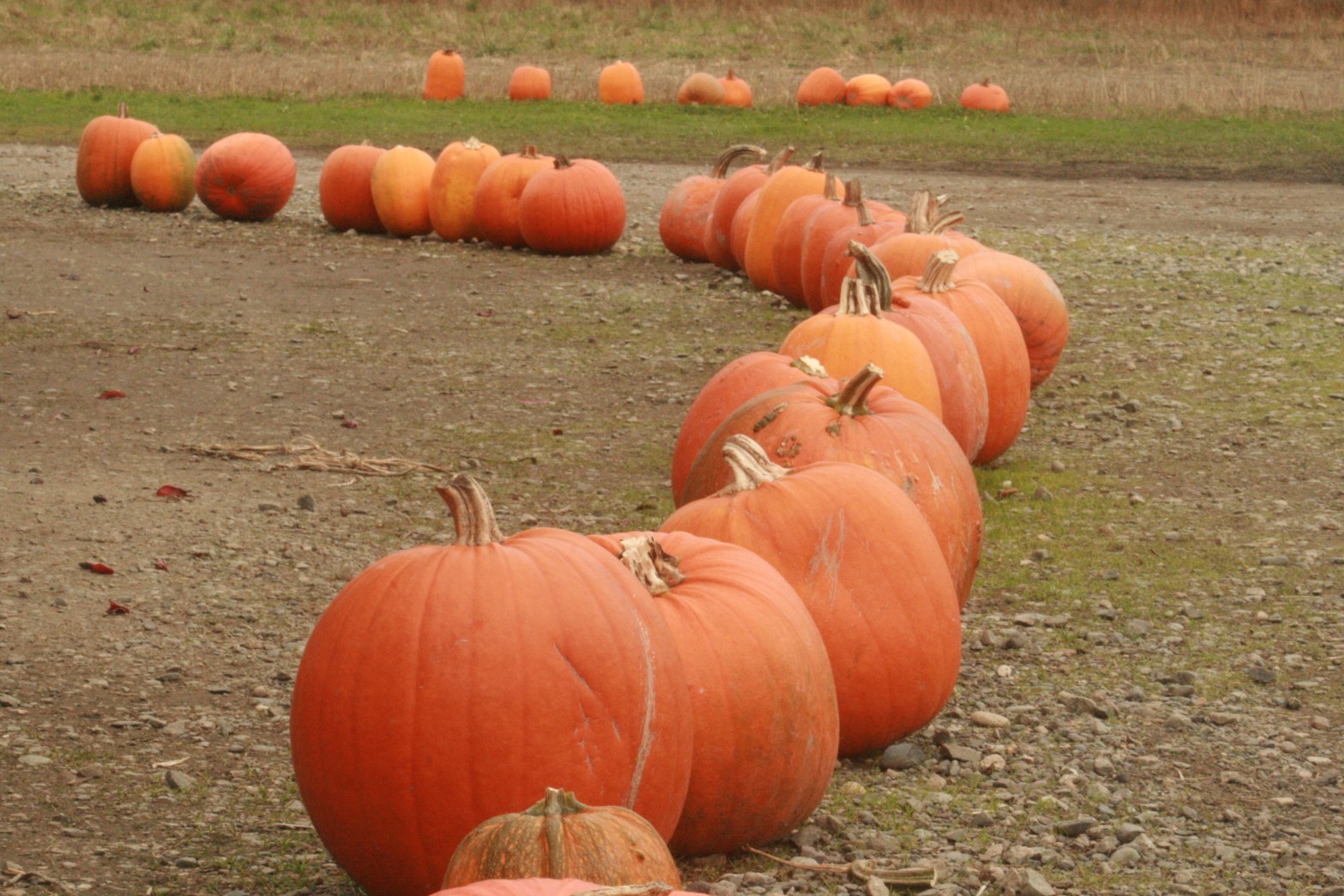
 Last year, I stopped by the place my family had gone for years to find the perfect pumpkin, Dugualla Bay Farms in Oak Harbor. I watched as a father tried, somewhat successfully, to coax his daughter into sitting atop a pumpkin long even for him to capture the moment with his camera while a young brunette with a baby strapped to her chest dragged a rusted orange wheelbarrow out to the pumpkin patch. I set out solo. Row upon row of mostly orange, but also white pumpkins lay in wait. Growlers screamed overhead, compelling tourists to stop and gawk. After half an hour of wandering the fields, I chose two from one of the several places with lines of pre-picked pumpkins, weighed, paid, returned home and placed them on the porch…uncarved.
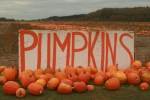 This year, I returned and did same. In the rain and with an added sense of sadness. According to a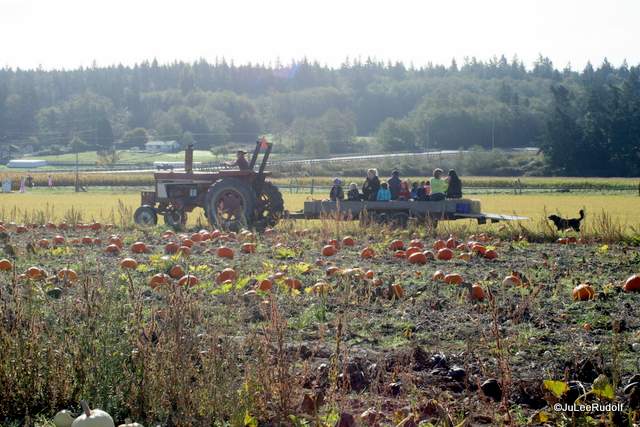
 Fun Facts:
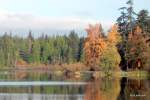
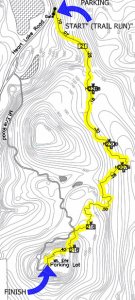
 I stopped by Mt Erie Elementary just after 9:00 am to take a few photos for a story, but when I learned that “only about five” people had signed up for the trail run, I thought, why not? I had the cash for the entry fee, so I registered and returned home. Ten minutes later, I was ready. I parked at Heart Lake and jogged to the start, arriving at 9:45 am, about 15 minutes early. I was the only one waiting at the base of Trail 21. The smooth surface of Heart Lake gleamed in the distance. A solitary Great blue heron fished along the near shore.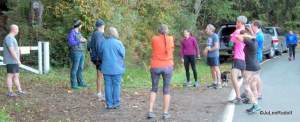
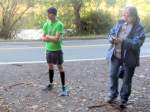 Just before 10:00 am, participants began to arrive. And that is when I first encountered Lucy. The petite youngster eyed me suspiciously. I knew we weren’t in the same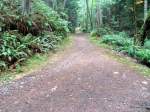
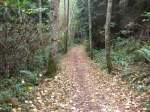
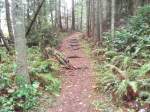 I faux-ran (looks like running, but at a super slow speed) the steep section at the start of Trail 21, passing a couple of older-than-I guys from an earlier wave. Teenagers in twos and threes staffed the turning points which were marked with flour arrows and orange surveyors tape. Minutes later, I’d reached the first mini-summit and entered the best part, the rolling hills along Trails 226 and 230. Near the end of it, I heard the trio from the fifth wave, including Lucy, hounding me. When we reached Trail 207, I knew I was about to be beat. Lucy and crew scampered by, passing me without a glance, traversing the roots and rocks as nimble as a mountain goat. Grr! The three were ahead of me. I knew I’d never catch them.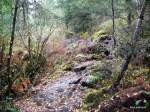
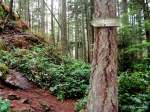 The final fourth of the course is the toughest. The trail gets more technical and the slope steeper. With less than a quarter mile to go, I passed a pair of girls from the cross country team where Trail 216 nears the road. They clapped and cheered, “You’re almost there.” When the Summit signed appeared, I knew I had only to make it up to and across a boulder to the finish, and did. Less than half an hour after the start, I crossed between two orange cones marking the finish and stepped onto Mt Erie Road.
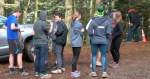 As I approached the water cooler, Lucy’s companion, smiled and handed me water in a dixie cup. My adversary didn’t even look up, instead, hopped off the truck bed’s flipped-down back gate, and joined her posse. I took the high road, acting friendly towards the three who’d just beat me and offering to take a photo, which they accepted. In it, you can see that Lucy isn’t interested in me. She’s looking off into the distance. I’ll bet she’d have rather raced the remaining road runners than pause for a photo. I bummed a ride from the summit to the school with a guy named Mike and his wife. On the way, we picked up another runner, Catherine. She told me she treasured the trophy she’d won years before during the first year she participated in the race.

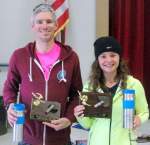 Back at the gym, we waited for everyone to arrive. I high-fived Ian Sloan after finding out that he’d beat his two wave-mates to become the overall trail winner, edging out second place finisher Joe Jankelson by two seconds. Ania VanEgdom was the first woman trail run finisher. In the road race, Patricia Blakeway was the overall winner and Chuck Davis the first male finisher. We gave the AHS Cross Country team member volunteers a round of applause. Raffle winners chose prizes-leftovers from past years. Age group and overall winners accepted awards. As for Lucy. She never showed. During the awards ceremony, she waited in the car. I was disappointed to miss the chance to get one last look at her. I wondered about next year, do I let sleeping dogs lie, or prepare for retribution. I think my motto will be: BEAT LUCY.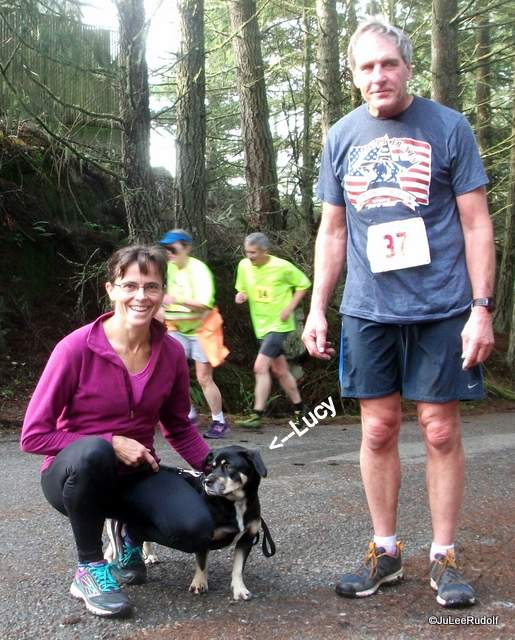
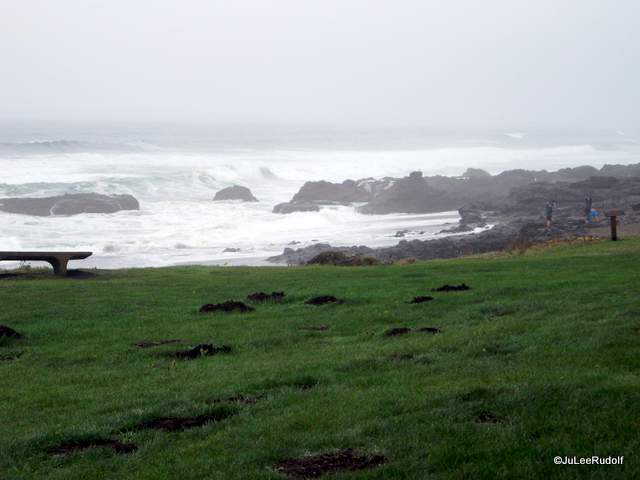
 Lying flat on my back on the wet grass after the race, a guy behind me says, “That was hard as f&*#.” I smile and say to my sister, “What he said.” The previous afternoon, as JoDee and I previewed the final mile of the 30K/50K courses, she was tearful. My sister had injured her IT band several weeks prior and had to sit this one out. We watched the last few 50K-ers crossed the finish line.
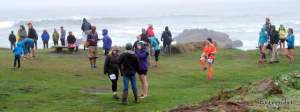 On a cool, foggy Sunday morning at 10:00 am, I set out with 154 others on a quest to climb 3,800 feet (more like 3,900) over a distance of 18.6 mi (um…19.8) within the 6 hours allotted in the Oregon Coast 30k. Minutes before, I was hanging out in a covered area. A pair of ponytailed identical twins discussed race strategy to my right and Glenn Tachiyama, best running photographer ever, to my left. I hoped that my choice of clothes was right as I walked over to the start line. Others’ apparel ranged from long tights with rain jackets and hats to sleeveless shirts and shorts, including the eventual winner, a 38-year-old local guy named Rob Russell who cut nearly 8 minutes off the previous course record, completing it in 2:48:38, about 8:30 min/mi pace!
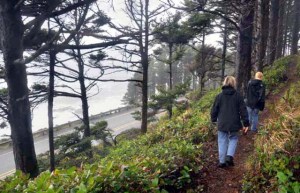 We started out on bumpy ground, perfect for ankle-twisting, just north of the Adobe Resort in Yachats, a small coastal town with a population of about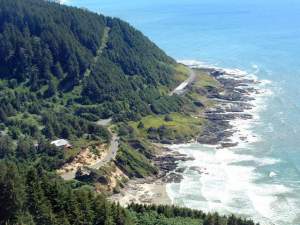
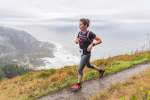 Early on, rain began to fall and the trail became a sloppy mess for a couple of miles. I dreaded the thought that it would continue for the rest of the race. Luckily, I was wrong. Even before I reached the
 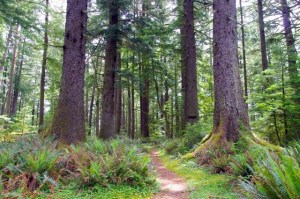 At about mile 7, I continued past the first checkpoint because I was carrying my own electrolyte drink and began the ascent of the middle hill, that reached its peak at mile 11: 1,200 feet above sea level. I had dreaded this part, thinking that I’d be doing a lot of walking, but it turned out to be less steep than other two hills. This loop along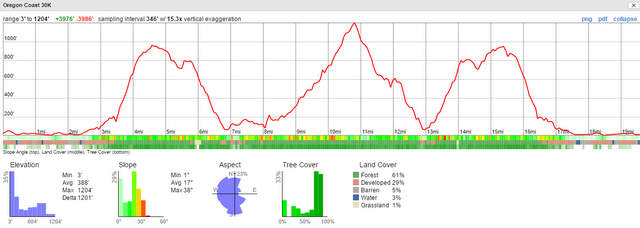
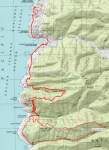 I skipped the aid station at mile 13 and headed up the hill. Pole Vaulter Girl called back, “Are you coming?” So, I tried to stick with her, walking the hillier parts and running the flatter ones in hopes of keeping up. Back at the Cape Perpetua Lookout, a spectator called out, “It’s all downhill from here,” to which I replied jokingly, “That’s a lie.” I knew that we had at least a mile of difficult climb left. And we did. I picked up the pace as I descended Amanda’s Trail, crossed the highway and slogged along the flat paved section nearly a mile beyond the beep of my watch after it signaled Mile 19 on the 30k (18.6 mi) course.
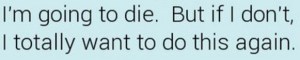 Four hours, twenty-one minutes and change later, I reached the finish line, high-fived James Varner, and lay down on the grass. The fact that Kiki Graf, two years older than me, finished 14th overall, 3rd of the 75 female finishers, and less than 20 minutes behind the 29-year-old first female finisher impressed me. The race was so difficult that afterwards I thought I’d never want to do it again. Days later, since I survived, I totally want to do it again. I’ll be back next year with my sister, and all the friends I can convince to join us.
 The
The 

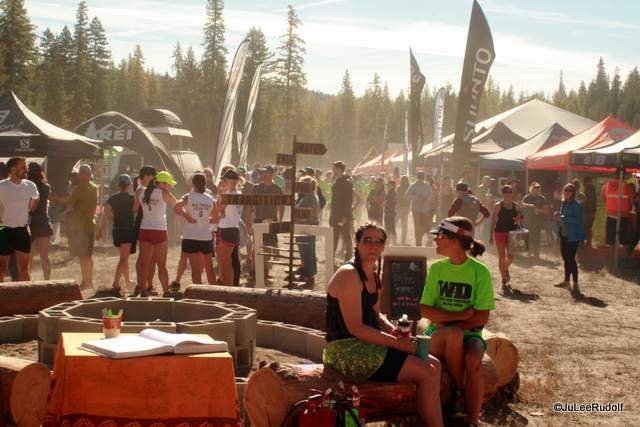
 “Eat my dust,” said no runner EVER, but that’s what over 1,700 participants in the inaugural running of Ragnar Trail Cascades did (and I theirs), literally, while on the trails and in The Village at Loup Loup Ski Bowl this past weekend. Fifteen four-person ultra and 204 eight-person regular teams converged upon this little known recreation area to (Trail) Run, Eat (Dust), Sleep (In Tents), Repeat while camping among the pine trees at 4,000 feet.
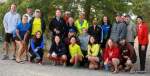
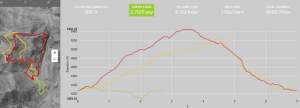 When I first learned about Ragnar Trail Cascades, I checked out the course. And scoffed. Every runner completes the same three loops: Green (2.7 mi/398 ft of climb), Yellow (6.9 mi/1406 ft), and Red (7.0 mi/1,622 ft), a total of 16.6 mi and 3426 ft of climb, but two of the loops cover much of the same trails. Living near and running in the scenic, well-tended trails of the Anacortes Forest Lands and Deception Pass State Park has spoiled me, so I didn’t organize a team in 2015, which was canceled due to lingering smoke from summer fires. But when I was offered a spot 11 days before this year’s September 15 race, I decided to Lean In, and became the 8th member of women’s masters team Fast Women Have Good Times. We were to camp with two other master’s teams, mixed Running on MT and men’s Legion of Zoom. I’d agreed to spend the weekend with 23 runners I’d never met.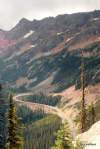
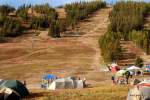
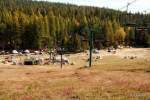
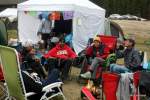 My ride followed the North Cascades Highway, a route with spectacular views and a national park, to a house about 30 minutes from the race location where we would spend Thursday night. Part of our group went to the RTC site at 4:00 pm Thursday to set up several tents at our three teams’ camp at a site sw of the lodge at Loup Loup Ski Bowl. On race day, we arrived two hours before our 10:30 start and viewed the safety video. Drivers parked vehicles down the hill from camp sites and rode shuttles back up. Campers were spread out all over the ski area not far from The Village. Gigantic trash and recycle containers; bright green Porta potties; and several hoses were set up, the only on-site water for washing. Two rows of tents made up the area where participants would spend most of their non-campsite time. In the evening, runners could hang out by the camp fire, watch movies, eat s’mores.
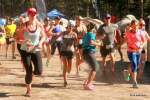
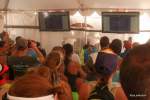
 Two of our teams prepared to for a 10:30 am start, the third’s was 12:30 pm. Once geared up with a green slap band to match the first loop, runners belted a chipped bib around their waists and set off through The Village and past our camp site along the shortest, flattest of the three courses. Fewer than twenty-five minutes later, our Runner 2 waited for news of Runner 1’s return under a white canvas tented area with two screens that showed the team name and number of arriving runners. Once seen on the screen, the subsequent runner would head into the transition tent, slap a different colored band on his or her wrist and await the previous runner’s arrival, accept and belt the bib and continue to the course. Returning runners reported course intel and possible pitfalls to the others. Except for a two mile section of single track at the summit of Red Loop, trails were typically wide, dusty roads sometimes covered with sections of grass or pine needles and lined with occasional roots and rocks.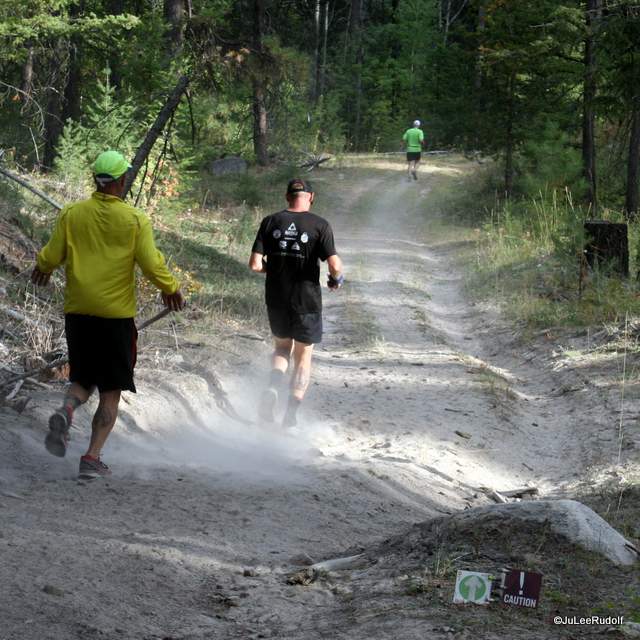
 Back at The Village, runners could give Salomon trail shoes a try on the trails for free, participate in several contests for prizes, drink coffee or Nuun or purchase a massage, time with Elevated Legs, or fancy coffee. Ragnar provided a budget-conscious unfancy high-carb dinner Friday night for free and food, coffee and beer at limited times for a fee.
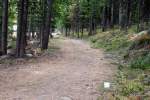 As Runner 4, my involvement in the race began in the early afternoon with Green Loop. Living at sea level, I knew that the 4,000-5,280 altitude would affect my performance, and it did. I was sucking wind on the flattest part of the easiest trail. I wanted to represent on my team of Fast Women, so I tried to fly along the dustiest trail on which I’d ever run and wondered at mile 1.7 how the One Mile to Go sign could be such a liar. It felt more like two. I started my second leg, Red Loop, at 9:30 pm. As I set out wearing one head lamp and carrying another, I found it hard to distinguish the fine grained dust layer covering potential tripping hazards with that camouflaging smooth trail. Once I could no longer run along the four mile uphill section, I alternated speed hiking the steeper parts with jogging on the flatter sections. Descending Red Loop runners called out encouragement: they knew what we faced. At about mile three, I reached the water station and followed single track to the top and partway down a switchback-y section that returned me to the common Red/Yellow track of runners heading up. Headlamp light and hand held flashlights illuminated dust in the air, creating whiteout zonez. Descenders encouraged ascenders, now we knew what they were in for.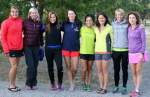
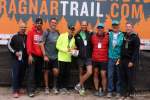 Afterwards, I crawled into my sleeping bag, slept half an hour and hung out with my campmates until my next leg neared. Looking to the northwest from The Village, we could see runners’ lights flickering between openings in the trees as they made their way to the summit. Waiting for Runner 3, I stood by the campfire in the cold darkness until 5:00 am, when I headed out along Yellow Loop. Dawn arrived as I made my way down the last couple of miles, my favorite part of the race. Runners 5-8 completed their legs and our team’s time of 24:25:27 was good for second place in our division and 41/199 overall. Our mixed team, Running on MT, finished 55th overall and a bunch of over 40 year old guys, Legion of Zoom, finished 3/199. By the time our three teams had finished, collected our metals and drunk our five-dollar beers, rain not forecast until later in the day was falling. We quickly packed up our camp and left Loup Loup Bowl before noon on Saturday, less than 48 hours from when we’d arrived.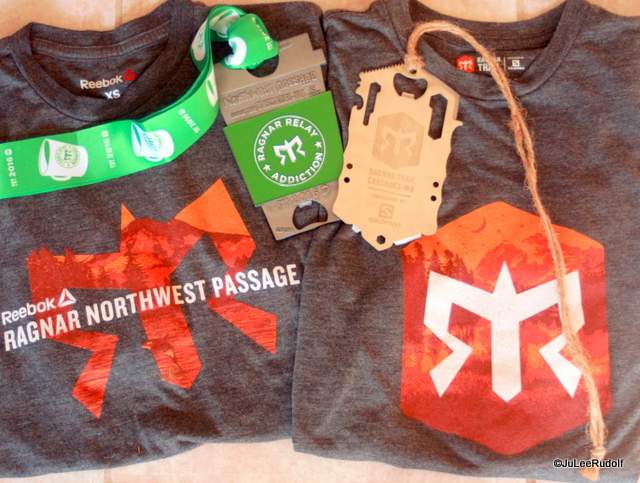
 “Be afraid. Be very afraid,” is what I would have said to Washington State’s Class of 2019 students and their parents a year ago.
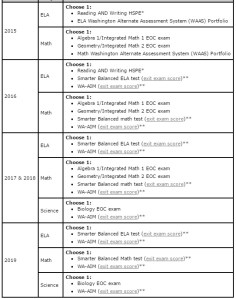 OSPI’s table of graduation requirements by year shows that during the transition to Math and ELA SBAC testing, which is aligned with Common Core State Standards, the bar for the skill set required for high school graduation rises higher each year until it reaches its maximum level for students in the Class of 2019.
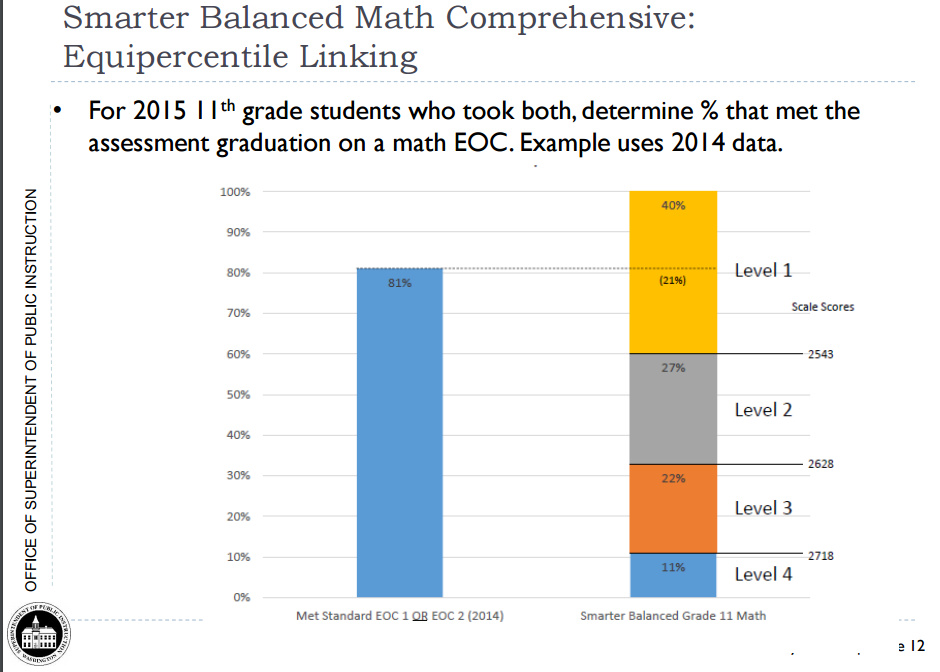
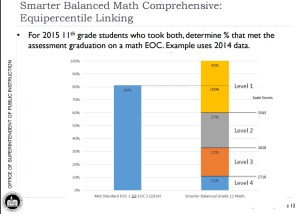 Meeting the Math SBAC requirement is so much more difficult (that is to say, the test is so much more rigorous) than the math EOC requirement of past years, that OSPI decided to lower the graduation requirement bar. The initial goal was to adjust the passing score for graduation for the SBAC so that the same percentage of students would meet the new standard as the average pass rate for the past three years for the old standard (see
 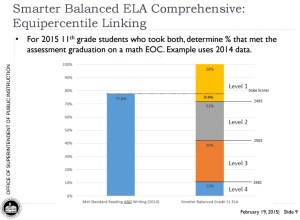 Students who achieve this level meet the Graduation Requirement; however, they will be forced to take remedial math courses in college. And even though the equivalent pass rate for students in the Class of 2017 compared to the Class of 2014-2016 would mean setting the equipercentile to mid-Level 1 for the Math SBAC, the State Board of Education (SBE) instead set the bar at 60% through Level 2. An
  At the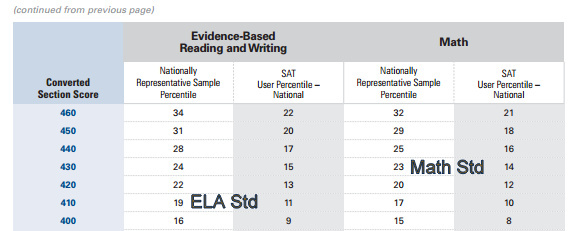
 Fortunately, the number of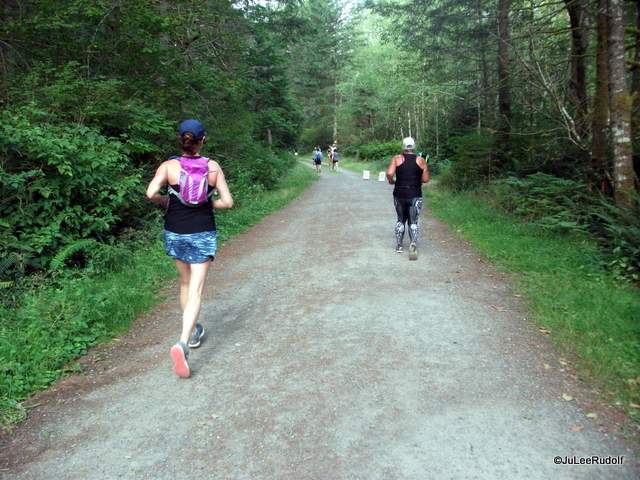
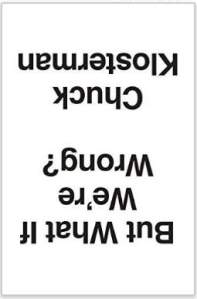 Gravity. It’s not something most of us spend much time thinking about, including me, until this summer, when I read Chuck Klosterman’s essay collection But What If We’re Wrong? It begins (p 3), ‘Like most people, I like to think of myself as a skeptical person. But I’m pretty much in the tank for gravity. It’s the force most recognized as perfunctorily central to everything we understand about everything else. If an otherwise well-executed argument contradicts the principles of gravity, the argument is inevitably altered to make sure that it does not…My confidence in gravity is absolute, and I believe this will be true until the day I die (and if someone subsequently throws my dead body out a window, I believe my corpse’s rate of acceleration will be 9.8 m/s2). ¶And I’m probably wrong. ¶Maybe not completely, but partially. And maybe not today, but eventually. ¶”There is a very, very good chance that our understanding of gravity will not be the same in five hundred years. In fact, that’s the one area where I would think that most of our contemporary evidence is circumstantial, and that the way we think about gravity will be very different.” These are the words of Brian Greene, a theoretical physicist at Columbia University…’ I’ll leave it to you to make your way through the rest of the essay to find out why Mr. Greene claims (p 4), “…gravity is the least stable of our ideas, and the most ripe for a major shift,” but just so you know, I find the idea that our current beliefs about gravity are likely to change significantly some time in the not too distant future very unsettling.
 Fortunately, when it comes to the average person’s beliefs about gravity’s affects on humans near the earth’s surface, I think we can agree: it hinders us as we move away from the center of the earth and helps us as we move towards it. The promise of help from gravity compelled my sister JoDee and me to give the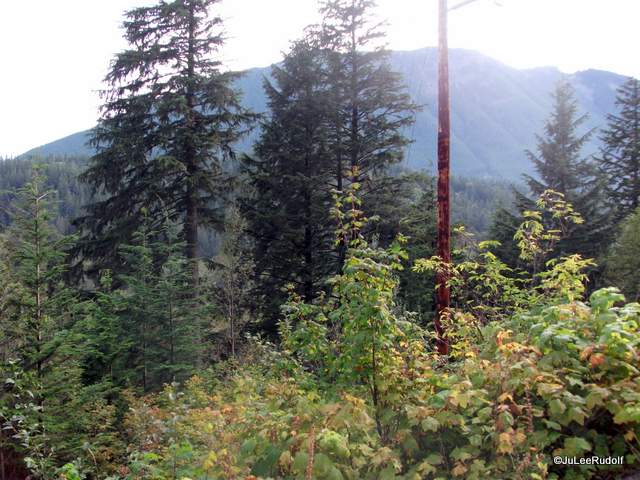
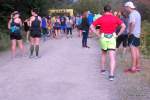 There was plenty of parking for the 1,200 participants on streets not far from the finish line near the shuttle loading zone, from which buses transported runners to Olallie State Park. From the drop off location, we hiked a quarter mile to the start line, listened to the pre-race instructions and took off right on time. The route followed the Iron Horse Trail and Snoqualmie Valley Trail, but “trail” was better defined as, “a route planned or followed for a particular purpose,” than what I had expected, “a beaten path through rough country such as a forest or moor,” but then I am spoiled because I live near and run on the trails of the Anacortes Forest Lands and Deception Pass State Park.
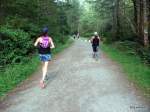
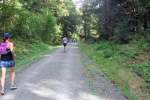 JoDee and I set our race goal ahead of time: under two hours or about 9 min/mi pace, and vowed not to make the rookie mistake of setting out too quickly. We blew it by completing the first three miles at 8:30 pace, but finally slowed down to meet our under two hours plan. As promised, the course was downhill. The scenery was nice, but..ahem…difficult to match high standards for a person used to running where I get to run. The Iron Horse and Snoqualmie Valley “trails” were former railroad track locations with track and ties removed, covered with gravel. Fortunately, for the first 8 miles, you could stick to softer stuff, compacted dirt in what looked to be tire ruts, further on, they disappeared and the entire path was covered in gravel. My gps watch showed a climb of about 200 feet, but we didn’t feel it. As promised, it was a slightly downhill nearly the entire way. Plus, the weather was perfect.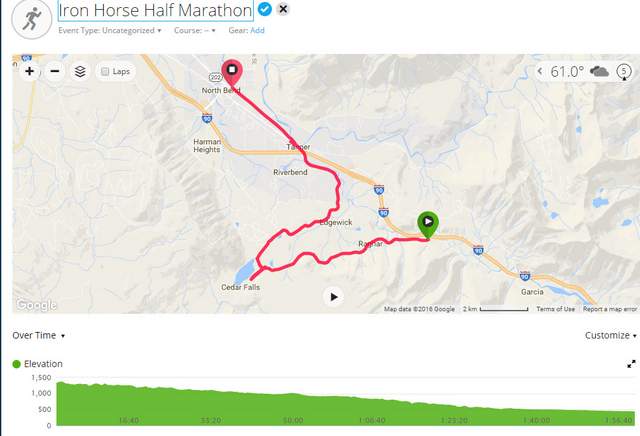
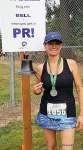 My sister finally caught the running bug about 16 months ago and up until this race, had a half marathon PR of 10:04 pace. Her kryptonite is mile 11 and beyond, so we discussed it as we approached the mile 11 sign (it seemed like she kind of wanted to punch me) and agreed to keep our consistent pace and stay strong to the end. Two miles later, I pointed out the finish line off in the distance and restated that we should run strong for the last part (since we’re training for a 30k in October). She growled that she couldn’t run any faster, so I just shut up. As we approached the finish, we recognized one of my high school classmates, bellowed his name, and he high-fived us as we passed by. We came in just under two hours, so we met our goal, and JoDee bested her previous PR by over 1 minute per mile, so I made her stand by the PR bell, though she refused to ring it.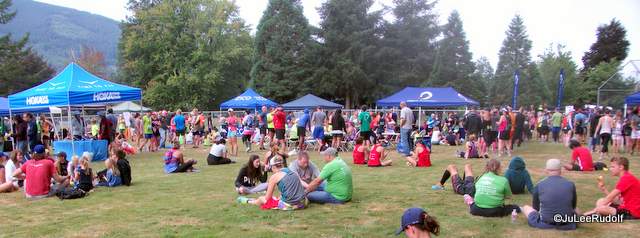
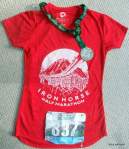 Post-race, we attempted to drink coconut water (which was just as disgusting as the last time I tried to like it), sat out the line for food (grilled hot dogs and more) and stretched. Although before the race, we’d discussed running the course with friends just for fun some day, afterwards, we decided we’d had enough of slightly downhill gravel road surrounded by trees. Best of the race: well-organized, super friendly volunteers, consistent slight descent throughout, experiencing a sisterly PR and especially the absolute nicest-looking, best true-to-size, flattering event t-shirt. Worst: the waves aren’t pace-dependent, so you could end up catching up to (and having to pass) a lot of slower runners, and running on gravel got old after just a few miles.
 Site Title


